
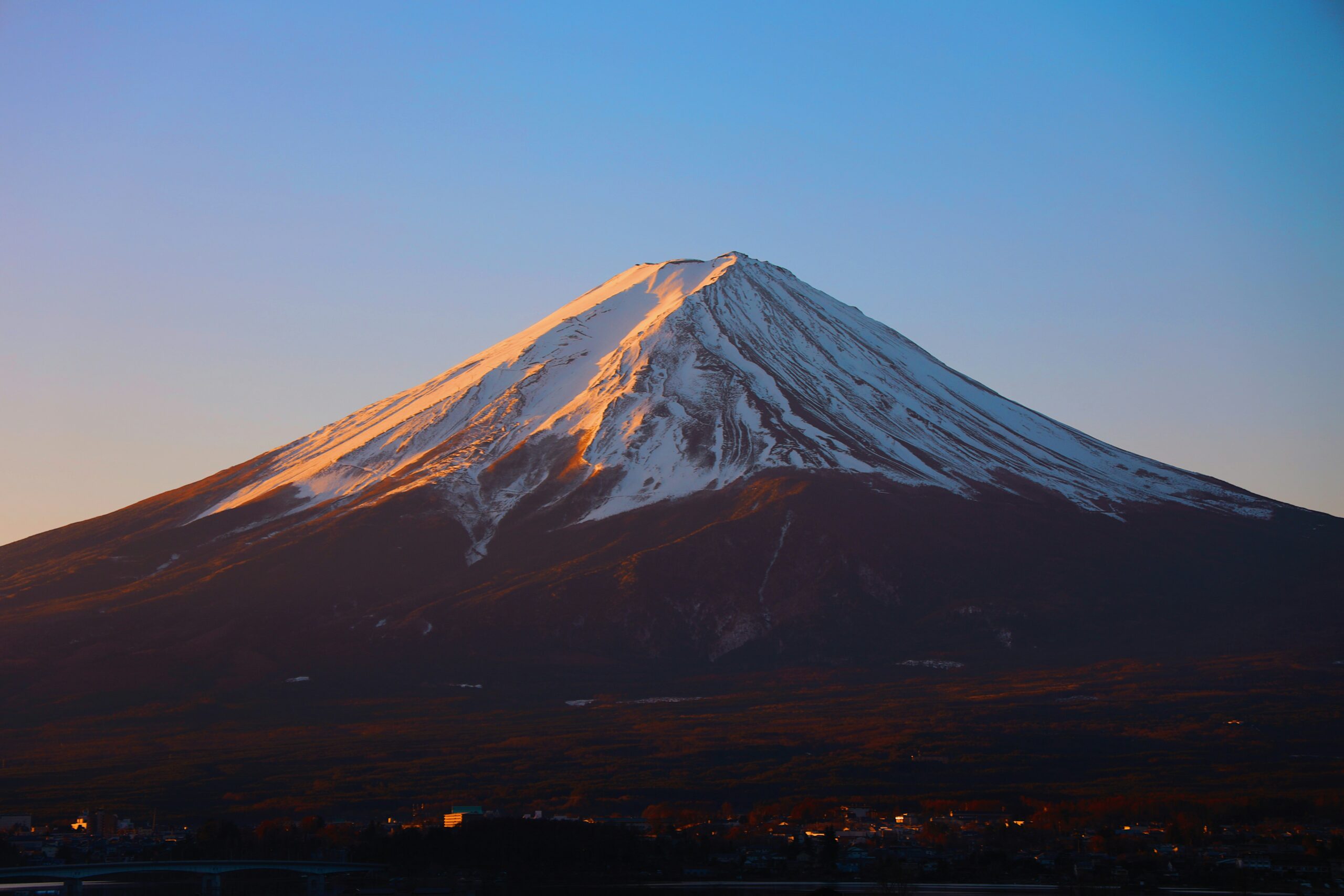
Mount Fuji is one of the most iconic sights on earth, and the good news is that you do not need to climb it to fall completely in love with it. This 2-day Mount Fuji itinerary is designed for travelers who want to spend one night in the area and see the mountain at its most spectacular: reflected in the still waters of Lake Kawaguchi at dawn, framed behind the vermilion tiers of Chureito Pagoda, and floating above the volcanic landscape (and sulfuric smell) of Hakone. Two days gives you time to do it properly, and this guide tells you exactly how.
Affiliate disclosure: This post may contain affiliate links. If you make a purchase through one of these links, I may earn a commission at no extra cost to you.
What is this itinerary? A 2-day, 1-night guide to exploring the Mount Fuji area, including the Fuji Five Lakes region and Hakone. This is not a climbing itinerary.
Best base: Kawaguchiko (Lake Kawaguchi) for Fuji Five Lakes; Hakone for hot spring views.
Getting there from Tokyo: Approx. 2 hours by highway bus to Kawaguchiko, or approx. 1 hour 45 min by Shinkansen to Odawara for Hakone.
Best time to visit: October to December for clear skies and snow-capped summit views. April to early May for cherry blossoms with Fuji.
Do I need to book in advance? Yes. Lake-view hotels and ryokan fill quickly, especially on weekends and public holidays. Book as early as possible.
Key sites: Lake Kawaguchi, Chureito Pagoda, Oshino Hakkai, Lake Motosu, Hakone Open Air Museum, Hakone Ropeway.
Is This a Mount Fuji Climbing Itinerary?
This is not a guide to climbing Mount Fuji. Climbing Japan’s highest peak is a separate undertaking entirely, with its own season (officially July to early September), equipment requirements, and trail conditions. This itinerary is for visitors who want to experience the extraordinary beauty of the Mount Fuji region: its mirror-still lakes, photogenic villages, iconic pagoda viewpoints, open-air art museums, and traditional hot spring ryokan. You are here to see Mount Fuji, not stand on top of it, and, trust me, the views from below are stunning enough to fill two full days and leave you wanting more.
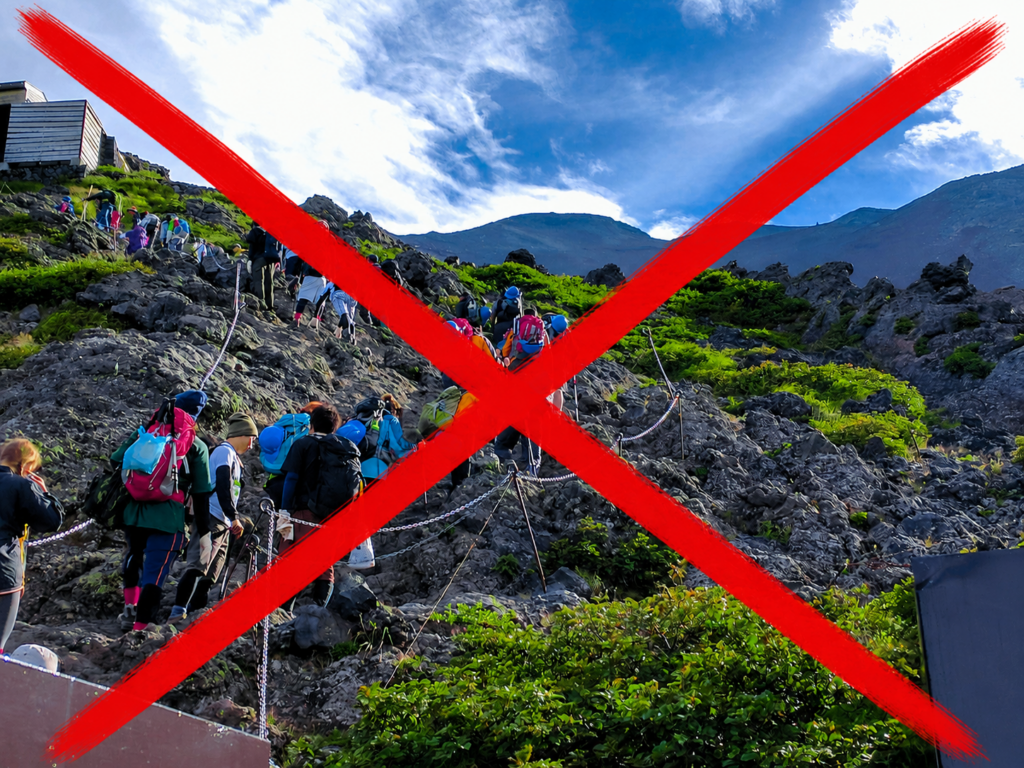
Not a Mt Fuji Climbing itinerary, Image altered from Ryan, Unsplash
Not sure how to structure your first day? A guided tour from Tokyo gets you to the best viewpoints at the right time of day. This tour takes you to Mt. Fuji by air-conditioned bus and then you take the bullet train back to Tokyo (so not part of the two days but at least you get to see Mt. Fuji).
How Do I Get to the Mount Fuji Area from Tokyo and Osaka?
| From | To Kawaguchiko | To Hakone (Odawara) | JR Pass? |
|---|---|---|---|
| Tokyo (Shinjuku) | Approx. 2 hrs by Fuji Express highway bus (direct to Kawaguchiko) | Approx. 1 hr 45 min by Shinkansen to Odawara, then Hakone Tozan Line | Shinkansen to Odawara: Yes (Hikari/Kodama). Fuji Express bus: No. |
| Osaka (Shin-Osaka) | Approx. 3.5 hrs: Shinkansen to Mishima (approx. 1 hr 40 min), then local train and bus | Approx. 2 hrs 30 min: Shinkansen to Odawara, then Hakone Tozan Line | Shinkansen legs: Yes (Hikari). Final local legs: No. |
| Kyoto | Approx. 3 hrs: Shinkansen to Mishima, then local train and bus | Approx. 2 hrs: Shinkansen to Odawara, then Hakone Tozan Line | Shinkansen legs: Yes (Hikari). Final local legs: No. |
For the Kawaguchiko area, the Fuji Express highway bus from Shinjuku is the most direct and convenient option for most visitors. For Hakone, the Odakyu Romance Car from Shinjuku (approx. 1 hr 45 min direct to Hakone-Yumoto) is a comfortable alternative not covered by the JR Pass but included with the Hakone Free Pass.
What Does a 2-Day Mount Fuji Itinerary Look Like?
Day 1 – Fuji Five Lakes and Chureito Pagoda
Base yourself at Lake Kawaguchi (Kawaguchiko), the most accessible of the Fuji Five Lakes and the one that delivers the most famous straight-on view of the mountain across the water. Arrive by late morning to give yourself a full afternoon.
Chureito Pagoda is the single most important stop on Day 1. The five-story vermilion pagoda of Arakura Sengen Shrine sits on the hillside above Fujiyoshida town with Mount Fuji perfectly framed behind it. This is the image you have seen on every Japan travel list. Reach it via a 15-minute walk and 398 steps from Shimoyoshida Station on the Fujikyu Railway. Go in the morning when the light falls on the mountain’s face. In spring, the surrounding cherry trees add a layer of beauty that is nearly impossible to overstate.
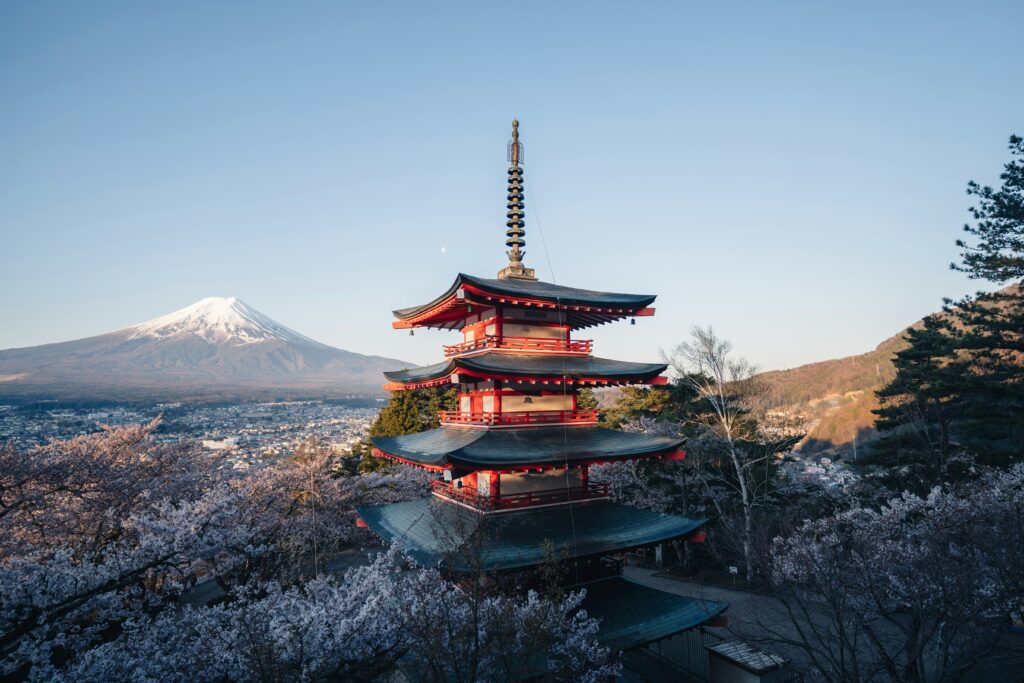
Chureito Pagoda, Spenser Sembrat, Unsplash
Oshino Hakkai is an easy afternoon stop between Fujiyoshida and Kawaguchiko: eight crystal-clear spring ponds fed by snowmelt from Mount Fuji, set in a traditional thatched-roof village. The water is so clear you can see to the bottom of ponds several meters deep. Entry to the ponds area costs 500 yen. Give yourself about 45 minutes for this.
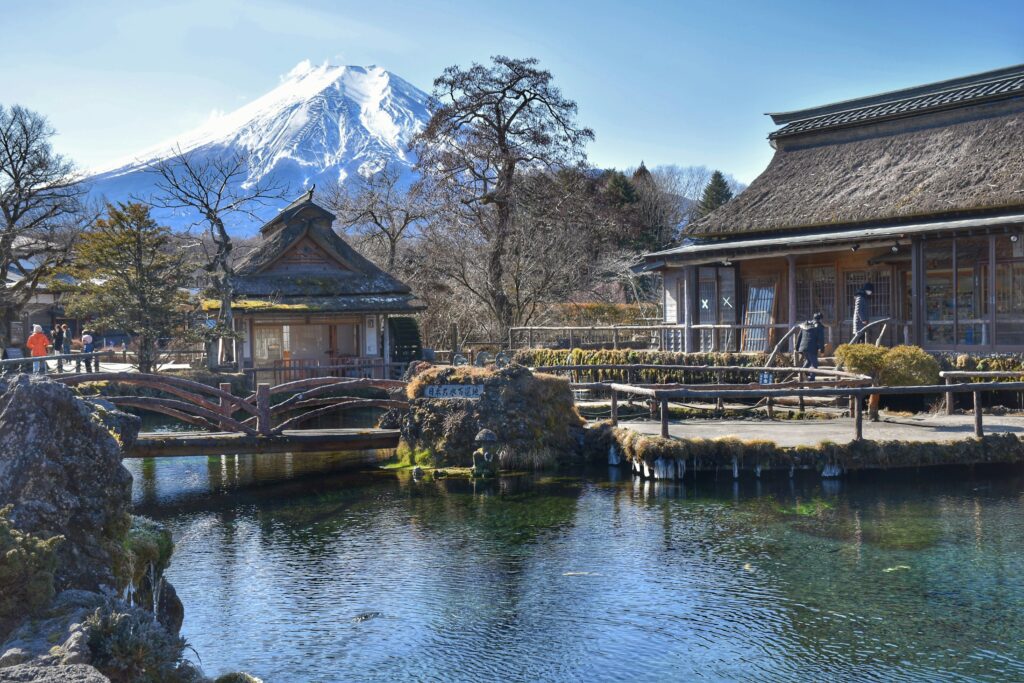
Oshino Hakkai, Hong Ki Tang, Unsplash
End the afternoon at Lake Kawaguchi itself. Walk the northern shore for the classic lake-with-mountain reflection shot. It is especially beautiful early in the morning. The Kawaguchiko Music Forest and the lakeside Lawson convenience store (yes, genuinely, due to its perfectly framed Fuji backdrop) are both worth a look. The famous Lawson is only a block or two west of Kawaguchiko Station. Spend the night in Kawaguchiko.
Day 2 – Lake Motosu and Hakone
Get up early. On a clear morning, the view of Mount Fuji from the shore of Lake Motosu (the westernmost and deepest of the five lakes) is exceptional: this is the view depicted on the back of the old Japanese 1,000-yen note that was replaced in 2024. The lake takes around 40 minutes to reach from Kawaguchiko by bus or car. The northern shore viewpoint is a short walk from the Motosu bus stop.
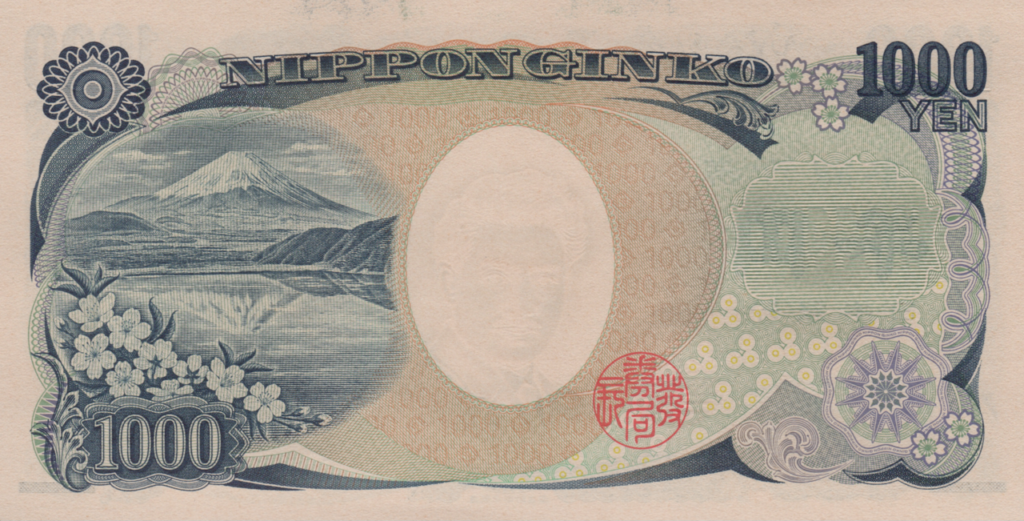
Lake Kawaguchiko on the back of the 1,000 yen note (Series E), Nippon Ginko, Government of Japan, Wikimedia Commons
From Kawaguchiko, travel south and west to Hakone for the afternoon. Hakone is a hot spring resort town in Kanagawa Prefecture, positioned within the Fuji-Hakone-Izu National Park, and on a clear day its higher elevations offer some of the most dramatic views of Mount Fuji available anywhere. The Hakone Ropeway runs from Sounzan to Togendai across volcanic Owakudani, with Mount Fuji visible to the northeast when skies cooperate. Owakudani itself, an active volcanic zone, is a surreal landscape of sulfur vents and boiling mud pools. The black eggs (kuro-tamago) cooked in the volcanic springs are a local tradition.
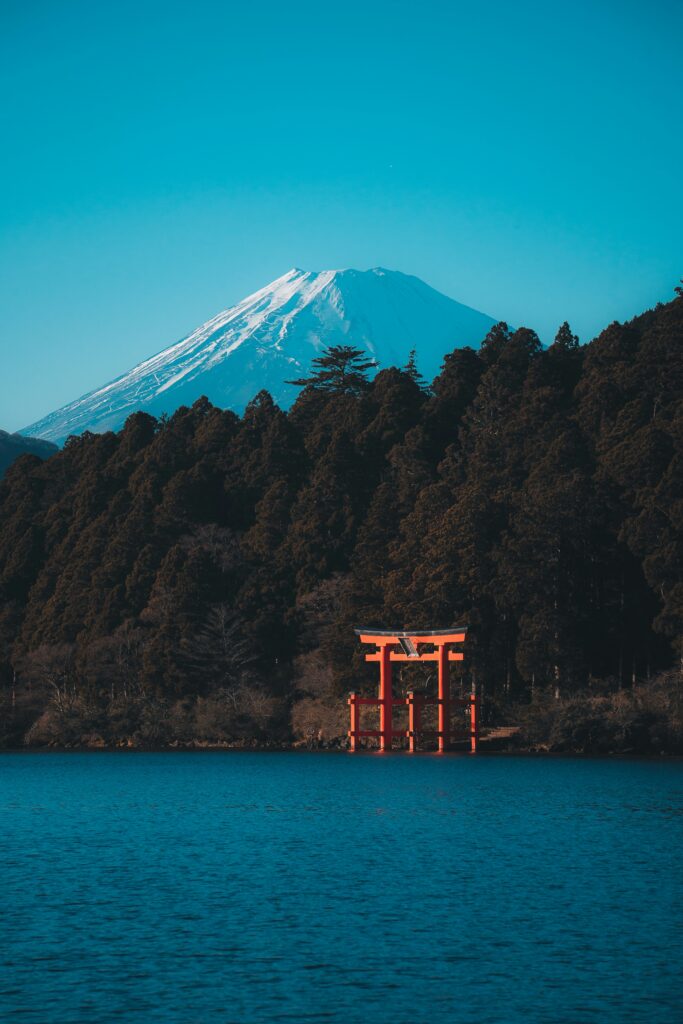
Hakone and Mt. Fuji, Raphael Lopes, Unsplash
If time allows, the Hakone Open Air Museum (Hakone Chokoku no Mori) is one of Japan’s finest outdoor sculpture parks, featuring over 120 works including a dedicated Picasso pavilion and an extraordinary outdoor Symphonic Sculpture you can walk through. Admission is 1,600 yen for adults. Allow about two hours.
Take a short boat cruise on Lake Ashi and go by aerial tram to the top of Mt Komagatake for views of Mt Fuji. You will then return to Tokyo by bullet train in the evening. FYI, this is not an overnight tour.
Book your Mt. Fuji trip with Hakone cruise and drum show here
After you spend a night in the Mt. Fuji area, have a coffee while taking an early morning kayak tour on Lake Kawaguchiko with Mt. Fuji as your beautiful backdrop.
With pick up and drop off service in at hotels in the Lake Kawaguchiko area or Kawaguchiko station, this tour takes you deep inside a Japanese ice cave on a small-group guided expedition. By the light of a headlamp, get up close and personal with a hidden natural wonder left undisturbed for 1200 years.
Where Should I Stay for the Best Mount Fuji Views?
Kawaguchiko, Fuji Five Lakes: The best base for this itinerary. Several lakeside hotels and ryokan offer rooms with direct Fuji views, including rooms with private open-air hot spring baths. Book a lake-view room on the north shore of Lake Kawaguchi for the classic mountain reflection. Spring and autumn weekends sell out months in advance.
Hakone: An outstanding alternative base, particularly if you prioritize hot springs (onsen) and a more resort atmosphere. Hakone has a wider range of accommodation from budget guesthouses to luxury ryokan. On a clear day, ryokan with views of Fuji on the higher slopes of Hakone deliver some of the most memorable views in Japan.
Lakeside and mountain-view properties in Kawaguchiko and Hakone book out fast, especially for Friday and Saturday nights. Compare options and lock in your dates early.
Is a 2-Day Mount Fuji Itinerary Necessary?
Absolutely. A single day trip from Tokyo is common, but it rarely does the region justice. Staying overnight means you are at the lakeside or the ropeway viewpoints in the early morning light, when the mountain is most likely to be clear and the crowds are thinnest. The reflection of Mount Fuji in Lake Kawaguchi at 7:00 am on a still October morning is one of the great travel experiences in Japan.
This 2-day Mount Fuji itinerary gives you time for Chureito Pagoda, Oshino Hakkai, Lake Motosu, the Hakone Ropeway, Owakudani, and the Hakone Open Air Museum: the full picture of one of the world’s most iconic mountains, seen from every angle that makes it extraordinary.
Frequently Asked Questions: 2-Day Mount Fuji Itinerary
What is the best 2-day Mount Fuji itinerary?
The best 2-day Mount Fuji itinerary covers: Day 1 at Chureito Pagoda (Arakura Sengen Shrine), Oshino Hakkai spring ponds, and Lake Kawaguchi; Day 2 at Lake Motosu for the 1,000-yen note view of Mount Fuji, followed by the Hakone Ropeway over Owakudani and the Hakone Open Air Museum. Stay overnight in Kawaguchiko or Hakone for early morning views.
Is this a Mount Fuji climbing itinerary?
No. This is an itinerary for visiting the Mount Fuji area, including the Fuji Five Lakes and Hakone. It does not cover climbing Mount Fuji, which is a separate activity with its own official season (July to early September), trail conditions, and equipment requirements.
How do I get to Mount Fuji from Tokyo?
From Tokyo, the easiest route to the Fuji Five Lakes is the Fuji Express highway bus from Shinjuku Station direct to Kawaguchiko, taking approximately 2 hours. For Hakone, take the Shinkansen from Tokyo to Odawara (approximately 35 minutes on the Kodama; covered by JR Pass), then the Hakone Tozan Line to Hakone-Yumoto. Alternatively, the Odakyu Romance Car runs direct from Shinjuku to Hakone-Yumoto in approximately 1 hour 45 minutes.
What is the best time of year to visit the Mount Fuji area?
October to December is the best time to visit the Mount Fuji area for clear skies and snow-capped summit views, with the least cloud cover of any season. Late March to early May offers the famous cherry blossom combination with Fuji, especially at Chureito Pagoda. Summer (June to August) brings heavy cloud cover that often obscures the mountain entirely. Winter weekdays offer the clearest skies and smallest crowds.
What is Chureito Pagoda and how do I get there?
Chureito Pagoda is a five-story vermilion pagoda belonging to Arakura Sengen Shrine in Fujiyoshida, Yamanashi Prefecture, with Mount Fuji visible directly behind it. It is one of the most photographed views in Japan. To reach it, take the Fujikyu Railway to Shimoyoshida Station, then walk approximately 15 minutes to the shrine’s stone steps. The pagoda is at the top of 398 steps. Entry to the shrine grounds is free. In spring, cherry trees line the approach and bloom around late March to early April.
Where is the best place to see Mount Fuji?
The best places to see Mount Fuji include: Chureito Pagoda in Fujiyoshida (iconic pagoda foreground), the north shore of Lake Kawaguchi for the classic Mt. Fuji reflection in the water, Lake Motosu’s northern shore (the view on Japan’s 1,000-yen note), and the Hakone Ropeway above Owakudani in Hakone. All four are covered in this 2-day Mount Fuji itinerary. Clear days are most common from October through December and in February and March.
Should I base myself in Kawaguchiko or Hakone?
Kawaguchiko (Lake Kawaguchi) is the better base for this 2-day itinerary because it is closer to Chureito Pagoda, Oshino Hakkai, and Lake Motosu, and offers the classic Fuji lake reflection. Hakone is a better choice if you prioritize hot spring onsen accommodation and the Hakone Ropeway, or if you are traveling from Osaka or Kyoto via the Tokaido Shinkansen. Many visitors combine both in two days by staying one night in each.
Is a 2-day Mount Fuji itinerary worth it compared to a day trip?
Yes. Staying overnight near Mount Fuji gives you access to early morning lake reflections and clear summit views before cloud cover builds later in the day. A one-night stay also allows you to combine the Fuji Five Lakes on Day 1 with Hakone on Day 2, covering the area’s two best regions in a single trip. Most day trippers from Tokyo see only one or two sites and rarely catch the mountain at its best.



0 Comments