
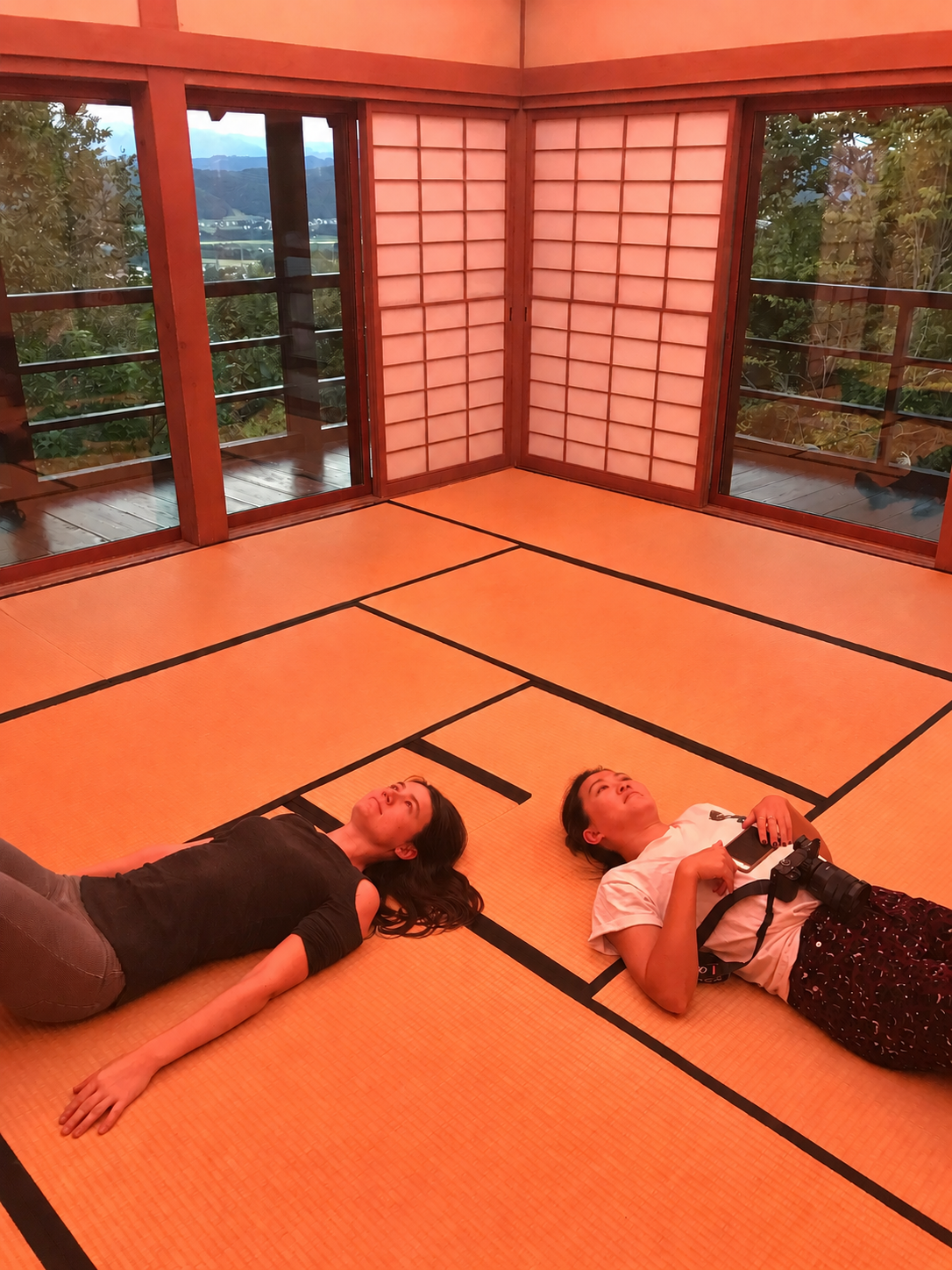
The House of Light by James Turrell is an artwork you can actually sleep inside, tucked into the rice fields of rural Niigata, and it is still one of the most fascinating experiences I have ever had in Japan. Here is my personal experiencing staying in this amazing work of art plus everything you need to know to book your own stay in 2026.
By Tokyo Becky
Artist: James Turrell, American light and space artist
Built: 2000, for the first Echigo-Tsumari Art Triennale
Location: 2891 Ueno, Tokamachi City, Niigata Prefecture, Japan, 948-0122
What it is: A house you can book to sleep inside that is also a work of art, with a retractable roof, a warm bath in the basement looking out at nature with colored lights at night, and a sunset and sunrise light program
Capacity: Shared accommodation, up to around 12 guests split across groups
2026 admission (day visit): 800 yen for adults, 400 yen for elementary school students, free for younger children
Getting there: Joetsu Shinkansen from Tokyo to Echigo-Yuzawa, then the Hokuhoku Line to Tokamachi, or a rental car for the full Echigo-Tsumari Art Field experience
What Is It Really Like to Spend the Night at House of Light by James Turrell?
I can tell you from personal experience: nothing quite prepares you for it. My group of four rented a car specifically to explore the Echigo-Tsumari Art Field, and staying overnight at the House of Light by James Turrell was the centerpiece of our whole trip. We drove up the hillside road into Kawanishi as the light was starting to turn gold, and the house itself came into view looking like a traditional Japanese farmhouse raised up on stilts, nothing like what you would picture from the words “James Turrell installation.”
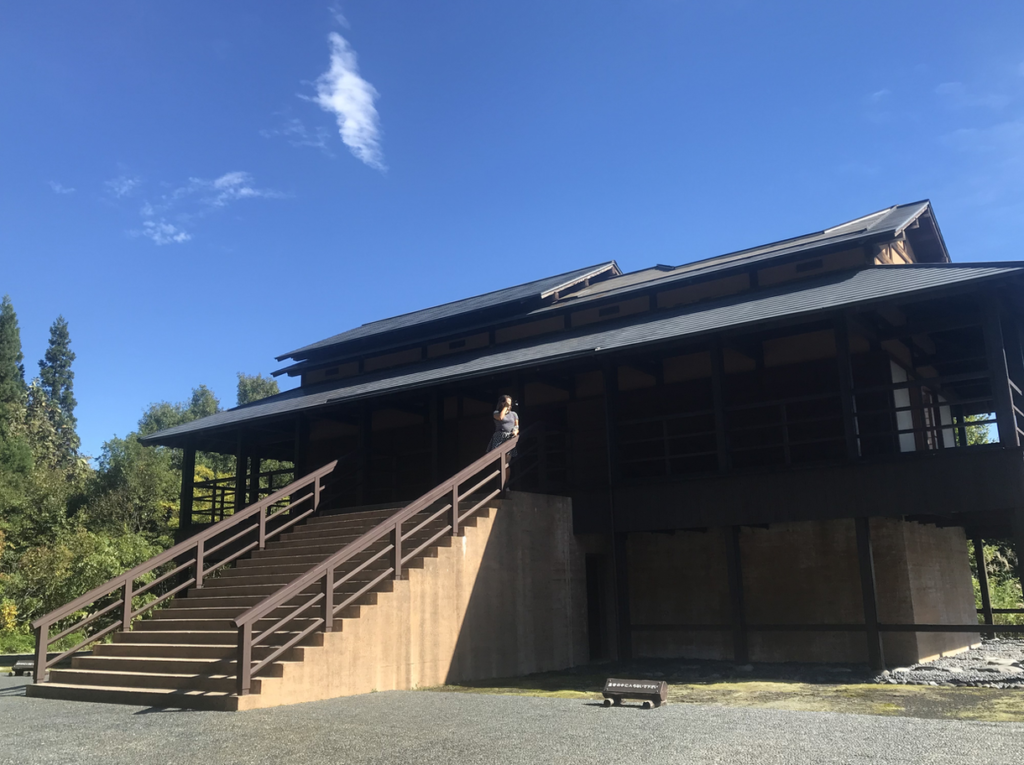
The entrance to the House of Light by James Turrell, Photo by Tokyo Becky
What we did not expect was that we would not be alone. The House of Light by James Turrell was designed for multiple groups to share the space and exchange ideas and reactions for the night, so when we arrived, another group of four that we had never met was already settling in. There is no assigned key to your own private room. Everyone shares the kitchen, the bathroom, and the twelve and a half tatami mat common room called “Outside In,” where the roof itself slides open to the sky.
Not long after we arrived, we heard a knock at the door. A woman from the local staff had driven up the hill to bring us our entire dinner, a full spread of seasonal Japanese dishes made with ingredients from the Echigo-Tsumari region. There was something about eating a meal delivered by hand, in the middle of the rice fields, with strangers turned housemates for the night, that made the whole evening feel like part of the artwork itself.
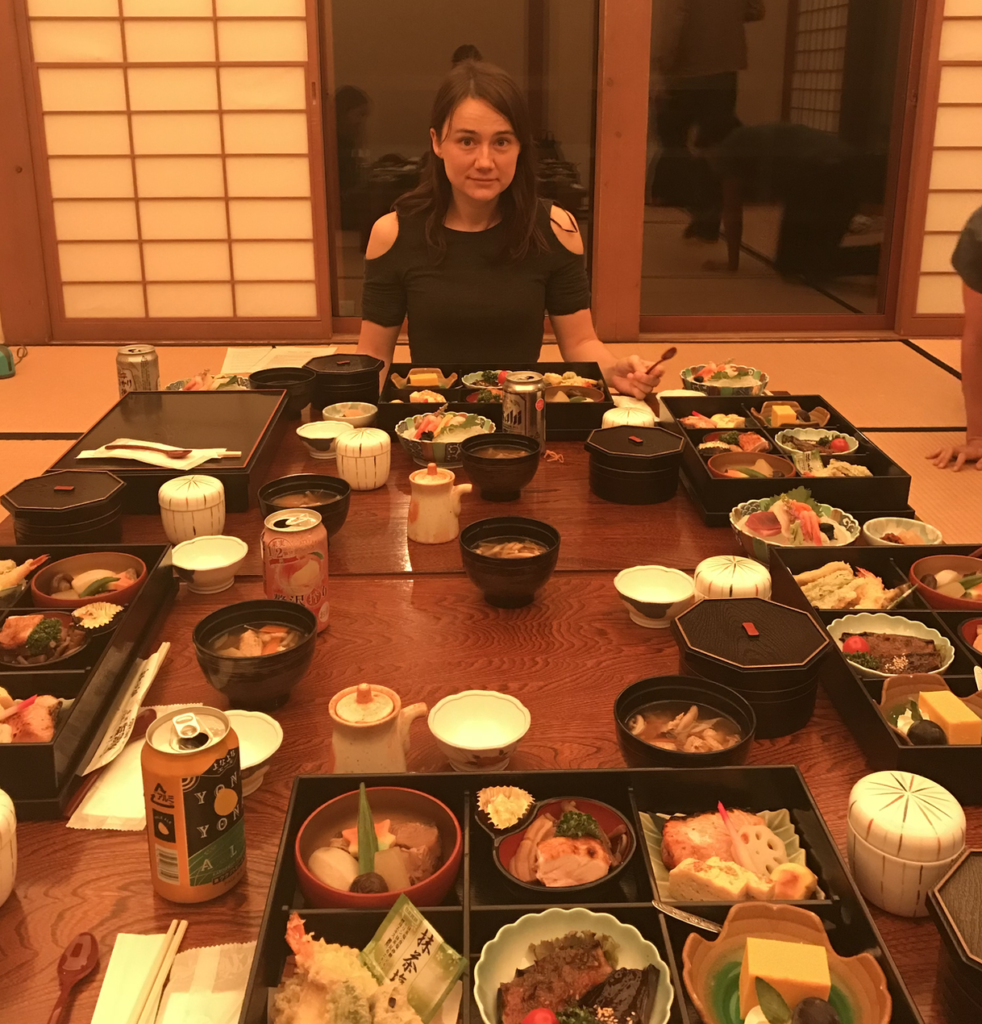
This entire dinner was delivered to the front door at The House of Light by James Turrell (so you’re not going to go hungry), Photo by Tokyo Becky
My favorite part of the house, though, was downstairs. The ground floor holds a traditional Japanese bath, or ofuro, lined with optical fiber threaded through the tokonoma and the edges of the tub. At night, the fiber optics glow in shifting colors while you soak, so the water itself seems to hold the light. It is quiet and strange and genuinely beautiful, and it is the detail I still think about years later.
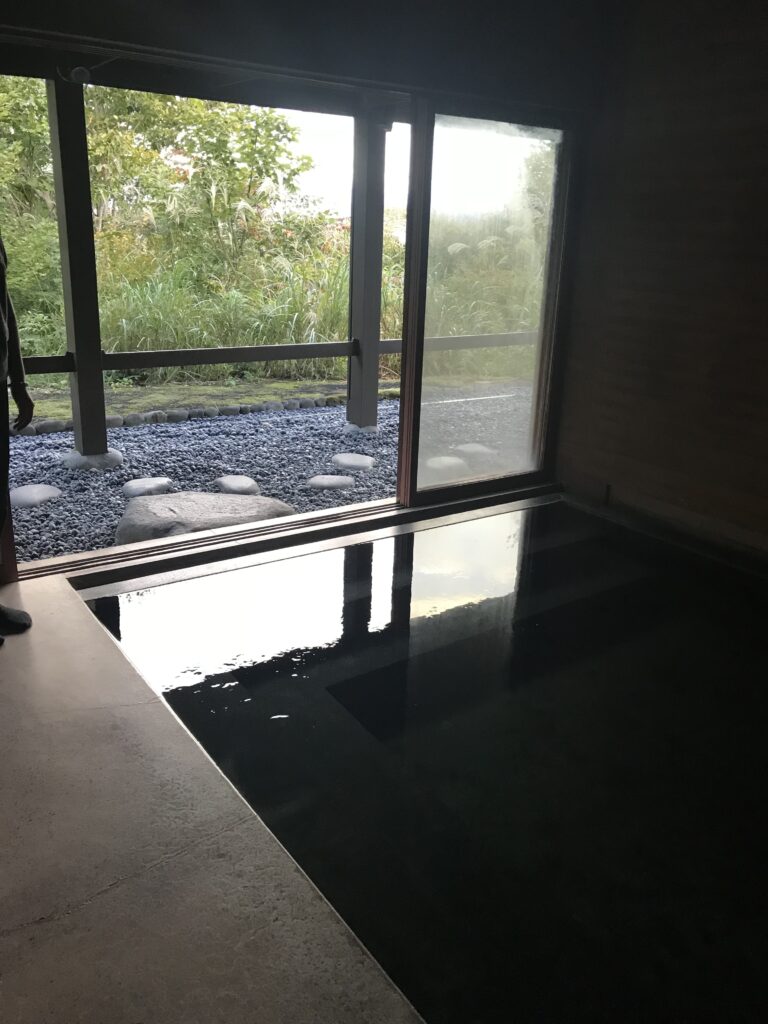
The hot bath on the bottom floor of the House of Light by James Turrell, Photo by Tokyo Becky
Upstairs, the “Outside In” room is the main event. At sunset and again before sunrise, the roof retracts and a lighting program times itself to the changing sky using projected color to trick your eyes into seeing hues hidden inside what looks like ordinary white light. Lying on the floor watching the square of sky above you shift from pale blue to deep indigo to black is unlike anything else I have done in Japan, and I have lived there for years. If you can only do one overnight art experience in Japan, this is the one I would personally send you to. The one caveat: you will have to wake up super early for the sunrise program as it starts at 4:43 am (see the instructions below).
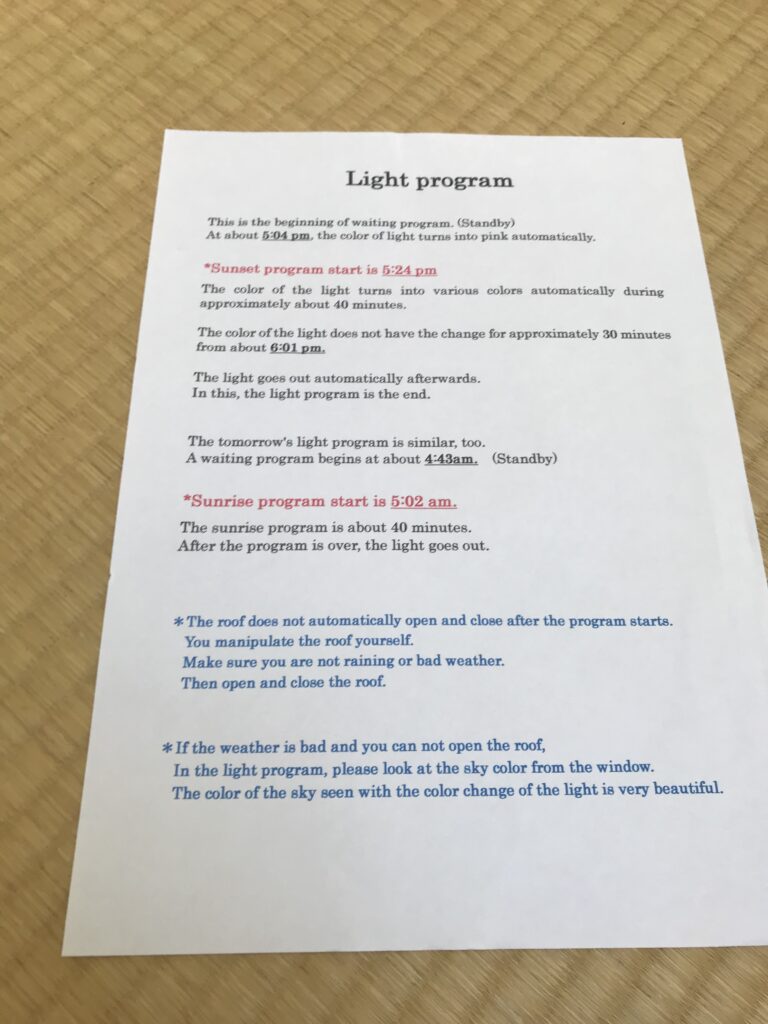
Directions for the light program at The House of Light by James Turrell, Photo by Tokyo Becky
Who Is James Turrell?
James Turrell is an American artist, born in Los Angeles in 1943, who has spent more than half a century working almost exclusively with light itself as his material rather than paint, stone, or metal. He is considered one of the founders of the Light and Space movement that emerged in Southern California in the 1960s. Turrell grew up in a Quaker family and earned his pilot’s license at sixteen. That early relationship with the sky, combined with a college degree in perceptual psychology, shaped nearly everything he has made since.
Turrell is best known for his ongoing Skyspaces, enclosed rooms with an aperture cut into the ceiling that frames the sky as a living, changing artwork, and for Roden Crater, his decades long project to transform an extinct volcanic crater in Arizona into a naked eye observatory. His work has been exhibited at institutions including the Guggenheim, MoMA, and the Whitney, and House of Light in Niigata is one of the few places in the world where you can actually spend the night inside one of his pieces rather than simply viewing it.
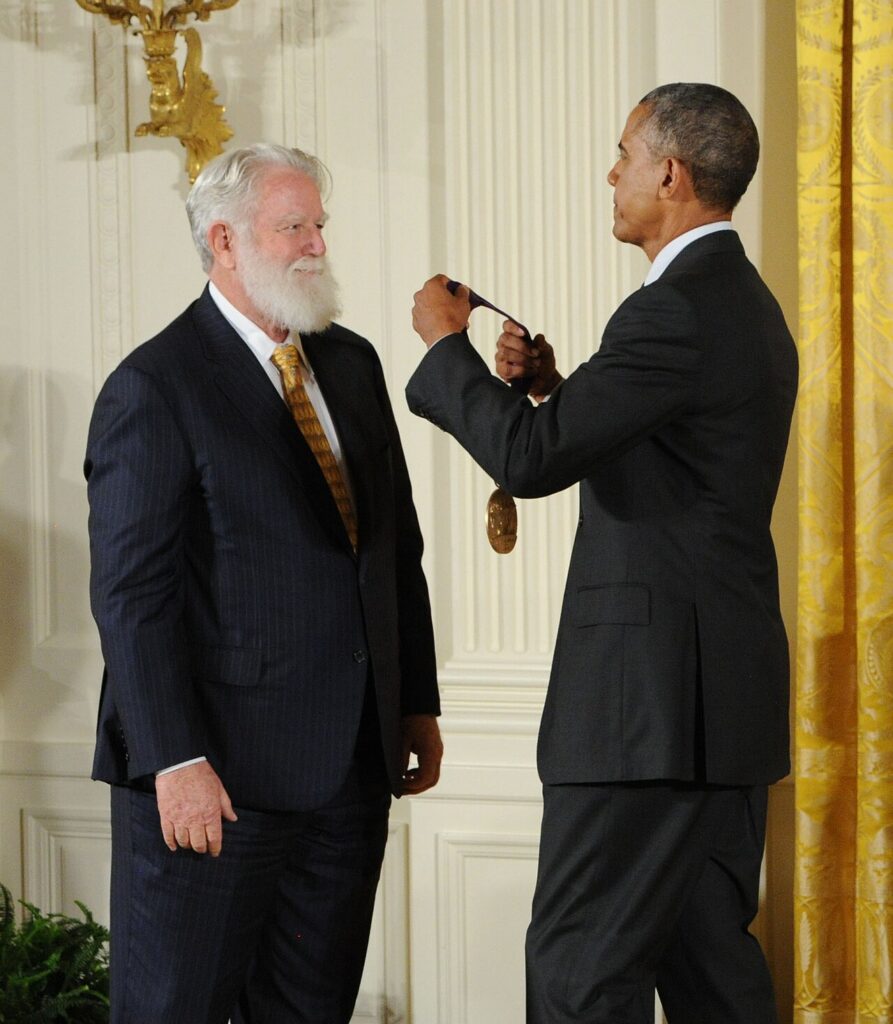
President Barack Obama presents the National Medal of Arts to visual artist James Turrell in a White House ceremony on July 28, 2014, Public Domain
What Is the History Behind House of Light by James Turrell?
House of Light by James Turrell was completed in 2000 as one of the earliest and most significant works created for the first Echigo-Tsumari Art Triennale, a project started by curator Fram Kitagawa to bring contemporary art into a rural, aging region of Niigata Prefecture as a way to revitalize it. Kitagawa asked Turrell to design a meditation house for the Echigo-Tsumari region. As part of the brief, Kitagawa handed Turrell a copy of Junichiro Tanizaki’s essay “In Praise of Shadows,” and Turrell has said that reading it led him to design the house in the traditional architectural style of the region rather than in his usual minimalist language.
The entrance to the House of Light by James Turrell, Photo by Tokyo Becky
The design also draws on a real piece of local history. The house takes its form from a traditional residence built in 1842 for the Hoshina family, local rice and sake traders in the Tokamachi district. Because the region receives heavy snowfall, the structure had to be raised well above ground level, and that requirement shaped the raised, stilted look of the building today.
The lighting itself has evolved since 2000. The original fixtures used straight tube incandescent bulbs. When those bulbs were discontinued, the entire lighting system was replaced with LED fixtures, and the light program was redesigned at the same time to offer a wider range of color variations during the roughly 40 minute sunrise and sunset sequences. The House of Light by James Turrell is now a permanent, year round work, and it remains James Turrell’s only piece anywhere in the world where visitors can book an overnight stay inside the artwork itself.
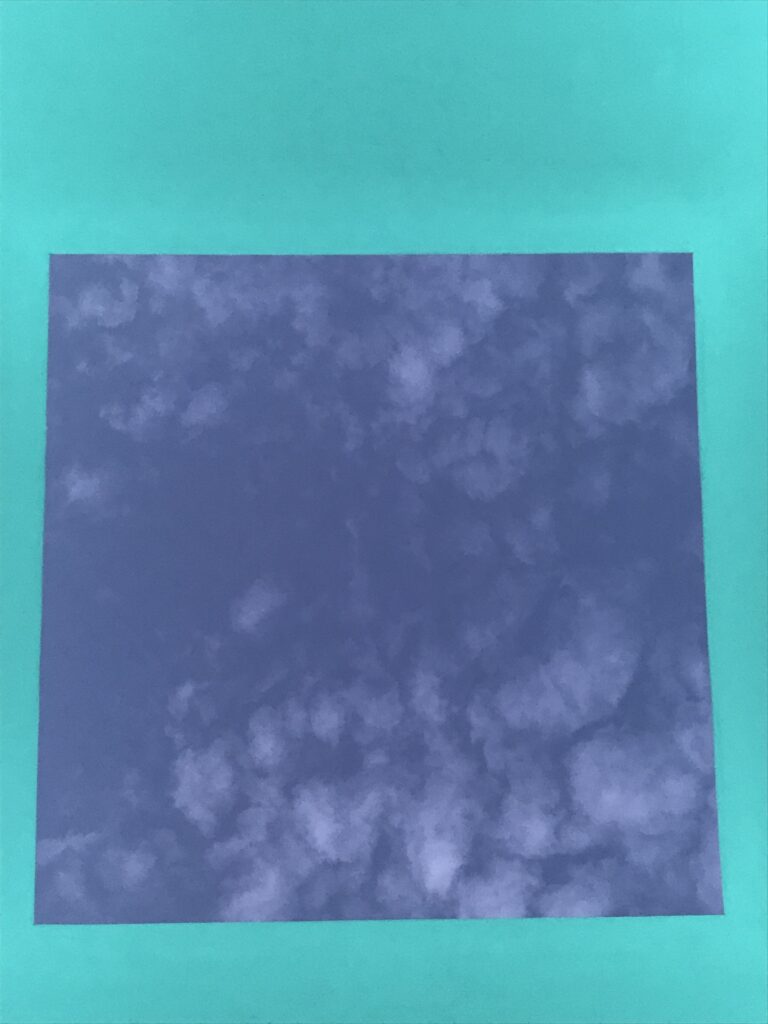
The sky always looks different depending on the time of day at The House of Light by James Turrell, Photo by Tokyo Becky
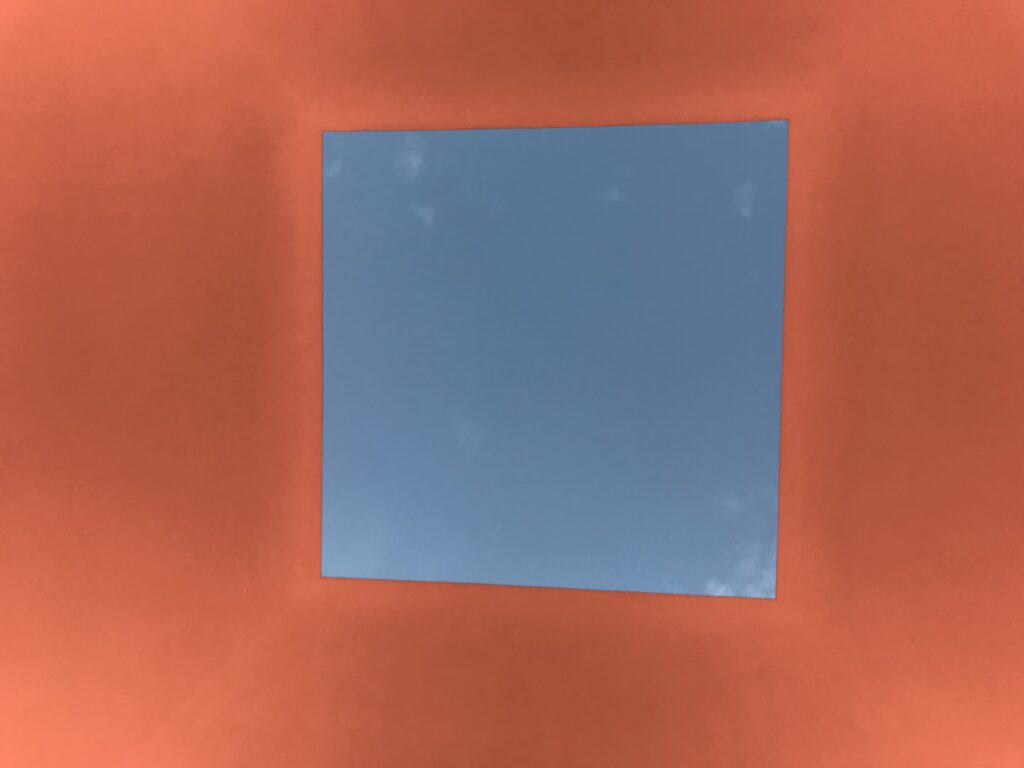
The House of Light by James Turrell, Photo by Tokyo Becky
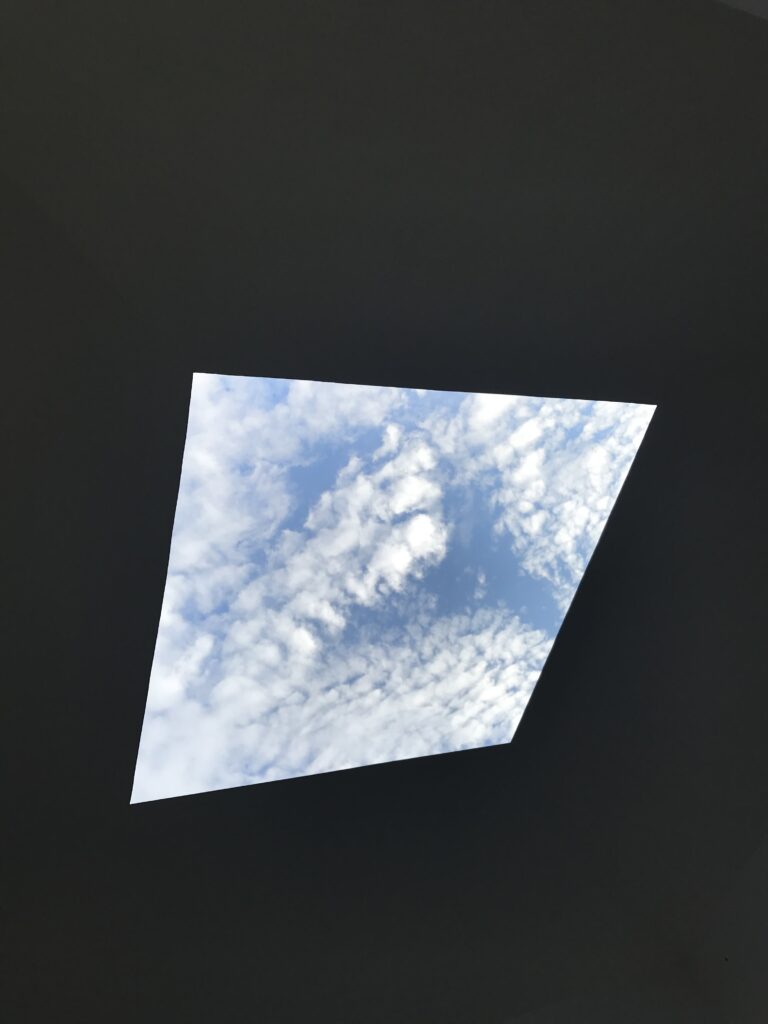
Looking through the ceiling at The House of Light by James Turrell, Photo by Tokyo Becky
Does James Turrell Have Other Artworks in Japan?
Yes. If House of Light gives you a taste for Turrell’s work, the island of Naoshima in the Seto Inland Sea is the other essential stop in Japan. Naoshima’s Chichu Art Museum, part of the Benesse Art Site, holds three permanent Turrell installations. Nearby, inside the Ando designed Minamidera building that is part of the Art House Project, you can experience Turrell’s piece Backside of the Moon, a work that plunges you into total darkness before your eyes slowly adjust and the space reveals itself. Between House of Light in Niigata and the Naoshima installations, Japan holds one of the richest concentrations of Turrell’s work anywhere in the world.
Affiliate disclosure: This post may contain affiliate links. If you make a purchase through one of these links, I may earn a commission at no extra cost to you.
Planning a longer trip? If you want to base yourself somewhere central before or after visiting Echigo-Tsumari, compare hotel options in Echigo-Yuzawa or in Tokamachi nearby.
Browse Hotels in Echigo-Yuzawa → Browse Hotels Near Tokamachi →
How Do I Get to House of Light from Tokyo?
The easiest route is by train. Take the Joetsu Shinkansen from Tokyo Station to Echigo-Yuzawa Station, then transfer to the local Hokuhoku Line for the roughly 25 minute ride to Tokamachi Station. From Tokamachi, House of Light is a short taxi ride up into the hills of the Kawanishi area.
Echigo-Yuzawa itself is worth knowing as a base. It is the first major stop on the Joetsu Shinkansen once you cross into Niigata Prefecture, roughly 75 to 90 minutes from Tokyo Station with no transfer required, which makes it noticeably easier to reach than Tokamachi. From there, you either continue on to Tokamachi via the Hokuhoku Line for the last stretch, or rent a car right at the station and drive the rest of the way yourself. Because it sits at the edge of the Echigo-Tsumari region and also connects easily back toward Tokyo or onward to the Japan Alps, Echigo-Yuzawa works well as a home base if you want a wider variety of hotels than the smaller towns closer to House of Light.
We chose to rent a car instead, and I would genuinely recommend it if your itinerary allows. Public transportation across the wider Echigo-Tsumari Art Field is limited and can be inconvenient, so a rental car gives you far more flexibility to reach the many scattered artworks across the region. Toyota Rent a Car has an outlet right next to Tokamachi Station, with additional options around Echigo-Yuzawa Station and in Nagaoka City. If you are driving from Tokyo directly, exit the Kanetsu Expressway at the Muikamachi interchange, and Tokamachi City is about a 30 minute drive from there.
| From | Route | Approx. Time |
|---|---|---|
| Tokyo Station (train) | Joetsu Shinkansen to Echigo-Yuzawa, then Hokuhoku Line to Tokamachi | About 1.5 to 2 hours |
| Tokyo (car) | Kanetsu Expressway to Muikamachi IC, then local roads | About 3 hours |
| Nagoya (car via Iiyama) | Chuo, Nagano, and Joshinetsu Expressways to Toyota Iiyama IC, then Route 117 | About 5 to 6 hours |
What Is Happening at Echigo-Tsumari in 2026?
The House of Light by James Turrell sits inside the much larger Echigo-Tsumari Art Field, a permanent, year round open air museum spread across roughly 760 square kilometers of Niigata countryside, built from the legacy of the Echigo-Tsumari Art Triennale. In 2026, the Art Field is running a season long program from late April through early November, timed to the region’s shift from budding spring through deep green summer to the rice harvest, with special exhibitions and events throughout. You can see the full 2026 program on the official Echigo-Tsumari Art Field website.
If you are visiting several sites, it is worth picking up the 2026 Echigo-Tsumari common ticket, which bundles discounted access to artworks like the Kiyotsu Gorge Tunnel of Light and Echigo Matsunoyama “Forest School” Kyororo, along with small discounts at partner facilities such as the Tokamachi City Museum and the Akashi-no-yu hot spring. You can book your own House of Light overnight stay and check current availability directly through the official House of Light page.
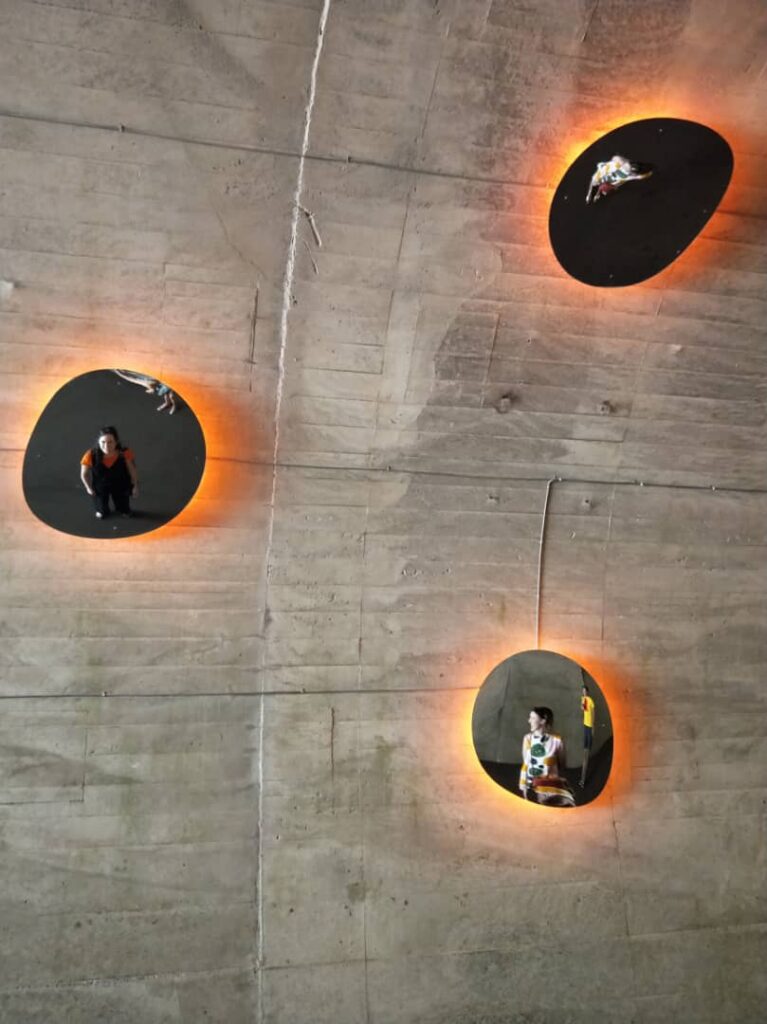
Fun reflections at the Kiyotsu Gorge Tunnel of Light, a fantastic stop as part of the Echigo-Tsumari Art Trail, Photo by Tokyo Becky
Don’t Miss the Kiyotsu Gorge Tunnel of Light
If you have time before or after your stay at House of Light, the Kiyotsu Gorge Tunnel of Light is an easy add-on and one of the most photographed spots in the entire Echigo-Tsumari Art Field. A 750 meter walking tunnel cuts through the mountain to a series of viewing platforms overlooking the gorge. It was renovated in 2018 by MAD Architects as part of the Art Triennale. The final platform holds a shallow reflecting pool that mirrors the cliffs and sky so perfectly it is hard to tell where the real gorge ends and the reflection begins. It is reachable on the Echigo-Yuzawa area tour route, or by car from Tokamachi, and advance reservation is required during peak 2026 periods, so check current dates on the official Echigo-Tsumari site before you go.
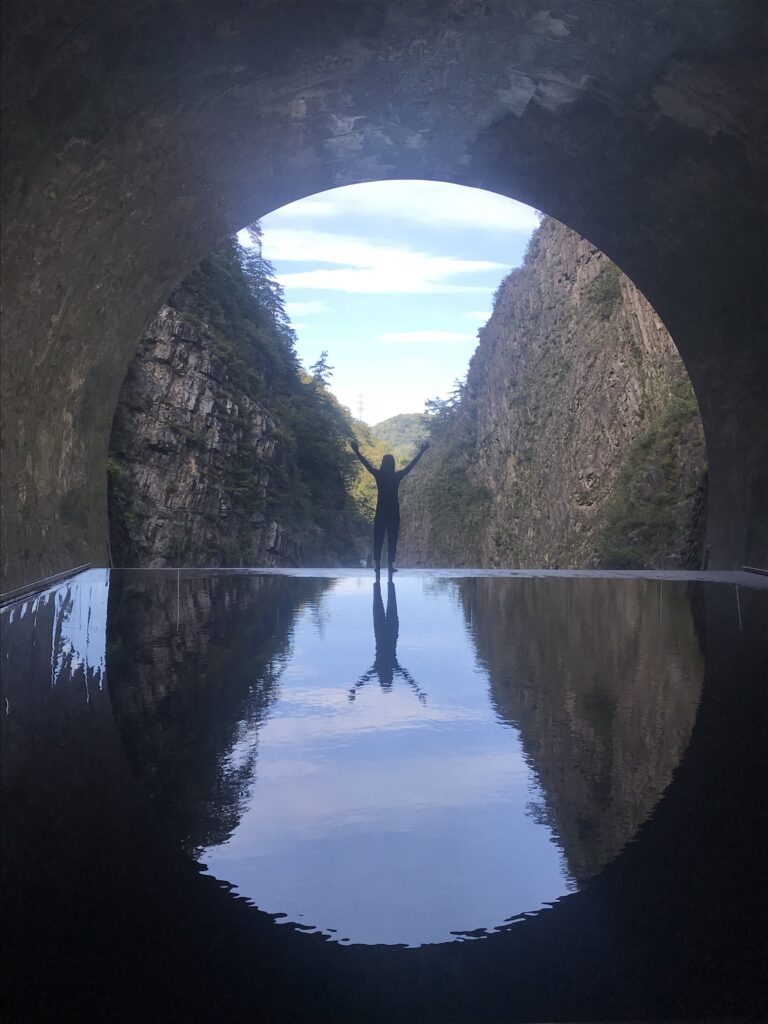
Photo of Tokyo Becky in the Kiyotsu Gorge Tunnel of Light, a fantastic stop as part of the Echigo-Tsumari Art Trail
Are There Buses Between the Art Sites?
Yes, although it takes a little planning. The regular local bus lines around Echigo-Tsumari run infrequently, and outside of the hourly Tokamachi to Tsunan route, they are not really practical for getting between artworks on your own schedule.
What works much better is the Art Field’s own seasonal tour bus network. During the main visiting season, from around mid April through November, the official tours run set routes departing from Tokamachi Station, Matsudai Station, and Echigo-Yuzawa Station. They each loop through a different cluster of artworks with a guide, and several include a local lunch stop. The Tokamachi and Kawanishi route in particular covers the area where the House of Light by James Turrell is located, while a separate route from Echigo-Yuzawa Station heads south to Nakasato and Tsunan for sites like the Kiyotsu Gorge Tunnel of Light. These tours require advance reservation and fill up during peak weekends, so book on the official Echigo-Tsumari Art Field site as soon as your dates are set.
If you would rather move at your own pace instead of following a set tour route, a rental car is still the most flexible option, and electric assist bicycles can be rented at Tokamachi Station for shorter distances around town.
How Much Does It Cost to Visit or Stay Overnight in 2026?
If you just want to see House of Light during the day, it is open to daytime visitors between 11:30 a.m. and 3:00 p.m. For an overnight stay, the facility charge is shared among however many groups are booked in that night, which is exactly what happened during my own visit when another group of four joined us.
| Fee Type | 2026 Price | Notes |
|---|---|---|
| Basic facility usage fee | 50,000 yen per night | Divided by the number of groups staying that night |
| Per person, weekends and holidays | 10,000 yen adults / 5,000 yen elementary students | Free for children under elementary school age |
| Per person, weekdays | 8,000 yen adults / 4,000 yen elementary students | Free for children under elementary school age |
| Daytime admission only | 800 yen adults / 400 yen elementary students | Free for children under elementary school age, 11:30 a.m. to 3:00 p.m. |
Overnight reservations must be made in advance, and bookings fill up quickly, especially around sunrise and sunset seasons, so plan ahead. If you would rather not cook, meals are also available as takeout breakfast and dinner service from Satoyama Shokudo in nearby Echigo Matsudai, prepared with seasonal ingredients from the region, similar to the dinner that was personally brought to our door.
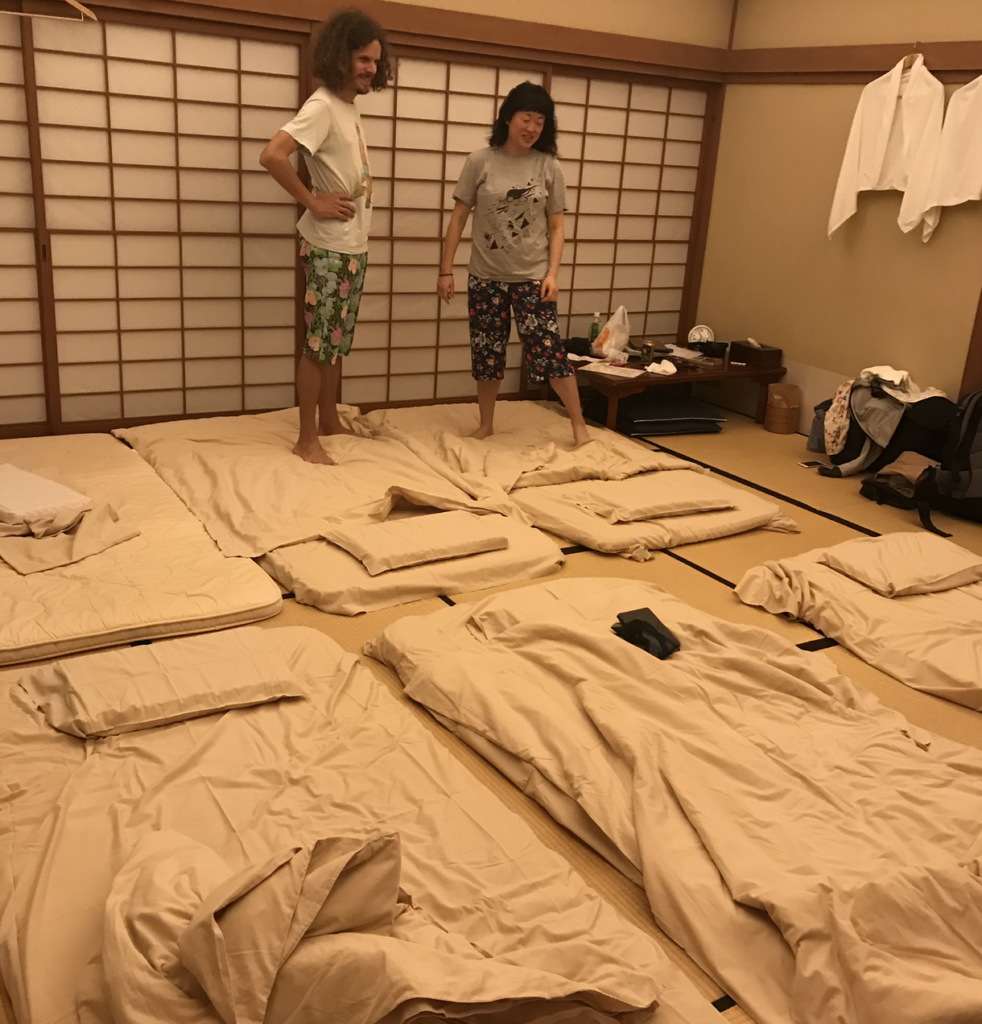
Getting ready for bed at The House of Light by James Turrell (I loved it), Photo by Tokyo Becky
Tips From My Own Stay
A few things I wish I had known before we arrived. First, expect to share the space. Unless you book with a large enough group to fill the whole house, you will likely be paired with strangers for the night, and that turned out to be one of the best parts of the experience rather than an inconvenience. Second, set an alarm for sunrise. It is genuinely worth losing the sleep for. Third, if you are driving, download offline maps before you head into the hills, since the roads up to the house are rural and cell signal gets patchy. And finally, make sure you leave time to take a bath. That fiber optic Light Bath on the ground floor was my personal favorite part of the entire stay, and you will want time to actually enjoy it rather than rushing through. Per Japanese tradition, you do not need a bathing suit and should go clothing-free for the bath.
Is House of Light by James Turrell Worth Visiting in 2026?
Yes, without question. I have traveled all over Japan, and my night at House of Light by James Turrell remains one of the most fascinating experiences of any trip I have taken there. It is not a museum where you look at art from a distance. You sleep inside it, bathe inside it, and watch the sky change through the ceiling that opens to the night sky (no skylight window – it is completely open). Between the history behind the building, Turrell’s reputation as one of the most important living artists working with light, and the sheer unlikeliness of finding something like this tucked into the rice terraces of rural Niigata, the House of Light earns a place on any serious Japan itinerary that goes beyond Tokyo, Osaka, and Kyoto, especially if you are already planning to explore the wider Echigo-Tsumari Art Field.
Frequently Asked Questions about House of Light by James Turrell (2026)
What is the House of Light by James Turrell famous for?
House of Light by James Turrell is famous for being American artist James Turrell’s only work in the world where guests can book an overnight stay inside the artwork itself, featuring a retractable roof, a fiber optic Light Bath, and a timed sunrise and sunset light program.
Where is the House of Light located?
The House of Light by James Turrell is located in the Kawanishi area of Tokamachi City, Niigata Prefecture, Japan, within the Echigo-Tsumari Art Field in the mountainous northern part of Honshu.
How do I get to the House of Light from Tokyo?
Take the Joetsu Shinkansen from Tokyo Station to Echigo-Yuzawa Station, then transfer to the local Hokuhoku Line for about 25 minutes to Tokamachi Station, followed by a short taxi ride. Driving from Tokyo via the Kanetsu Expressway takes about 3 hours and offers more flexibility to explore the wider art field.
How do I get to the House of Light from Nagoya?
By car from Nagoya, take the Chuo, Nagano, and Joshinetsu Expressways to the Toyota Iiyama Interchange, then follow Route 117 into Tokamachi City, a journey of roughly 5 to 6 hours total including the connecting drive.
How much does it cost to stay overnight at the House of Light in 2026?
The basic facility usage fee is 50,000 yen per night, split between however many groups are staying, plus a per person fee of 10,000 yen for adults on weekends and holidays or 8,000 yen on weekdays, with reduced rates for elementary school children and free entry for younger kids.
Are there buses between the artworks at Echigo-Tsumari?
Regular local buses run too infrequently to be practical for most visitors, but the Echigo-Tsumari Art Field runs its own seasonal guided tour buses from Tokamachi Station, Matsudai Station, and Echigo-Yuzawa Station along set routes, including one that covers the Kawanishi area where the House of Light is located. These tours require advance reservation through the official Art Field website.
Do I need to book the House of Light by James Turrell in advance?
Yes. Overnight stays must be reserved in advance through the official Echigo-Tsumari Art Field website, and bookings fill up quickly, especially during peak sunrise and sunset seasons.
Does James Turrell have other artworks in Japan besides the House of Light?
Yes. James Turrell has permanent installations on the island of Naoshima, including three works inside the Chichu Art Museum and the piece “Backside of the Moon” inside the Tadao Ando designed Minamidera building, part of Naoshima’s Art House Project.
Will I have to share the House of Light with strangers?
Often, yes. The House of Light by James Turrell was designed for multiple small groups to share the common room, kitchen, and bathroom for the night unless your own group is large enough to book the entire house, and sharing the space with another group is a normal and often memorable part of the experience.
Is the House of Light worth visiting in 2026?
Yes. the House of Light offers a rare chance to sleep inside a working James Turrell artwork, complete with a retractable roof, a glowing fiber optic bath, and a timed sunrise and sunset light program. This makes it one of the most memorable overnight experiences available anywhere in Japan.


0 Comments