
If you’ve been living in Japan and planning to apply for permanent residency, the rules just shifted under your feet. On October 1, 2026, the Immigration Services Agency rolled out revised permanent residency guidelines and hiked the application fee dramatically. Some of the toughest new standards, Japanese language ability, pension projections, and longer spouse residency periods, take effect on April 1, 2027. The income requirement is already in play for many applicants.
These changes are the biggest update to Japan’s permanent residency system in years. They raise the bar on financial self-sufficiency, language skills, and long-term contribution to Japanese society. Whether you’re on a work visa, married to a Japanese national, or holding Highly Skilled Professional status, the path to permanent residency is now going to be more demanding.
My Journey with the Japan Permanent Residency Requirements
I applied for Japan permanent residency myself in the fall of 2014. At that time, it took about four months to hear back from the Japanese immigration agency, and I was approved in January 2015. At the time, the fee was only 8,000 yen, which I only paid once approval came through. I handled the application myself. The hardest part was asking a Japanese friend to provide proof of her income and tax payments for that year. It felt invasive because Japanese people tend to keep their financial matters private.
I am still a permanent resident of Japan to this day. Looking back, things have changed a lot. With these new rules, I believe it is going to be much harder for people to receive permanent residency now. I also wonder if these changes will make it more difficult for me to keep the residency as well. Time will tell how the immigration agency acts, but these changes will almost certainly reduce the number of permanent residency applicants.
This post walks you through everything that changed, what still applies, the documents you’ll need, and practical steps you can take today so you’re ready when you apply.
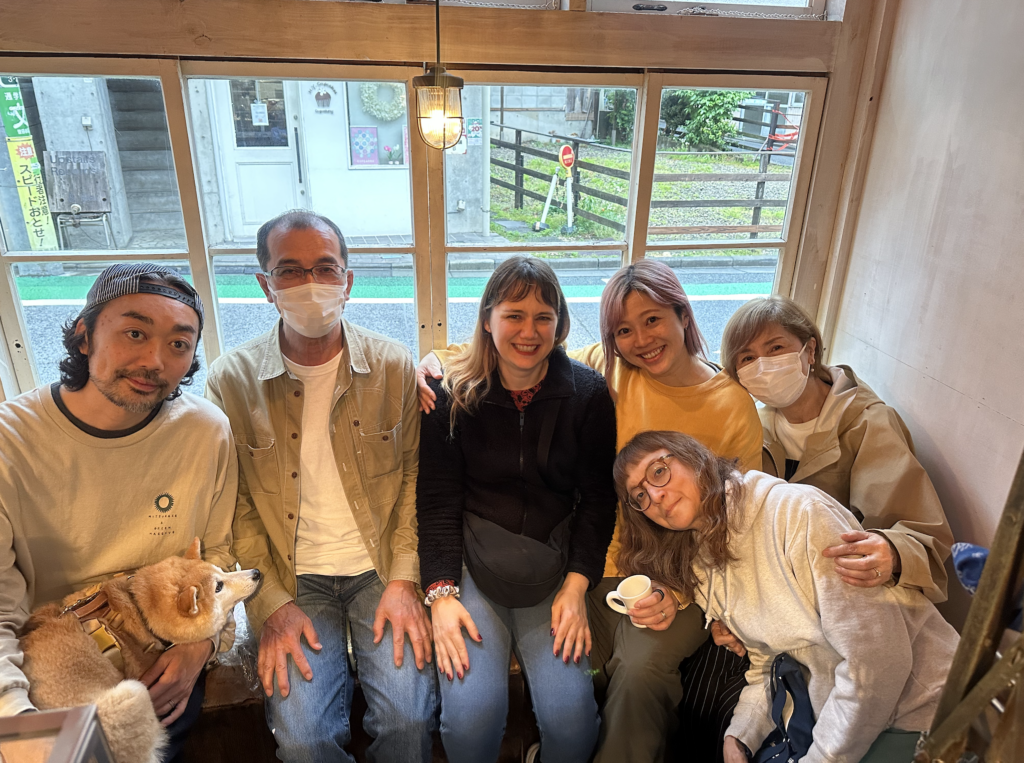
With my Japanese friends in Shimokitazawa, Photo by Tokyo Becky
The Three Core Requirements
Every permanent residency application in Japan rests on three legal pillars under the Immigration Control and Refugee Recognition Act:
- Good conduct — You follow the law and live a socially acceptable life. Criminal records, serious traffic violations, or repeated immigration breaches hurt your case.
- Independent livelihood — You (or your household) can support yourself without relying on public assistance.
- National interest — Your permanent stay must actively and concretely benefit Japan.
Spouses and children of Japanese nationals, permanent residents, or special permanent residents are usually exempt from the first two requirements. Refugees and those granted complementary protection skip the independent-livelihood test.
The October 2026 revision makes the second and third pillars stricter and more specific.
What’s Already Changed (October 1, 2026)
Higher Application Fee
The permanent residency fee rose from ¥10,000 to ¥200,000. This applies to applications received on or after October 1, 2026. Other residence-status fees also increased. The fee is still paid with a revenue stamp only if your application is approved.
New Income Standard
The old informal benchmark of roughly ¥3 million per year for a single person is gone. Your household’s annual income must now continuously exceed the average income of Japanese households of the same size.
Recent figures put the average Japanese household income around ¥5.75 million. Single working households average closer to ¥4.5 million. Household size includes dependents you support even if they live abroad. Income earned by family members on non-work statuses (such as Dependent visas) generally does not count toward the total.
This income rule already applies to applications filed on or after April 1, 2026 that were still under review on October 1, and to all new applications going forward for people subject to the independent-livelihood requirement.
What’s Coming on April 1, 2027
Pension Projection Requirement
You’ll need to show that your expected future pension benefits match what someone would receive after 30 years of enrollment in the Employees’ Pension Insurance at the required income level. If there’s a shortfall, financial assets can help close the gap. The asset amount needed is lower for younger applicants. Assessment is usually done on a household basis.
Japanese Language Ability
Most applicants will need to demonstrate Japanese at the “independent user” level, CEFR B1 or equivalent. This is roughly JLPT N3 or higher, depending on the test. Certain groups are exempt, including Highly Skilled Professionals and their families, people who completed at least six years of Japanese elementary or secondary education, and some Japan-born children of permanent residents. Until now, there has been no language test required for permanent residency. This requirement alone will likely greatly reduce the number of applicants who will shy away from these requirements.
Understanding of Japanese Systems and Rules
Immigration will check whether you understand everyday systems and social rules mainly using the official Life and Work Guidebook. The exact method of assessment will be set by the Immigration Services Agency. This is also a new requirement. No such previous test was required.
Children’s School Attendance
If you have children of compulsory school age, they are expected to attend elementary or junior high school. Non-attendance is treated as a negative factor.
Longer Waiting Periods for Spouses and Children
- Spouses of Japanese nationals, permanent residents, or special permanent residents: genuine marriage of five years plus three years of continuous residence in Japan (up from three years of marriage and one year of residence).
- Qualifying children: three years of continuous residence (up from one year).
The standard 10-year continuous residence rule (including at least five years on a qualifying work or residence status) stays the same for most other applicants. Highly Skilled Professional fast tracks remain unchanged: one year with 80 points or more, or three years with 70 points or more.
Other National-Interest Factors
Past tax, pension, or health-insurance delinquencies, even if later paid, are more clearly treated as negative. Long absences from Japan (a single trip of six months or more, or a total of two years and six months or more within the previous 10 years without good reason) also count against you. You still need to hold the maximum available period of stay for your current status, though a transitional rule softens this for applications filed by March 31, 2027.
Residency Periods at a Glance
| Your Situation | Apply by March 31, 2027 | Apply from April 1, 2027 |
|---|---|---|
| Most work visas | 10 years continuous (5+ years on qualifying status) | Same |
| HSP 80+ points | 1 year | Same |
| HSP 70+ points | 3 years | Same |
| Spouse of Japanese/PR | 3 years marriage + 1 year residence | 5 years marriage + 3 years residence |
| Child of Japanese/PR | 1 year continuous | 3 years continuous |
| Long-Term Resident | 5 years | Same |
Documents You’ll Typically Need
Requirements vary by your status and family situation, but expect to prepare:
- Permanent residence application form
- Recent photo (4 cm × 3 cm)
- Passport and residence card
- Certificate of residence (jūminhyō) for the household
- Reason statement (riyūsho) written in Japanese
- Employment certificate or business documents
- Tax certificates for recent years (often five years)
- Pension and health-insurance payment records
- Income proof
- Guarantor documents (still commonly requested)
- Marriage or family-relationship evidence if applying as a spouse or child
- Points calculation sheets if using the HSP route
From April 2027, you will need to add proof of Japanese language ability and any required evidence related to systems knowledge or children’s schooling. My biggest piece of advice is to start collecting tax and social-insurance records early. Incomplete or late payment histories are a frequent reason for refusal.
Practical Steps You Can Take Right Now
Check whether filing before or after April 1, 2027 makes a meaningful difference for your situation. Build a clear record of household income above the Japanese average and keep it steady for several years. Clear any outstanding taxes, pension, or insurance premiums and stay current going forward. Limit long trips abroad so you don’t trigger the new absence thresholds. Even if you plan to apply before next April, improving your Japanese to B1 level strengthens your case now and prepares you for the formal requirement later. Finally, consider having a qualified administrative scrivener or immigration specialist review your timeline and documents. The guidelines stress individual assessment, and small details can matter.
Conclusion
Japan’s permanent residency system is now more rigorous, with higher financial expectations, clearer language and integration standards, and a significantly higher application fee. The October 2026 changes already affect income assessment and cost, and the full set of new requirements for most applicants will take effect in April 2027.
These updates reflect the government’s focus on self-sufficient, well-integrated permanent residents. For many people already living and working in Japan, permanent residency remains within reach if you plan carefully and document thoroughly. Review your own residence history, income trajectory, tax and insurance records, and language level against the current and upcoming rules. Gather your documents early, and get professional advice if your situation has any complexity.
The window before April 2027 still offers some flexibility on language, pension, and spouse timelines. Use the coming months wisely. Permanent residency continues to offer real advantages, unrestricted stay and work, greater stability, and easier access to loans and housing, but success now depends more than ever on preparation and meeting the raised bar.
Unfortunately, these new Japan permanent residency requirements are going to prevent some hard-working but lower paid Japanese residents from applying. Although I believe that working hard for ten years on a work visa in Japan, making all tax payments, and integrating into Japanese society should be enough to allow someone to be granted permanent residency, I understand that Japan only wants to prevent foreign residents from breaking Japanese law and grant permanent residency to those dedicated to integration and hard work. At the same time, I hope that these new Japan permanent residency requirements do not make foreigners feel more unwelcome and marginalized as Japanese residents.
If you are interested in learning more about moving to Japan, which will start the road to permanent residency, check out my article here.





0 Comments