
Sapporo is Hokkaido’s biggest city, but some of the island’s most spectacular scenery is waiting just outside the city limits. The best day trips from Sapporo cover an extraordinary range: lavender fields in Furano, the electric blue of the Shakotan coast, volcanic valleys in Noboribetsu, and the historic canal streets of Otaru. In summer, the whole region bursts into color and the cooler Hokkaido climate makes it one of the most comfortable places to be in Japan. These are the eight escapes to put on your list.
By Tokyo Becky
What Makes Sapporo Such a Great Base for Day Trips?
Hokkaido is Japan’s northernmost main island and its largest prefecture. In summer, it is arguably the best place in Japan to be. While the rest of the country gets stiflingly hot, Hokkaido stays cool, green, and relatively uncrowded compared to the tourist trail of Kyoto or Tokyo. Sapporo sits roughly in the center of the island’s southern half, which puts it within easy reach of national parks with volcanoes, lavender-blanketed farmland, wild coastal peninsulas, and charming old port cities.
Most of these day trips are doable by public transport, and the JR Hokkaido Pass (available in 3-, 5-, or 7-day versions) covers several key routes including Otaru, Noboribetsu, Asahikawa, and Lake Toya. That being said, for the most flexibility, especially in Furano and Biei, a rental car genuinely transforms the experience.
Affiliate disclosure: This post may contain affiliate links. If you make a purchase through one of these links, I may earn a commission at no extra cost to you.
Where to Stay in Sapporo
All of these day trips are best done from a base in Sapporo. Staying near Sapporo Station or Susukino keeps you close to the rail and bus connections you will need.
1. Otaru: An Easy Day Trip from Sapporo
For your quickest day trip out of Sapporo, Otaru is your answer and one of the most satisfying. The historic port city sits on Hokkaido’s southwestern coast, just 30 to 40 minutes from Sapporo Station by train on the JR Hakodate Main Line. A one-way ticket costs around 800 yen. Trains run roughly every 15 minutes throughout the day, so there is no need to plan too far ahead.
The Otaru Canal is the city’s most photographed landmark: a 1.1-kilometer waterway lined with red-brick Meiji-era warehouses, now home to cafes, glass workshops, and wine bars. In summer, the green ivy covering the buildings makes the whole scene feel almost impossibly picturesque. The canal is a 10- to 15-minute walk from Otaru Station.
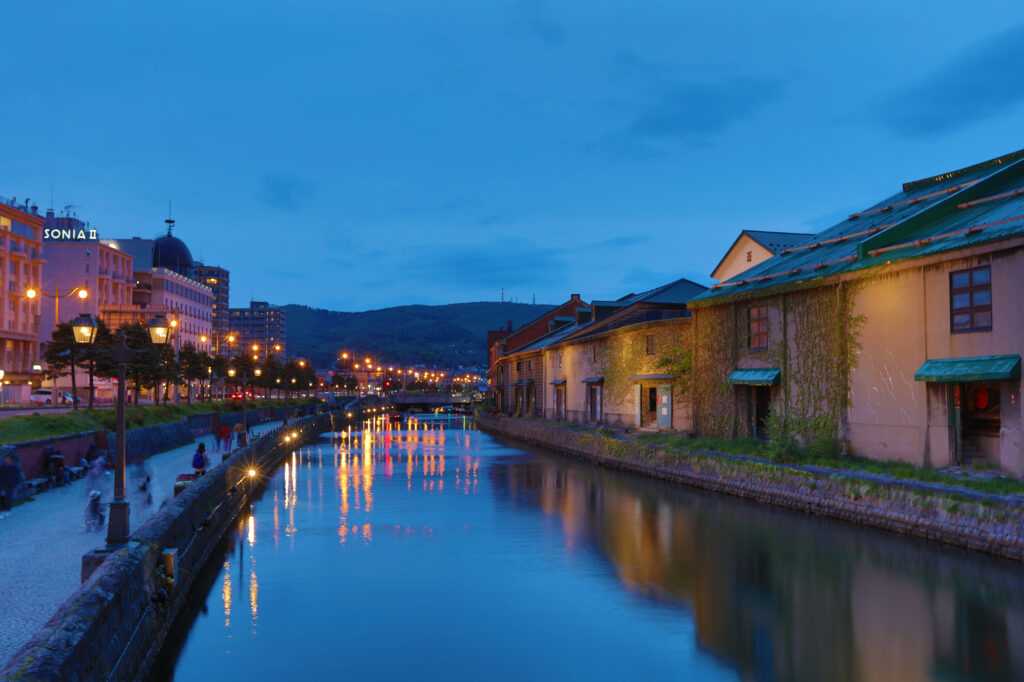
A night view of the Old Canal in Otaru, Japan,
What to Do in Otaru in Summer
Start at Sankaku Ichiba Market near the station for an early Hokkaido-style breakfast of fresh seafood. Then, head to the canal district and wander Sakaimachi Street, which is lined with glassware studios, music box makers, and old merchant buildings. Otaru is famous for its handblown glass and music boxes. The Otaru Music Box Museum (Orgel-do) is worth a stop even if you do not buy anything. End the day at one of the local sushi restaurants for some of the freshest nigiri in Japan.
If you have extra time, take the Tenguyama Ropeway up Mt. Tengu for panoramic views over the city and the Sea of Japan. On a clear summer evening, the view is exceptional. The ropeway is a short bus or taxi ride from the canal area.
When Is the Best Time to Visit Otaru in Summer?
Otaru is one of the best day trips from Sapporo at any point during summer, since its main attractions are canal streets, shops, and seafood rather than seasonal blooms. That said, June is a particularly pleasant time to visit: the city is quieter before peak tourist season hits, temperatures are mild and comfortable, and the canal-side ivy is a fresh, vivid green. July and August bring larger crowds, especially on weekends, but the long daylight hours mean you can easily stay into the evening, when the canal area takes on a more atmospheric golden light. If you want the most relaxed version of Otaru, aim for a weekday in June or early July.
Train (recommended): JR Hakodate Main Line from Sapporo Station to Otaru Station. Rapid trains take about 30 to 35 minutes; local trains take about 45 to 50 minutes. One-way fare around 800 yen. Covered by the JR Hokkaido Pass.
Bus: Hokkaido Chuo Bus from Sapporo Station Bus Terminal to Otaru Station Bus Terminal. Around 65 minutes, fare around 730 yen one-way.
Car: About 50 minutes via the Hokkaido Expressway, toll approximately 1,020 yen each way.
Book an Otaru Day Tour from Sapporo
Prefer a guided experience? Otaru tours from Sapporo often combine the canal, Tenguyama Ropeway, and local seafood stops in a single easy day.
2. Furano and Biei: Japan’s Famous Lavender Fields!
The Furano and Biei combo is the summer day trip from Sapporo that everyone wants to do and for good reason. These two towns in central Hokkaido are home to the most photographed flower fields in Japan. Furano is best known for its lavender, which peaks in early July and typically holds through late July into early August. Biei, about 30 minutes north of Furano, is famous for its rolling patchwork hillsides and the iconic Shirogane Blue Pond (Aoi Ike).
Farm Tomita – The Most Famous Lavender Farm in Hokkaido
Farm Tomita in Nakafurano is the most famous lavender farm in Hokkaido. Its sloping fields hold rows of purple lavender backed by blue sky, a scene that has graced countless travel magazines and social media feeds. Beyond lavender, the farm grows poppies, marigolds, salvia, and more, so the fields are colorful well beyond the main lavender peak. Entry to Farm Tomita is free. The farm is a 25-minute walk from Naka-Furano Station or a short taxi ride.
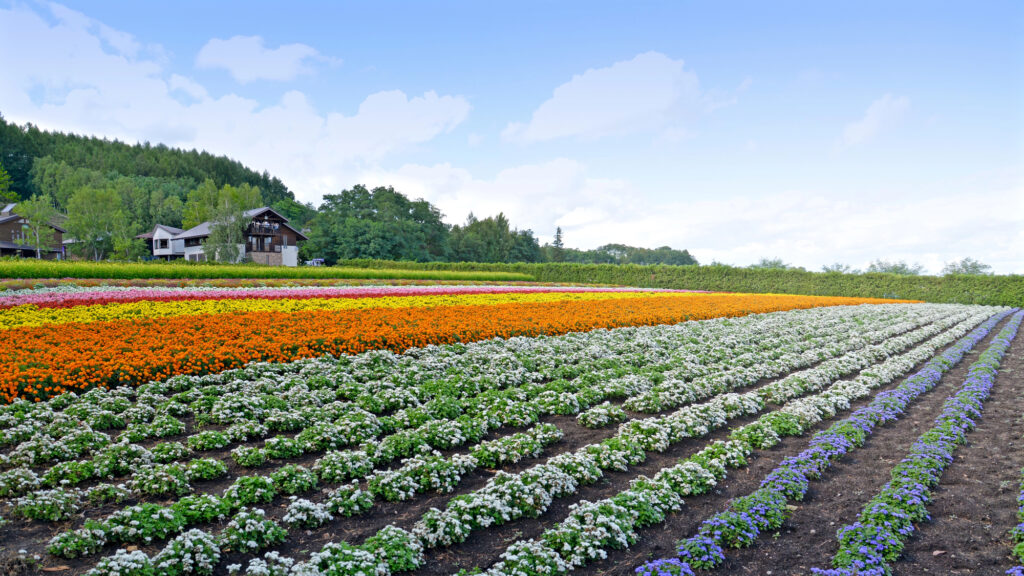
Farm Tomita, Furano, Hokkaido, Japan,
The Blue Pond in Biei: Is It Worth Visiting?
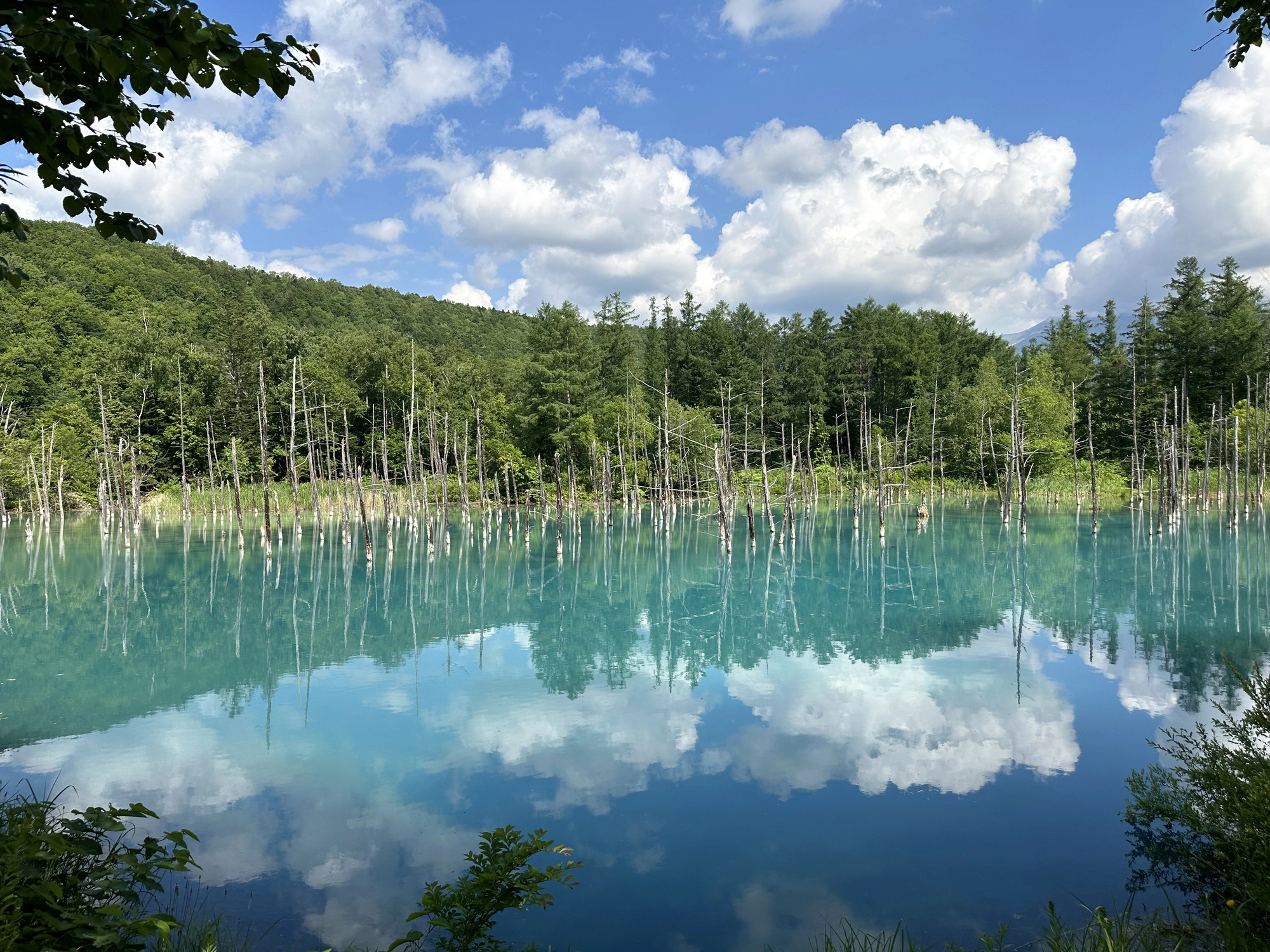
The Shirogane Blue Pond (Aoi Ike) in Biei is genuinely striking. Its electric cobalt-blue color comes from aluminium hydroxide particles that occur naturally in the water. The color shifts subtly depending on the season, the weather, and the time of day. There is a small parking area and viewing walkway. Access by public bus from Biei Station has improved in recent years, but a car or guided tour still makes combining Furano and Biei in a single day much easier.
Other Biei highlights include Shikisai-no-Oka (a hill of multicolored flower patches with great views) and Patchwork Road, which is a scenic driving route through the rolling fields.
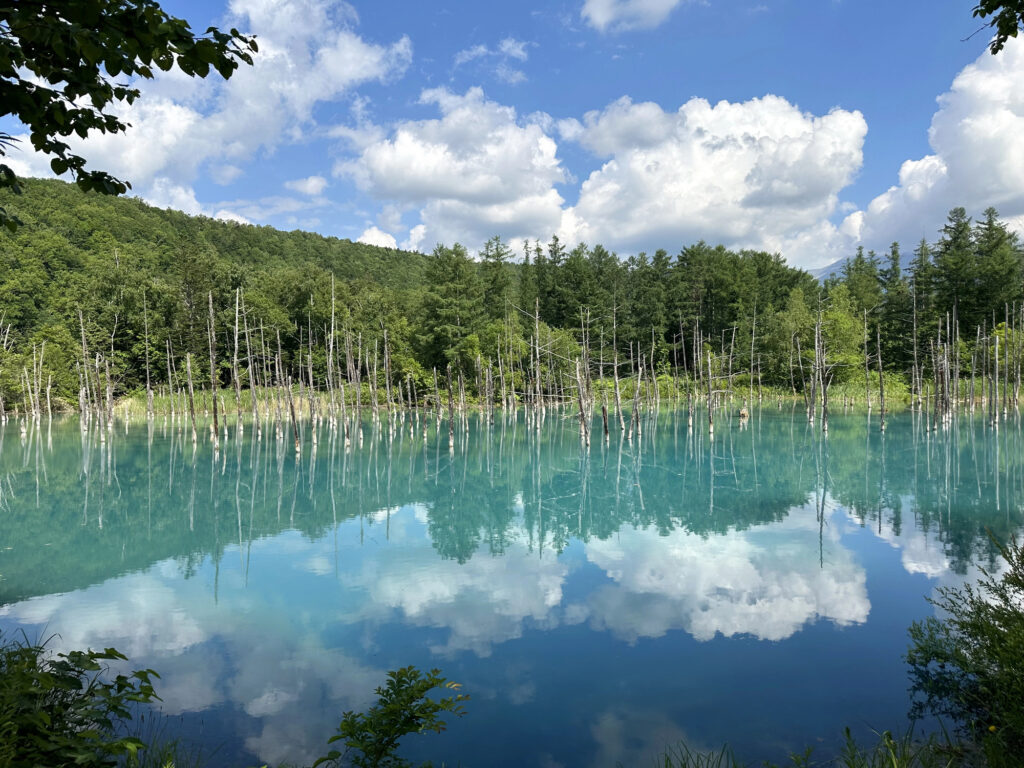
Shirogane Blue Pond (Aoi Ike), Biei, Hokkaido,
When Is the Best Time to Visit Furano and Biei in Summer?
Early July is the sweet spot for this day trip. The lavender at Farm Tomita typically hits peak season in the first two weeks of July, which is when the hillsides are at their most vivid purple and the farm is at its most photogenic. If you visit in late June, the lavender may still be coming in, although other flowers are already in full bloom. By early August, the lavender is fading but poppies, sunflowers, and salvia keep the fields colorful. The Blue Pond in Biei looks striking throughout the summer. Crowds are at their thickest in July during lavender peak, so arriving early in the morning, before tour buses fill the parking areas, makes a big difference.
Car (recommended for combining both): About 2 hours from Sapporo via the Hokkaido Expressway. Allows you to cover Farm Tomita, the Blue Pond, and Shikisai-no-Oka in a single day.
Train: JR from Sapporo, transferring at Takikawa or Asahikawa, takes about 2 to 2.5 hours to Furano. In summer, the seasonal Furano Lavender Express runs direct from Sapporo on select dates; seat reservations are mandatory and it is covered by JR passes.
Guided day tour: The most practical no-car option. Tours depart from Sapporo and cover Farm Tomita, the Blue Pond, and Shikisai-no-Oka with transport included. Book on Viator or Klook.
Book a Furano and Biei Day Tour from Sapporo
Not renting a car? A guided day tour from Sapporo takes all the logistics out of visiting Furano and Biei, covering Farm Tomita, the Blue Pond, and Shikisai-no-Oka with transport included.
Book a Day Tour from Sapporo to Furano and Biei in a private car
3. Noboribetsu: Welcome to Hell Valley
Noboribetsu is Hokkaido’s most famous hot spring town, and its centrepiece is Jigokudani, which translates directly as Hell Valley. This volcanic crater is full of steaming vents, sulfurous pools, grey rock, and bubbling orange-tinted earth. Entry to the valley itself is free, and a network of well-maintained boardwalks lets you walk safely through the steam. It is genuinely dramatic and absolutely worth the trip.
From Jigokudani, a longer hiking loop leads to Lake Oyunuma, a natural hot spring lake that never freezes, and the Oyunuma River Natural Footbath, where you can soak your feet in a warm outdoor stream running through the forest. Allow at least two to three hours for the full loop.
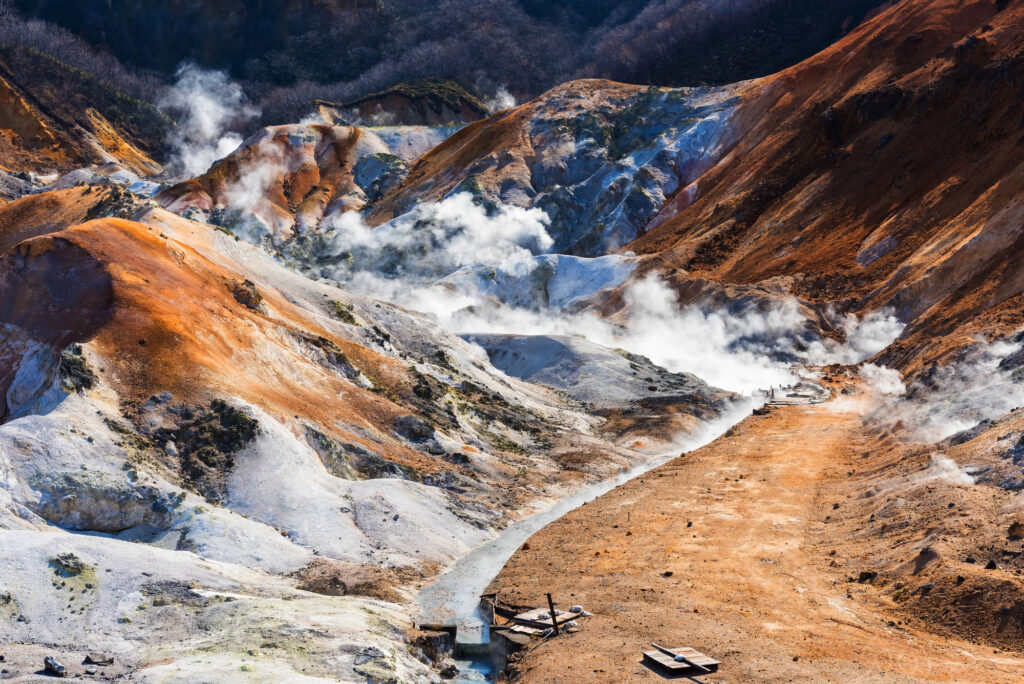
Noboribetsu Hot Spring or Jigokudani Hell Valley,
Visit a Day Onsen in Noboribetsu
After the valley walk, a soak in one of Noboribetsu’s famous onsen is the ideal way to end the day. The Dai-ichi Takimotokan is one of the most well-known options for day visitors. Its baths draw water from seven different hot spring sources within Hell Valley itself. Day-use rates are around 2,250 yen for adults (9:00 am to 6:00 pm) and around 1,100 yen for children. Check the official website for current rates before visiting.
When Is the Best Time to Visit Noboribetsu in Summer?
Noboribetsu is a rewarding day trip in every month of summer. June is a particularly comfortable time to visit: the humidity is low, the forest trails are lush and green, and the crowds are smaller than in peak July and August. The Hell Valley boardwalks and the Oyunuma footbath loop are pleasant to walk in mild temperatures. July and August are the busiest months, with more organized tours and visitors, but the long days give you plenty of time to explore at a relaxed pace before your onsen soak. The Jigoku Festival (Hell Festival) takes place in late August each year, if you want to time your visit to coincide with some local atmosphere and demon-themed street theater.
Train (recommended): Limited Express Suzuran or Hokuto from Sapporo Station to JR Noboribetsu Station. Journey time approximately 1 hour 15 minutes; fare approximately 2,000 to 3,500 yen one-way. Covered by the JR Hokkaido Pass. Then take the Donan Bus from Noboribetsu Station to Noboribetsu Onsen bus terminal (about 15 minutes, around 350 to 450 yen; not covered by JR passes).
Highway bus: Direct Donan Bus service from Sapporo Station Bus Terminal. Travel time about 1 hour 40 minutes; fare approximately 2,100 to 3,000 yen.
Book a Noboribetsu Day Tour from Sapporo
Guided tours to Noboribetsu from Sapporo typically cover Hell Valley, the Oyunuma footbath, and an onsen soak all in one day.
4. Lake Toya: A Caldera Lake Surrounded by Mountains
Lake Toya (Toyako) is one of the great natural spectacles in Hokkaido. Formed by a volcanic explosion, this circular caldera lake is ringed by mountains including the still-active Mount Usu, which last erupted as recently as 2000. The Showa Shinzan volcanic dome nearby is another reminder that this is living geology. On a clear summer day, the lake is serene and deeply blue, with the island of Nakajima visible at its center.
In summer, Lake Toya is best known for its nightly fireworks festival. The Toyako Long-Run Fireworks show fires every night from late April through October, making it an unusually rare experience: a fireworks display you can watch on a Tuesday evening in July without any special occasion to celebrate. It runs from 8:45 pm and typically lasts for 20 minutes.
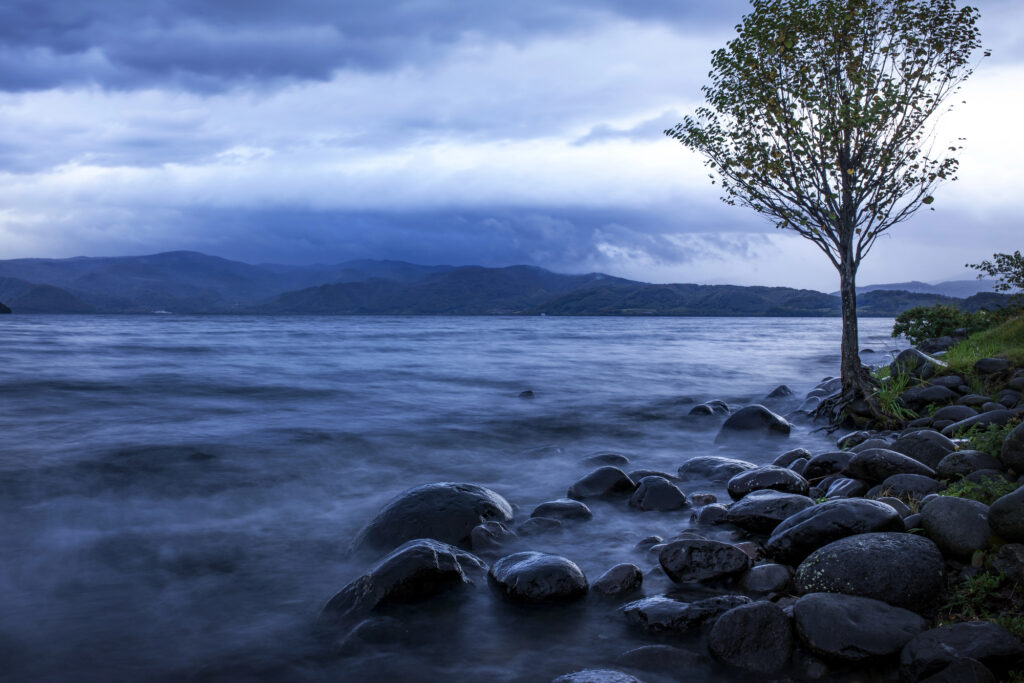
Lake Toya, Hokkaido,
How to Combine Lake Toya and Noboribetsu
Lake Toya and Noboribetsu sit within the same Shikotsu-Toya National Park and are commonly combined on a single day trip from Sapporo, especially via a guided tour. By car, the drive between the two takes about 40 minutes. Several organized tours from Sapporo cover Hell Valley, the Showa Shinzan volcanic dome, and Lake Toya in one departure.
When Is the Best Time to Visit Lake Toya in Summer?
Lake Toya is lovely throughout the summer months, but July and August offer the fullest experience. The Toyako Long-Run Fireworks run every evening from late April through October, so any summer visit gives you the option to stay for the show. If you plan to take a boat out on the lake or do a scenic walk along the shore, July and August have the most stable weather. June is cooler and less crowded, making it a good choice if you prefer a quieter atmosphere. The Mount Usu ropeway and volcanic walking trails around Showa Shinzan are open all summer and are best visited on a clear day for the most dramatic views.
Train: Limited Express Hokuto from Sapporo Station to Toya Station (about 1 hour 40 minutes). Covered by the JR Hokkaido Pass. From Toya Station, local buses run to the lake shore (about 20 minutes).
Car: About 1 hour 45 minutes via the Hokkaido Expressway.
Guided tour: Multiple operators run combined Noboribetsu and Lake Toya day tours from Sapporo.
5. Jozankei: Is This Hot Spring Town Worth a Day Trip from Sapporo?
Jozankei is Sapporo’s own backyard onsen town tucked into a forested gorge along the Toyohira River just 26 kilometers south of the city. It is sometimes called “Sapporo’s Annex” because of how close it is: roughly one hour by bus from Sapporo Station. With over 50 natural springs producing mineral-rich sodium chloride waters, it is an ideal half-day or full-day onsen escape without needing an overnight stay.
Most ryokans and hotels in Jozankei offer one-day onsen visits, which are typically priced at around 1,000 to 2,000 yen per person. You can soak for a few hours and still be back in Sapporo for dinner. The Futami Suspension Bridge trail gives views over the river gorge, and there are free foot baths along the riverside for those who want a taste without committing to a full onsen.
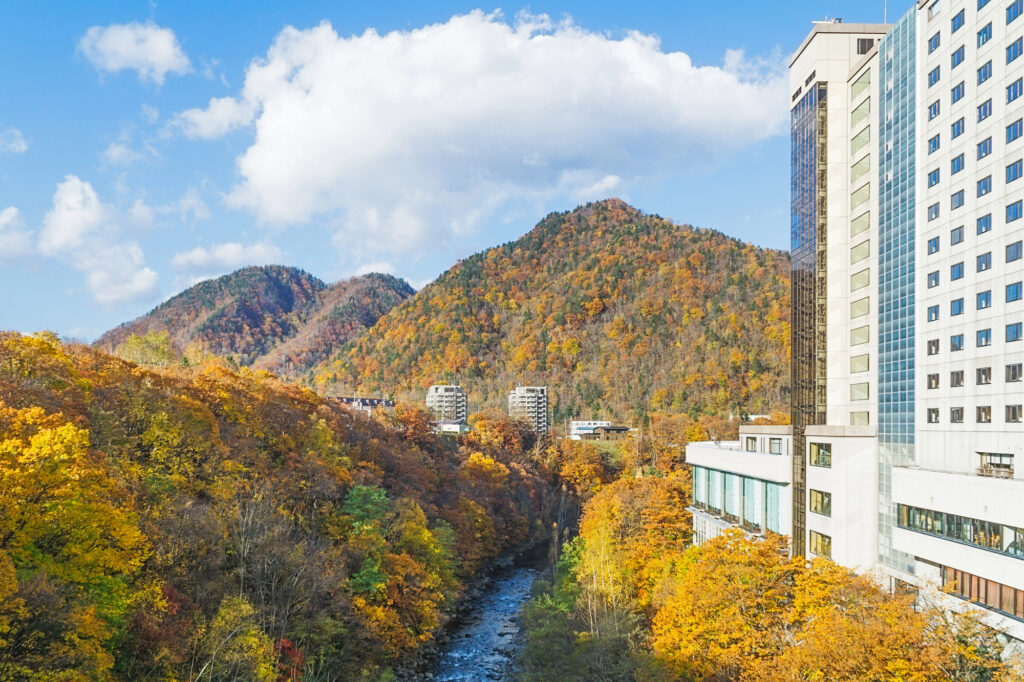
Jozankei, Hokkaido, Japan,
The Hill of the Buddha: A Hidden Gem Near Jozankei
On your way to or from Jozankei, consider stopping at the Hill of the Buddha (Makomanai Takino Cemetery) in southern Sapporo. A 13-meter stone Buddha head emerges from a hillside, designed by legendary architect Tadao Ando. In summer, the surrounding hill is covered in lavender. It is one of Hokkaido’s most genuinely surprising sights and is often overlooked by first-time visitors.
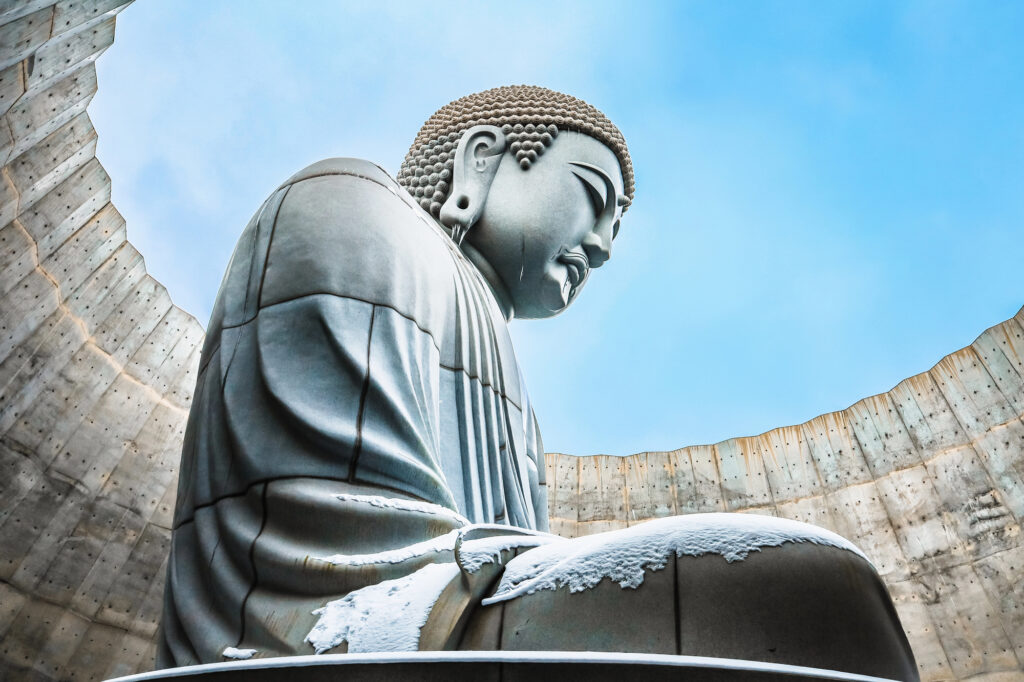
The Hill of the Buddha, Hokkaido, Japan,
When Is the Best Time to Visit Jozankei in Summer?
Jozankei is a good day trip option throughout the entire summer, but June and early July are especially pleasant. Temperatures are comfortable, the gorge is at its greenest, and the onsen experience feels more restorative when the air is fresh rather than hot. July and August are busier, particularly on weekends when Sapporo residents head to the mountains for a cool break from the city. If you are combining Jozankei with a stop at the Hill of the Buddha, note that the lavender surrounding the Buddha is typically in bloom in July, so this combo works especially well in the middle of summer.
Bus (easiest option): Jotetsu Bus No. 7 or No. 8 from Sapporo Station Bus Terminal, bound for Jozankei Onsen. Journey time approximately 1 hour to 1 hour 15 minutes. No train service to Jozankei.
Car: About 45 minutes to 1 hour from central Sapporo.
Book a Jozankei Onsen Day Tour
6. Lake Shikotsu: The Second Deepest Lake in Japan
Lake Shikotsu is the second-deepest lake in Japan and one of the clearest. Unlike Lake Toya, which has a more developed resort shoreline, Shikotsu feels wilder and more remote. Located in Shikotsu-Toya National Park roughly 50 kilometers south of Sapporo, it is surrounded by volcanic peaks including Mount Tarumae to the south and Mount Eniwa to the north.
In summer, the lake is a popular spot for kayaking, canoeing, snorkeling, and scuba diving in unusually clear fresh water. The Shikotsu Wild Bird Nature Path is excellent for birdwatching. Hikers can climb Mount Tarumae, which takes about three to four hours round trip and rewards with views of the lake and an eerie lava dome at the summit.
There is no direct public train to Lake Shikotsu. The most practical options are a seasonal bus tour from Hokkaido Chuo Bus, a rental car, or a combined guided tour from Sapporo. The drive from Sapporo takes about one hour via Route 453.
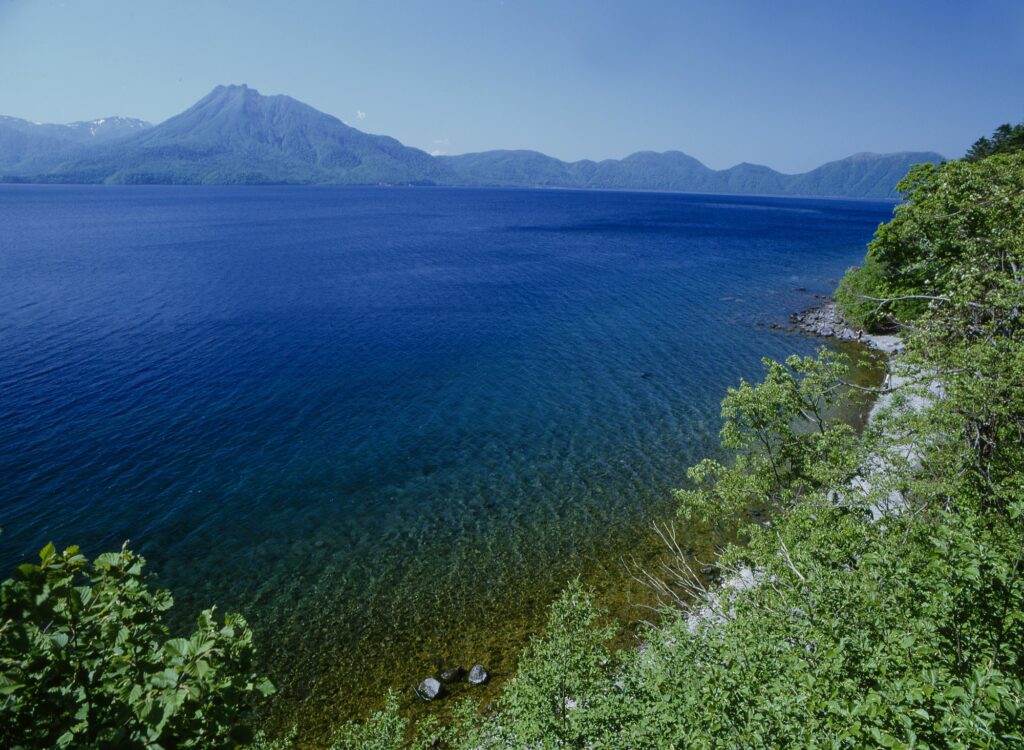
Lake Shikotsu. Hokkaido, Japan,
When Is the Best Time to Visit Lake Shikotsu in Summer?
July and August are the prime months for Lake Shikotsu. Water temperatures are at their warmest for kayaking, canoeing, and snorkeling, and all outdoor activity operators are fully running. The lake’s extraordinary clarity is visible throughout the summer, but it it at its most amazing on sunny days when the water reflects the surrounding volcanic peaks. June is a good option if you prefer quieter trails and a more peaceful lakeside experience. The Mount Tarumae hiking season runs from roughly June through October, with July and August offering the most reliable trail conditions and the best summit visibility.
Book a Lake Shikotsu Day Tour from Sapporo
Visit Sapporo’s clearest lake and experience the serenity of Marukoma Onsen, where you enjoy the lake views while relaxing in a hot spring. Taste the delicious Hime Masu cuisine and ice cream at the lake.
7. Asahiyama Zoo: One of the Best Zoos in Japan
Asahiyama Zoo in Asahikawa is Japan’s northernmost zoo and attracts over 10,000 visitors a day during peak times of the year. The zoo’s reputation was built on a simple but radical idea: design enclosures that let animals move the way they actually move in the wild rather than pacing in cages. The result is a series of Action Exhibits that put visitors and animals at eye level in ways that feel genuinely unexpected.
Penguins swim through a clear underwater tunnel at head height. Polar bears press their noses against glass panels right in front of your face. Snow leopards pad along overhead walkways above the path. For families, it is one of the best days out in all of Hokkaido. For travelers without children, it is still remarkably good.
Summer opening hours run from 9:30 am to 5:15 pm (last admission 4:00pm) between late April and mid-October. Admission is 1,000 yen for adults and free for junior high school students and younger. Budget about two to three hours to see the main exhibits at a relaxed pace.
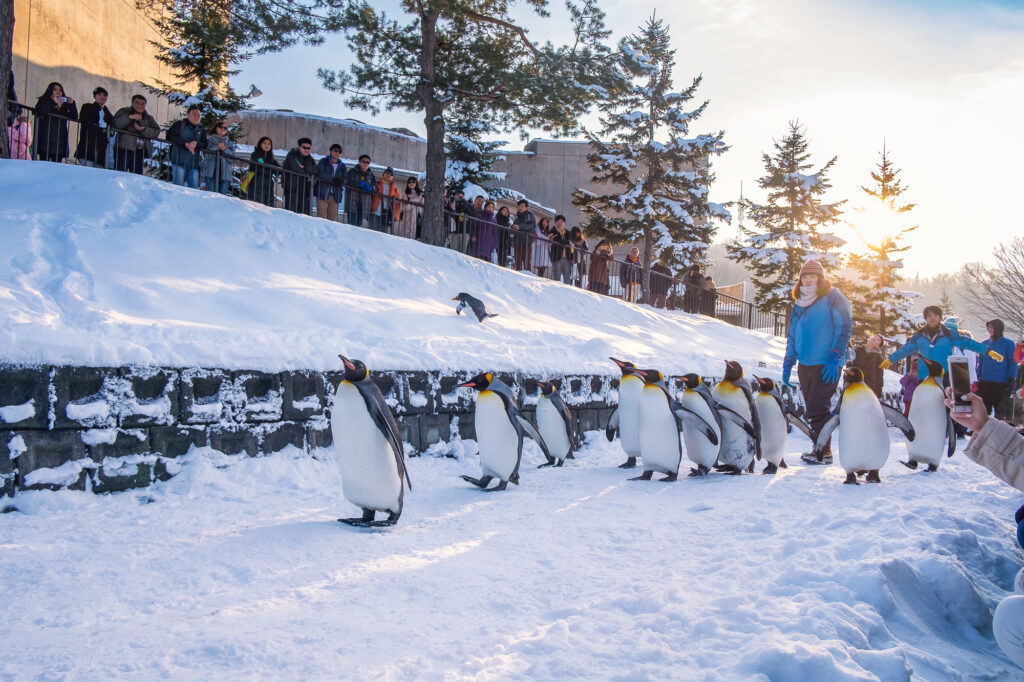
Parade of the penguins in winter at the Asahiyama Zoo,
When Is the Best Time to Visit Asahiyama Zoo in Summer?
The zoo is open all summer, but the timing of your visit within the day matters more than the month. The zoo gets very busy on weekends and national holidays in July and August, with peak crowds arriving between 10am and 2pm. If visiting in peak season, aim to arrive at opening (9:30am) to see the enclosures before crowds build. June is a quieter month overall, and the animals are just as active. The outdoor exhibits and the overhead snow leopard walkway are best experienced in dry, clear weather, so check the forecast before making the trip from Sapporo. Keep in mind that Asahikawa sits further inland than Sapporo and can be slightly warmer on hot summer days.
Train + bus: JR Limited Express from Sapporo Station to Asahikawa Station (approximately 1 hour 25 minutes; covered by JR Hokkaido Pass), then Asahiyama Zoo Line bus (routes 41, 42, or 47) from Asahikawa Station to the zoo (approximately 40 minutes, around 500 yen).
Highway bus (seasonal): Direct buses from Sapporo Station Bus Terminal to Asahiyama Zoo during peak tourist season. Departs at 7:30am and 9:30am.
Car: About 2 hours from Sapporo. Parking on site.
Book an Asahiyama Zoo Day Tour from Sapporo
Book a day tour from Sapporo to Asahiyama Zoo combined with a Furano and Biei bus tour.
Visit Asahiyama Zoo + Furano and Biei together with this tour
8. Shakotan Peninsula: Hokkaido’s Most Stunning Coastline
The Shakotan Peninsula is the day trip from Sapporo that genuinely catches people off guard. Jutting out into the Sea of Japan on Hokkaido’s western coast, it is a mountainous headland of dramatic sea cliffs, hidden coves, and water so transparently blue it has earned its own name: Shakotan Blue. This is not the Japan most visitors expect. It looks more like parts of the Mediterranean than a northern island.
Cape Kamui: The Legendary Tip of the Peninsula
Cape Kamui is the most famous point on the peninsula. A 770-meter walking path called Charenka’s Path leads out to the cape’s tip, with dramatic open sea views on both sides. The walk takes about 20 minutes each way and includes some steep sections, but the 300-degree panorama at the end is worth every step. Note that the path was historically off-limits to women due to an old fishing superstition. A sign marking this legend still stands at the entrance today.
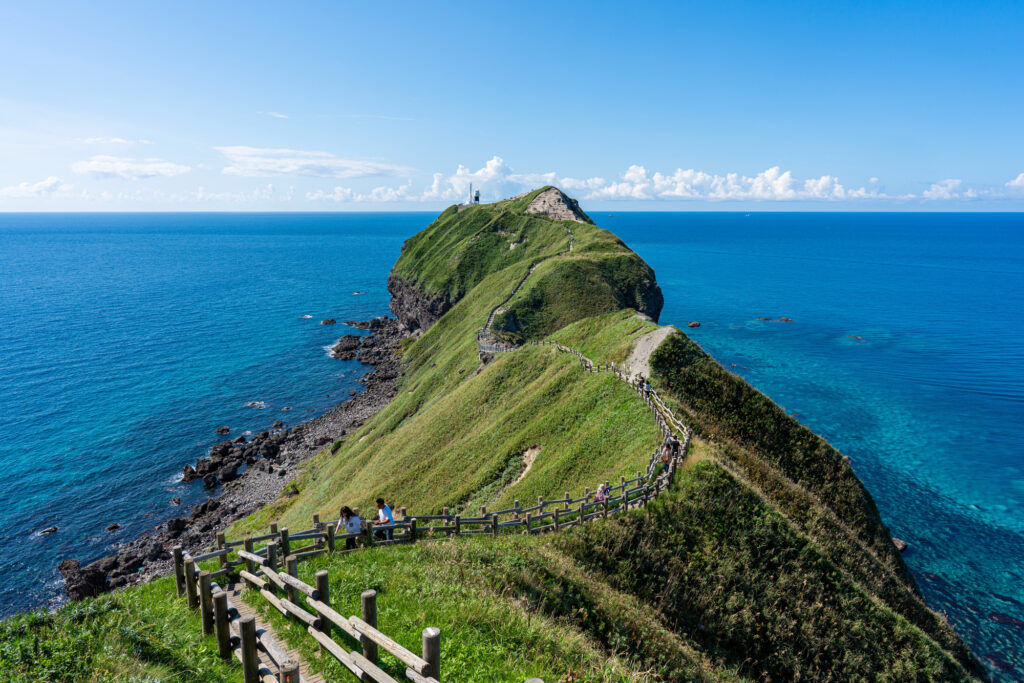
Cape Kamui, Hokkaido, Japan,
Shimamui Coast and Sea Urchin Season
About 10 minutes south of Cape Kamui by car is the Shimamui Coast, selected as one of Japan’s 100 best shores. A short tunnel carved originally to transport herring leads through the cliff to an observation deck overlooking an expanse of turquoise water. The sea is so clear you can see the rock on the seafloor from above.
Shakotan is also famous for its sea urchin. From June to August, the local uni is in season and available at restaurants throughout the peninsula. A fresh sea urchin rice bowl (uni donburi) here is one of the best things you can eat in Hokkaido.
Do You Need a Car for the Shakotan Peninsula?
Essentially, yes. Public transport to the peninsula is extremely limited. Most independent travelers drive from Sapporo, which takes about 2 to 2.5 hours via Highway 229 along the scenic coast. Many visitors combine Shakotan with Otaru on the same day since Otaru is on the way. Alternatively, guided bus tours from Sapporo operate seasonally from around April to October and are the best public-transport option available.
When Is the Best Time to Visit the Shakotan Peninsula in Summer?
June to August is the window for the Shakotan Peninsula, and the sea urchin season runs squarely through all three months. The water is at its most brilliantly blue on sunny days with low cloud, so this is one trip where weather genuinely determines the experience. A grey overcast day dulls the famous Shakotan Blue considerably, so it is worth checking the forecast and being flexible if you can. July is typically the driest month in this part of Hokkaido, making it the most reliable choice for the clear skies that make the coastal scenery so spectacular. August is also excellent, with warm temperatures ideal for the Cape Kamui walk and the full sea urchin season still running. Guided tours from Sapporo typically operate from late April through mid-October, but the summer months from June to August are peak season for the peninsula.
Car (strongly recommended): About 2 to 2.5 hours from Sapporo via Highway 229. Allows you to visit Cape Kamui, Shimamui Coast, and seafood restaurants independently.
Guided tour (best public transport option): Seasonal day tours from Sapporo include transport, typically running from April or May to October. Full-day tours run about 10 to 12 hours. Book through Viator or Hokkaido Chuo Bus directly.
Book a Shakotan Peninsula Day Tour from Sapporo
A guided tour is the easiest way to reach the Shakotan Peninsula without a car. Most tours include Cape Kamui, Shimamui Coast, and a fresh sea urchin lunch.
Ready to visit the Shakotan Peninsula on a day trip from Sapporo? Book here!
How Long Does It Take to Reach Each Destination from Sapporo?
| Destination | By Train | By Car | JR Pass? |
|---|---|---|---|
| Otaru | 30 to 45 min | ~50 min | Yes |
| Jozankei | No train; bus ~75 min | ~45 to 60 min | No |
| Noboribetsu | ~1 hr 15 min + bus | ~1 hr 20 min | Yes (train only) |
| Lake Toya | ~1 hr 40 min + bus | ~1 hr 45 min | Yes (train only) |
| Lake Shikotsu | No direct train; seasonal bus | ~1 hr | No |
| Furano and Biei | 2 to 2.5 hrs (transfer required) | ~2 hrs | Yes (seasonal express) |
| Asahiyama Zoo | ~1 hr 25 min train + 40 min bus | ~2 hrs | Yes (train to Asahikawa) |
| Shakotan Peninsula | Guided tour only | ~2 to 2.5 hrs | No |
Frequently Asked Questions: Best Day Trips from Sapporo in Summer
What are the best day trips from Sapporo in summer?
The best summer day trips from Sapporo include Otaru (30 minutes by train, famous for its canal and seafood), Furano and Biei (2 hours, home to lavender fields and the Blue Pond), Noboribetsu (1 hour 15 minutes by train, known for Hell Valley and onsen), Lake Toya (1 hour 40 minutes by train), Jozankei (1 hour by bus), Lake Shikotsu (1 hour by car), Asahiyama Zoo in Asahikawa (about 2 hours by train and bus), and the Shakotan Peninsula (2 to 2.5 hours by car, famous for its electric-blue sea and fresh uni).
Do I need a car for day trips from Sapporo?
Not for every destination. Otaru, Noboribetsu, Lake Toya, Asahiyama Zoo, and Jozankei are all reachable by train or bus from Sapporo. A car becomes strongly recommended for visiting both Furano and Biei in a single day, and is essentially required for the Shakotan Peninsula independently. Lake Shikotsu has no direct train service and is easiest by car or guided tour.
When is lavender season in Furano, Hokkaido?
Lavender season in Furano typically runs from late June through early August, with peak bloom in early to mid-July. Farm Tomita in Nakafurano is the most famous farm for lavender viewing and is free to enter. The fields are at their most vivid color in the first two weeks of July. Always check Farm Tomita’s official website for current conditions before visiting.
How do I get from Sapporo to Otaru?
The easiest way to get from Sapporo to Otaru is by JR train on the Hakodate Main Line. Rapid trains take about 30 to 35 minutes and cost around 800 yen one-way. Local trains take 45 to 50 minutes. Trains run roughly every 15 minutes throughout the day. The ride is covered by the JR Hokkaido Pass. You can also take the highway bus for around 730 yen, which takes about 65 minutes and arrives near the canal area.
Is Hell Valley in Noboribetsu free to visit?
Yes. Entry to Jigokudani (Hell Valley) in Noboribetsu is free of charge. The area is open around the clock, with a visitor center operating from 8am to 6pm in summer (May to October). Boardwalks give safe access to the steaming vents and sulfurous pools. The Oyunuma River Natural Footbath, where you can soak your feet in warm volcanic water, is also free. You can get a day pass to an onsen at nearby hotels such as Dai-ichi Takimotokan and pay for them separately.
How much does it cost to visit Asahiyama Zoo?
Admission to Asahiyama Zoo in Asahikawa is 1,000 yen for adults and free for junior high school students and younger. Summer opening hours run from 9:30am to 5:15pm (last admission 4:00pm) between late April and mid-October. The zoo is located in Asahikawa, about 1 hour 25 minutes by limited express train from Sapporo plus a 40-minute bus ride from Asahikawa Station.
What is Shakotan Blue?
Shakotan Blue refers to the extraordinarily clear, intensely blue color of the sea along the Shakotan Peninsula on Hokkaido’s western coast. The water is so transparent that the rocky seafloor is visible from above. The peninsula’s Cape Kamui and Shimamui Coast are the most famous spots for experiencing this color. Shakotan is also known for its fresh sea urchin, which is in season from June to August.
Is the JR Hokkaido Pass worth buying for day trips from Sapporo?
The JR Hokkaido Pass can be excellent value if you plan to take express trains to multiple destinations. It covers Otaru, Noboribetsu, Lake Toya, Asahikawa (for Asahiyama Zoo), and the seasonal Furano Lavender Express. It is available in 3-, 5-, and 7-day versions. It is not worth buying if you only plan to visit Otaru once, since a single ticket is inexpensive. It does not cover local buses at each destination, which are paid separately.
Are day trips from Sapporo worth doing in summer?
Absolutely. Summer is arguably the best time to do day trips from Sapporo. Hokkaido’s climate is cooler than the rest of Japan, so July and August are pleasant rather than brutal. The lavender fields in Furano peak in early July, the Shakotan Peninsula’s blue sea is at its most vivid, and all mountain trails and national park areas are fully open. Sapporo is an excellent base: well-connected by rail, close to diverse landscapes, and with excellent food and accommodation options.
Which of These Best Day Trips from Sapporo Should You Do First?
If you have only one day, Otaru is the easiest and most reliably satisfying choice. It is close, cheap, beautiful, and packed with great food. If you have two days and are visiting in July, make Furano and Biei your second day. The lavender is like nothing else in Japan. If you want dramatic and unique scenery, go to Noboribetsu and stand in the steam at Hell Valley before soaking in the onsen. If you have a car and a full day to spare, the Shakotan Peninsula is a gorgeous day trip.
Sapporo in summer is one of the great bases for exploration in all of Japan. The city itself is wonderful, but the countryside around it is the real reward. Enjoy it all and find yourself falling deeper in love with Japan!



0 Comments