
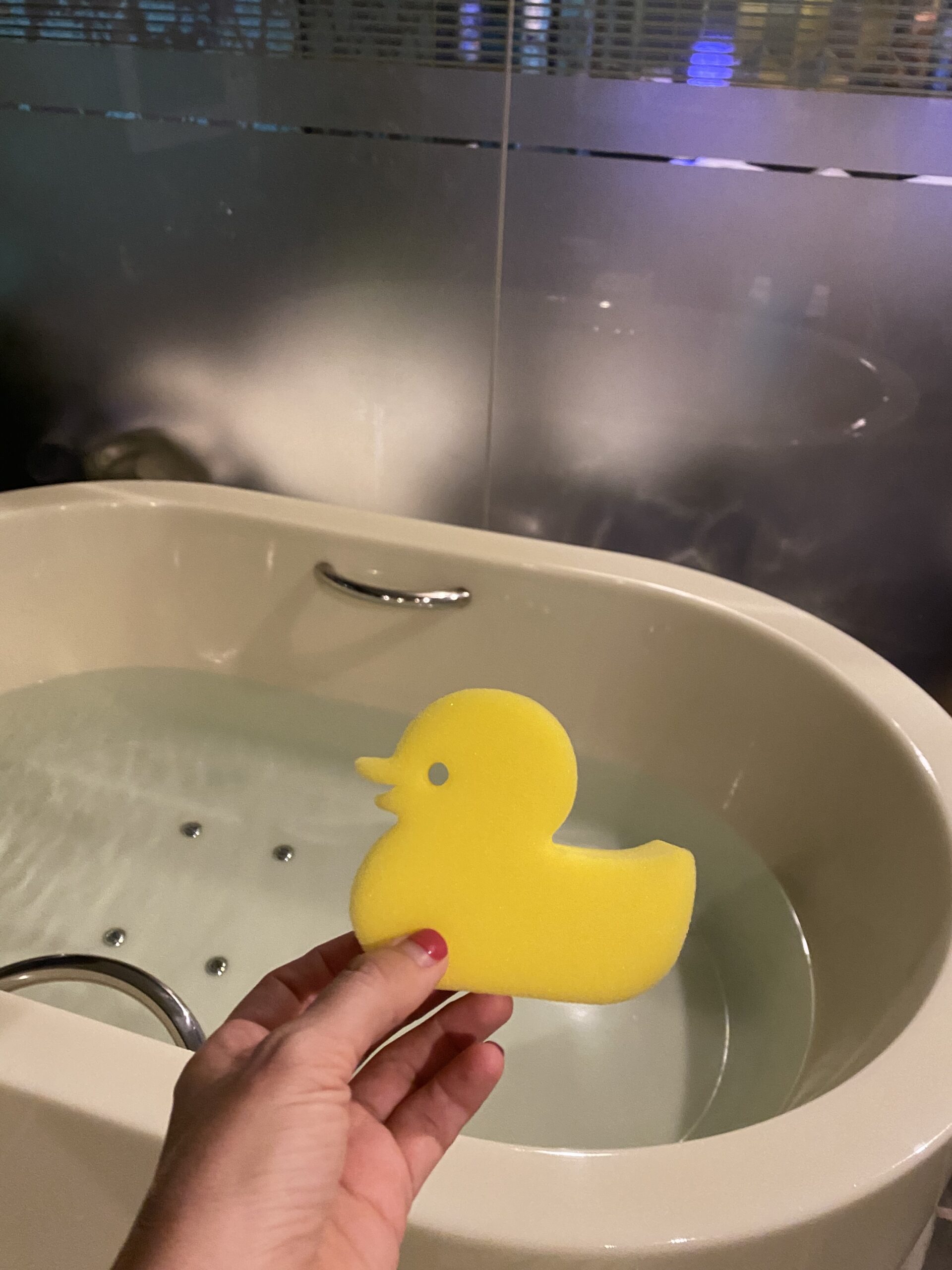
★ Quick Facts: Japan Love Hotels at a Glance
What is it?
Short-stay accommodation for couples, with hourly “rest” rates, overnight “stay” rates, and amenities you won’t find anywhere else on earth.
Japanese term
Rabuho (ラブホテル). Also listed as “fashion hotel” or “adults only” on booking platforms.
How many exist?
10,000 to 37,000 across Japan. An estimated 2.5 million people visit one every single day.
Who can stay?
Couples only at most properties. Two men are typically refused entry. Rules vary by establishment. The cameras are watching!
Cost
Rest from ¥3,000–5,000. Overnight ¥8,000–20,000. Luxury rooms cost considerably more.
Book online?
Yes. 700+ Japan love hotels list on Booking.com under “adults only.” Many offer free cancellation.
Best areas in Tokyo
Ikebukuro (highest concentration), Shinjuku/Kabukicho, and Shibuya’s Love Hotel Hill.
Need Japanese?
No. Check-in is fully automated via touchscreen photo panel. Zero language skills required.
Introduction
What Is a Love Hotel in Japan, and Why Should You Stay in One?
I have stayed in love hotels in Japan at least 10 times that I’m willing to admit. I have checked into a room with a rotating bed and mirrored ceiling in Shibuya. I have sung karaoke into a microphone at 2am in a room in just down the street from Golden Gai while wearing a costume I found hanging in the closet. I have soaked in a jacuzzi that took up roughly a third of the floor space and emerged to find individually wrapped “accessories” arranged on a shelf beside a bottle of lotion and what appeared to be a small rubber raft (which I later found out was meant for “lotion play.” Love hotels in Japan are not like anything else on earth, and once you have stayed in one, no conventional business hotel will ever feel quite the same. In fact, they can even feel fancier than 5-star hotels depending on the establishment.
A friend of mine discovered the rules of entry the memorable way. I was initially surprised because she was a conservative Christian from Texas who said things like “Oh dear” and “isn’t he precious?” One day, “Kelly” announced to all of us living in the same guest house in a Western suburb of Tokyo that she would like to experience a love hotel before she left Japan and returned to the United States. Before we knew it, a group of six of us were heading out to check into love hotels together.
To prepare for our first trip together to Shibuya, we had a Japanese speaking friend call several love hotels in the area to find out what the situation was for such a strange group. Of course, we wanted to be as prepared as possible. The information she received back was illuminating.
Affiliate disclosure: This post may contain affiliate links. If you make a purchase through one of these links, I may earn a commission at no extra cost to you.
The Rules
You cannot go into a love hotel alone.
Two men are not allowed in together.
Two women cannot enter if they are Chinese nationals, on the basis that the establishment suspects they may be sex workers.
More than two people cannot enter together under any circumstances.
The rules vary by hotel, and not all of them apply everywhere, but that phone call gave us our first real sense of what we were dealing with: a world with its own logic, its own etiquette, and its own remarkably specific policies. Welcome to love hotels in Japan.
This guide to love hotels in Japan covers everything you need to know before you go: the history of Japan love hotels, how to spot one on the street, how the check-in process works, what to expect inside the room, which amenities and themed experiences are on offer, and where to book love hotels in Tokyo and Osaka right now on Booking.com (see below).
History
A Brief History of Love Hotels in Japan
The love hotel did not appear overnight. The history of love hotels in Japan reaches back to the early Edo period (1600 to 1868), when so-called “encounter teahouses” or deai cha-ya offered discreet rooms to sex workers and their clients. These establishments evolved through the Meiji era, through post-war reconstruction, and through the economic boom of the 1960s and 70s, gradually shifting from places of professional transactions to places where ordinary couples went for privacy. Japanese homes have always been small, walls thin, and multiple generations frequently living under one roof. The love hotel filled a straightforward social need: somewhere private to go.
“The modern term ‘love hotel’ traces directly to a neon sign in Osaka in 1968, when an establishment called Hotel Love opened its doors and gave the category its name.”
The concept spread fast. By the late 1970s, love hotels had evolved from simple rooms into spectacles: castle exteriors, UFO-shaped buildings, revolving beds, jungle themes – the stranger, the better. During Japan’s economic bubble of the late 1980s and early 1990s, checking into a love hotel had become almost a ritualized step in the Japanese dating process. A professor who studied the phenomenon academically described how they shifted during this period from places where a man “took along” a companion, to places where couples made the decision together. That shift changed everything about how they were designed and marketed.
I’ll never forget the first time that I looked up love hotels in Japan and came back and a hotel called “Gang Snowman” popped up complete with the promise of being able to get freaky in a red open top convertible on the roof! There were also rooms festooned with Christmas decorations – because don’t we all feel sexier when Santa is watching? =) This really intrigued me and I couldn’t help but smile at the sheer flair and fun that Japan was approaching the love hotel business. I later found a large love hotel in Japan shaped like a boat in the far Western suburbs of Tokyo (complete with a 36-minute walk from the nearest train station), but I sadly haven’t been able to stay there yet. Read about it here for the hilarious copy along with the map here. Warning: it is outdated and will not impress you, but the impression it will leave as a pure adventure is sure to thrust your spirits.
The flamboyant castle exteriors have largely disappeared from city centers, replaced by sleeker facades that blend more easily into their surroundings. However, the interiors have, if anything, become more inventive. Today, love hotels in Japan number somewhere between 10,000 and 37,000, and roughly 2.5 million people visit one every single day. They are not a niche curiosity. They are a fixture of Japanese daily life, as unremarkable to locals as a convenience store.
The Experience
What Are the Quirky Experiences You Can Have in a Japan Love Hotel?
This is where it gets interesting. Love hotels in Japan operate in a competitive market that rewards creativity, and the amenities arms race has produced some genuinely extraordinary results. I have checked into rooms that made five-star hotels feel sterile by comparison, not because of thread count or concierge service, but because of sheer inventive commitment to the experience.
In one Shinjuku room, the TV remote not only controlled the channels but also the color of the ambient lighting, the incline of the motorized bed, and the selection of adult films cycling on a dedicated channel. The closet, when opened, contained a rail of costumes in multiple sizes: nurse, sailor uniform, French maid, and what appeared to be a samurai outfit. Each was sealed in an individual plastic bag. On the shelf below sat an array of sex toys, each wrapped in packaging that would not have looked out of place in a pharmacy. There was a karaoke system with two microphones, a thick binder of song listings, and a tambourine. There was even a hanger for your face masks.

Love hotels in Japan think of everything – even a hanger for your face mask, Photo by Tokyo Becky
Other memorable features I have encountered across various Japan love hotels: a foam pool with a small inflatable raft and a bottle of lotion beside it (as mentioned before); a swing installed from the ceiling above the bed; rooms themed around specific anime characters and cartoon franchises (Hello Kitty dungeons are real and documented); a rotating platform bed beneath a mirrored ceiling and a ceiling-mounted disco ball; a room designed to resemble the interior of a spacecraft; and, in one Ikebukuro hotel, a room so aggressively themed around a Parisian boudoir aesthetic that it genuinely took a moment to remember I was in Tokyo. I have even walked into rooms where a countdown timer starts as soon as you enter (since you are paying by the hour), making more than one guy’s “excitement” waver knowing he was being timed.
At the luxury end of the market, some love hotels in Japan rival anything you would find in a five-star property. Private hot tubs in the bedroom, rainfall showers with multiple spray settings, high-thread-count linens, full room service menus, and complimentary amenity kits that include items most hotel minibars would not dream of. The rooms are almost always significantly larger than an equivalent-priced business hotel room in the same city. They are, as a rule, exceptionally clean (as you would hope and expect, don’t let your OCD mind run away with you too much inside thinking about previous customers).
Book Now
Book a Japan Love Hotel Tonight
A growing number of the best love hotels in Japan now list on Booking.com under “adults only.” Browse available rooms in Tokyo and Osaka, check real guest photos, and book with free cancellation on many options.
Browse Shinjuku Tokyo Love Hotels on Booking.com →
Spotting One
How Do You Spot a Love Hotel in Japan?
Spotting love hotels in Japan is both easier and trickier than it sounds. In the 1970s and 80s, they announced themselves with castle turrets, neon-lit UFO rooflines, and building facades that could generously be described as baroque. Today, many city-center love hotels have toned down their exteriors to blend in with neighboring businesses. However, once you know what to look for, they are everywhere.
The name is often the first giveaway. Japan love hotels have produced some of the most creative naming in the entire hospitality industry. At the tasteful end of the spectrum, you have Hotel Amour, Hotel Secret, Hotel La Passion, Hotel Fooo, and Hotel Oz. Then things get more hilarious: Hotel Study Room, Hide and Seek Club, Pink Mochi, The 101st Marriage Proposal, and the outright frontrunner, Banana and Donut, an establishment in Saga Prefecture that has apparently won multiple surveys for Japan’s funniest love hotel name. Its logo confirms the theme with commendable clarity.
5 Dead Giveaways: How to Spot a Love Hotel
Two-rate sign showing “rest” (休憩) and “stay” (宿泊) near the entrance
Angled or covered entrance so passersby cannot see in
Darkened or frosted windows on every floor
License plate covers or private garage with retractable screens
Clusters of identical neighbors — love hotels always group together
In Shibuya, there is an area locals call Love Hotel Hill, a cluster of streets between Dogenzaka and the back roads near Maruyamacho where dozens of love hotels stand side by side. If the building next door and the one after that both have the same combination of features, you are in the right neighborhood. Note: You are not going to find love hotels here on Google Maps. You are going to have to walk into the neighborhood, walk into hotel lobbies, and see what you find. If you see signs on the outside talking about “Rest” vs. “Stay” and prices, you are looking at a love hotel, my friend.
How It Works
How Does a Japan Love Hotel Actually Work?
The check-in process at a Japan love hotel is designed around one principle above all others: anonymity. You will rarely, if ever, see a member of staff face to face. In some hotels, the reception desk exists behind a screen, with only a pair of hands visible to take payment. In most modern establishments, there is no desk at all.
When you enter, you will typically find a wall panel or illuminated touchscreen displaying photographs of every available room in the hotel. Rooms that are currently occupied are shown in a darker state or simply absent from the display. You choose your room by pressing the corresponding button or tapping the image on screen. The price, the room’s amenities, and its current availability are all visible at a glance. Once you have made your selection, follow the direction indicators (usually a flashing light or arrow) to your room. The door will unlock automatically.
Payment happens either in the room before you leave, via a machine mounted on the wall, or at a payment terminal near the exit. Most love hotels accept both cash and credit cards, though some remain cash-only. If you pay by card, note that many love hotels process the charge under a different business name to protect your privacy on bank statements.
What’s Inside
What Amenities and Features Can You Find in a Japan Love Hotel?
The standard amenities in even a mid-range love hotel in Japan would make many business hotels look underprepared. At the baseline, expect a large bed, a spacious private bathroom with a soaking tub or jacuzzi, a rain shower, toiletries, towels, robes, free condoms on the nightstand, and a flat-screen TV. From there, it escalates quickly.
Entertainment
Adult films on-demand, usually free. Karaoke via the TV with microphones provided. DVD players, video game consoles, and mood-lighting controls. Soundproofing is exceptional, which is precisely why karaoke is on the menu.
The Closet
A rail of individually sealed costumes: nurse, sailor, French maid, samurai. Below them, sex toys wrapped for hygiene. The presentation is clinical and matter-of-fact. Think well-organized pharmacy, not seedy back room. Note: you will not always find costumes and sex toys in the rooms. You get what you pay for.
Themed Rooms
French boudoir, pirate ship, Hello Kitty dungeon, spacecraft, jungle. Ceiling swings, rotating beds, mirrored ceilings, disco balls, foam pools. The themes are real, but not every place is this flashy. Some love hotels will simply look like nice, demure places with a jacuzzi with colored lights.
Room Size
Average love hotel room: 20 sq m. A typical Tokyo apartment is 17 sq m in total. Luxury rooms reach 40–80 sq m. You will have more space than usual in many of the rooms, and everything in the room is designed to help you fill it.
At the luxury end of the market, some love hotels rival anything you would find in a five-star property including complimentary amenity kits that include items most hotel minibars would not dream of.
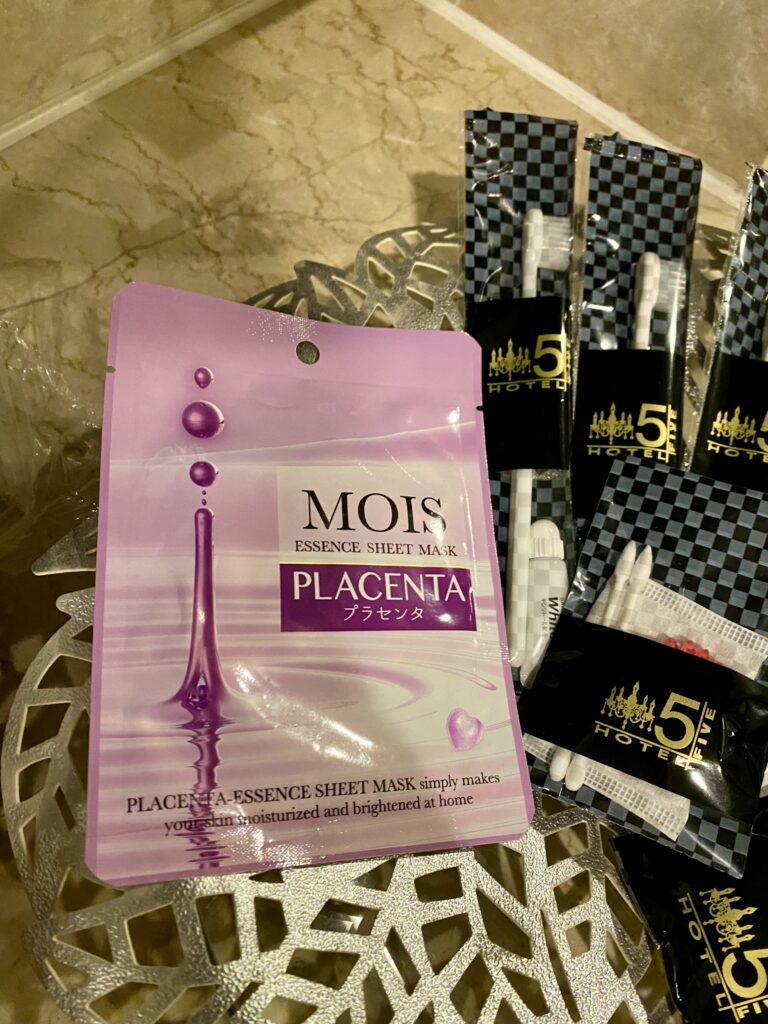
One of the many toiletries that you will find in a love hotel in Japan. Photo by Tokyo Becky
Featured Hotels
Curious About the BaliAn Resort Hotels?
The BaliAn Resort group is widely considered Tokyo’s best love hotel chain, with multiple locations in Shinjuku and Ikebukuro. Real guest photos, verified reviews, and online booking with free cancellation available through Booking.com.
Where to Book
Where Can You Book a Japan Love Hotel in Tokyo and Osaka?
The traditional method of booking love hotels in Japan is to walk into an area with a high concentration of properties, consult the illuminated room panel in the lobby, and check in on the spot. No reservation required. This still works perfectly well, and in many Tokyo neighborhoods you will find a dozen or more love hotels within a single block, so the odds of finding availability are high except on the busiest weekends and public holidays.
For those who prefer to plan ahead, or who want to research rooms before arriving, a growing number of Japan love hotels now list on Booking.com, typically labeled as “adults only” properties. The guest reviews are real, the photos are accurate, and online booking often unlocks discounts not available at the door.
Find Your Perfect Stay
Browse All Japan Love Hotels on Booking.com
Over 700 love hotels in Japan are bookable on Booking.com, including properties in Tokyo, Osaka, Kyoto, and beyond. Filter by price, location, and guest rating.
FAQ
Frequently Asked Questions about Japan Love Hotels
What is a love hotel in Japan?
A love hotel in Japan (known in Japanese as a rabuho, or ラブホテル) is a short-stay accommodation designed primarily for couples who want privacy. They offer hourly “rest” rates and overnight “stay” rates, automated check-in with no face-to-face staff interaction, and rooms equipped with amenities including jacuzzis, karaoke systems, themed decor, adult entertainment, and in many cases costumes and sex toys for sale or use. There are an estimated 10,000 to 37,000 love hotels across Japan.
Can tourists stay in a Japan love hotel?
Yes. Tourists are welcome at Japan love hotels and increasingly seek them out as a unique accommodation experience. Many love hotels in Tokyo and Osaka now list on international booking platforms including Booking.com, making advance reservations straightforward. No Japanese language skills are required: check-in is automated via a touchscreen photo panel, and payment is handled by machine.
What is the difference between “rest” and “stay” at a Japan love hotel?
A “rest” (kyukei, 休憩) is a short daytime stay of typically two to three hours, priced at a reduced rate. A “stay” (shukuhaku, 宿泊) is an overnight booking, usually from around 10pm or 11pm until 11am the following morning. Some hotels also offer “free time” flat-rate packages for longer daytime blocks. Rest rates typically start from around 3,000 to 5,000 yen; overnight rates at well-equipped properties generally run 10,000 to 18,000 yen.
How do you check into a Japan love hotel?
When you enter a Japan love hotel, you will find a wall panel or touchscreen display showing photographs of all available rooms. Rooms that are occupied are shown in a darkened state. You select your room by pressing its button or tapping its image. Follow the indicator lights or arrows to your room; the door unlocks automatically. Payment is made either through a machine in the room before you leave or at a terminal near the exit. Most properties accept both cash and credit cards, though some are cash-only.
Who is allowed to check into a Japan love hotel?
Love hotels in Japan are designed for couples and most enforce strict entry rules. Solo guests are typically not admitted. Two men checking in together are generally refused entry at most establishments. Rules vary by hotel, and some have additional restrictions. The policies are enforced discreetly but consistently. Non-Japanese couples, including foreign tourists, are generally welcome without issue.
Where are the best love hotels in Tokyo?
The highest concentration of love hotels in Tokyo is in Toshima Ward (Ikebukuro), followed by Shinjuku (particularly the Kabukicho entertainment district) and Shibuya, where Love Hotel Hill near Maruyamacho and Dogenzaka contains dozens of properties. The BaliAn Resort group, with locations in Shinjuku and Ikebukuro, is widely considered the best love hotel chain in Tokyo. Several BaliAn properties list on Booking.com with real guest reviews and online booking available.
Can you book a Japan love hotel on Booking.com?
Yes. A growing number of love hotels in Japan list on Booking.com, typically under the “adults only” category. Over 700 love hotels in Japan are bookable on the platform, including well-reviewed properties in Tokyo (Ikebukuro, Shinjuku, Shibuya) and Osaka. Online booking often provides a discount over walk-in rates, and many properties offer free cancellation.
Are Japan love hotels safe and clean?
Yes. Reputable love hotels in Japan, particularly in major urban areas, are known for high standards of hygiene and privacy. They are licensed, regulated businesses. Rooms are cleaned thoroughly between guests. Amenities including sex toys are individually wrapped and sealed. As a general rule, the more central and well-reviewed the property, the higher the standards. Avoid unusually cheap options and stick to establishments with verified guest reviews.
Is staying in a Japan love hotel worth it?
Absolutely. Love hotels in Japan offer an experience that exists nowhere else: complete anonymity, room sizes that dwarf standard Tokyo hotels, themed environments ranging from playful to genuinely luxurious, and a window into a fascinating and distinctly Japanese institution. At mid-range prices, the value relative to a business hotel in the same city is often remarkable. Even if you visit purely out of curiosity for a two-hour rest stay, staying in love hotels in Japan is one of the most memorable things you can do in the country.
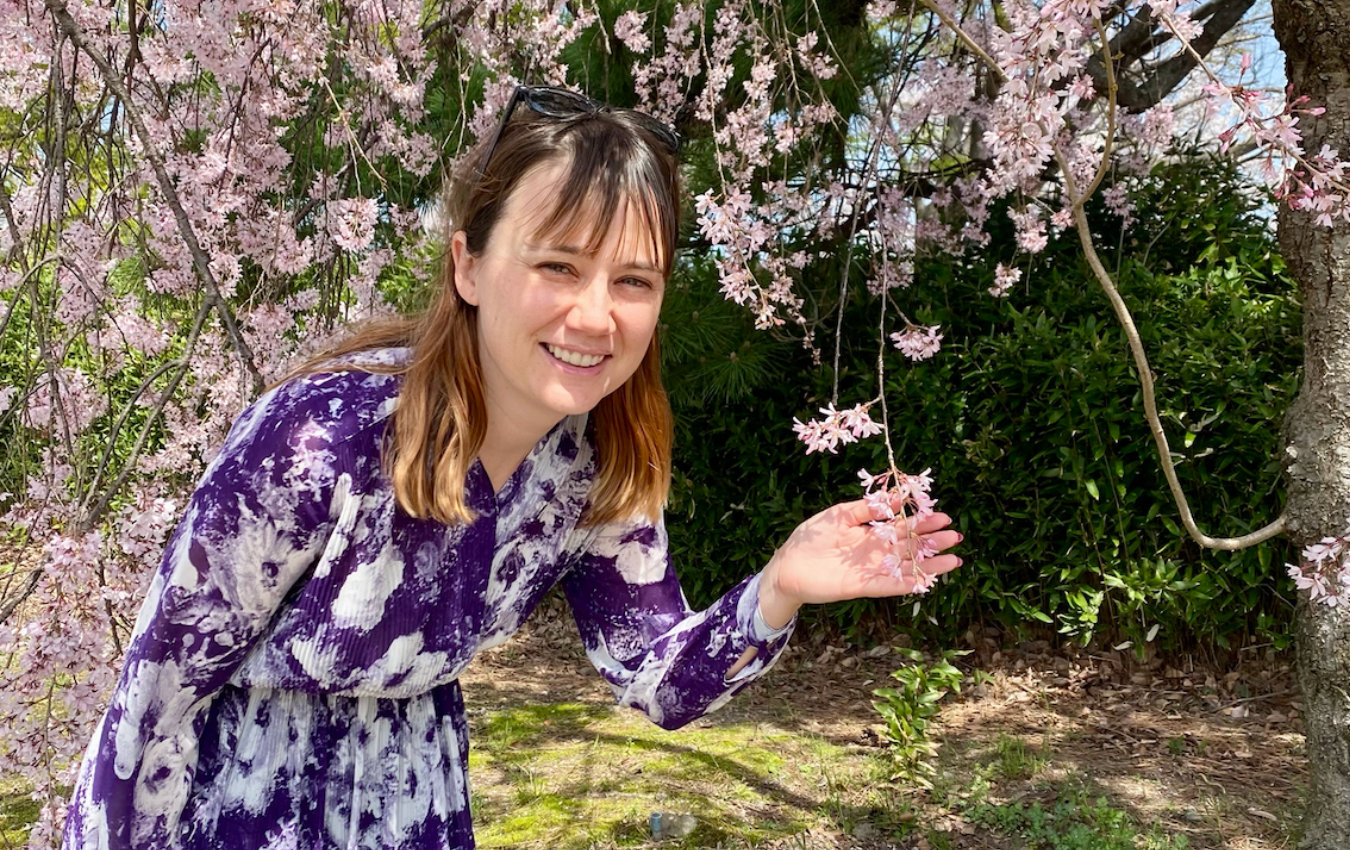
Written by Tokyo Becky · tokyobecky.com


0 Comments