
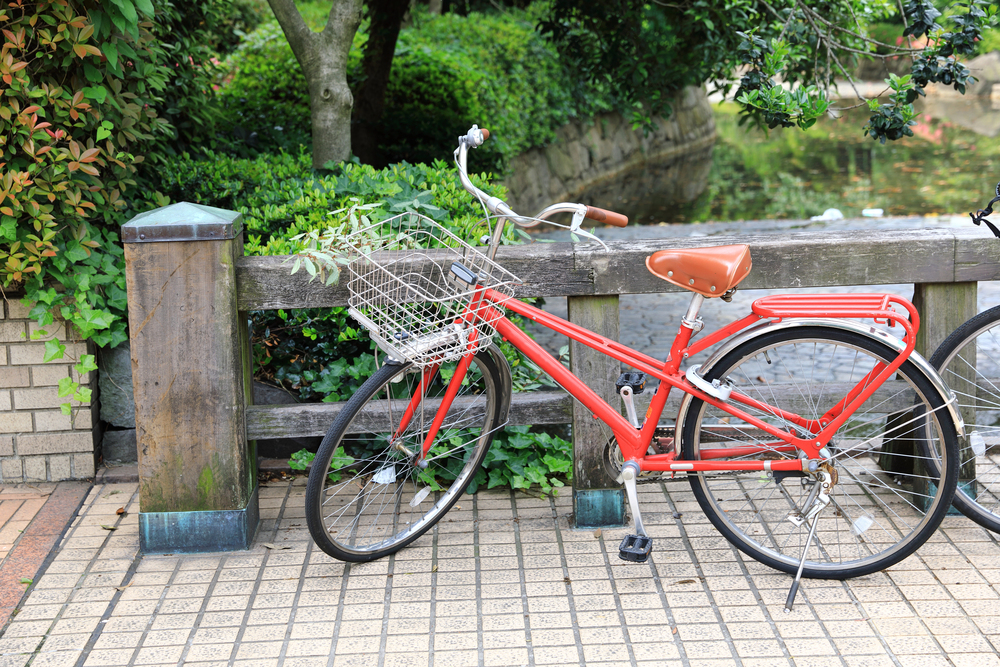
When I lived in Tokyo, my bicycle was my best friend, and I took it everywhere. Tokyo has one of the world’s most useful train networks, but there’s a lot to see between stations. After a while, you may also find yourself getting tired of all the walking you must do to get from one train station to another. On a bicycle, you can follow a side street because it looks interesting, stop at a neighborhood coffee shop, or take your time beside the Sumida River. It’s an entirely different way to explore the city. If you plan to stay for more than a couple of days, it’s essential to figure out how to rent a bicycle in Tokyo so you can take advantage of a slower pace around the city (and you won’t have to carry everything on your back).
You don’t need to bring a bike or commit to a full-day rental. Tokyo has several app-based bike-share services, many with electric-assist bicycles. The trick is knowing which app to download, where you can return the bike, and a few road rules before you set off.
Where to Rent a Bicycle in Tokyo
Docomo Bike Share
Those red electric-assist bicycles parked at docks around central Tokyo are usually Docomo bikes. They’re a practical choice when you want to ride between different parts of the city rather than take the subway for every short trip.
A single ride costs ¥165 for the first 30 minutes and ¥165 for each additional 30 minutes. The monthly plan is ¥3,300, but occasional visitors will generally find pay-per-ride simpler. A one-day pass is also available through certain off-app sales channels; check the official Tokyo rates for details.
Download Docomo Bike Share: iPhone | Android | Official website
One detail worth knowing: locking a bike while you grab lunch does not necessarily end the rental. You need to complete the return at an approved dock.
HELLO CYCLING
HELLO CYCLING has bikes in many residential neighborhoods as well as busier areas. That makes it handy if you’re staying a little farther from the big tourist hubs. Availability and prices vary by station and bike type.
At many Tokyo stations, a standard bicycle starts at ¥160 for the first 30 minutes with further charges after that and a 12-hour cap that may be ¥2,500. Check your exact bicycle in the app rather than assuming the same tariff applies everywhere. You can also consult the Tokyo price table.
Download HELLO CYCLING: iPhone | Android | Official website
LUUP
LUUP is easy to spot around Tokyo because it operates both compact electric-assist bicycles and e-scooters. If you specifically want a bicycle, make sure you select the bike icon and not a scooter in the app.
In Tokyo, the standard rate is ¥50 to start plus ¥25 per minute. A 10-minute ride therefore costs around ¥300. For a longer, unhurried sightseeing ride, one of the other bike-share services may work out cheaper.
Download LUUP: iPhone | Android | Official website
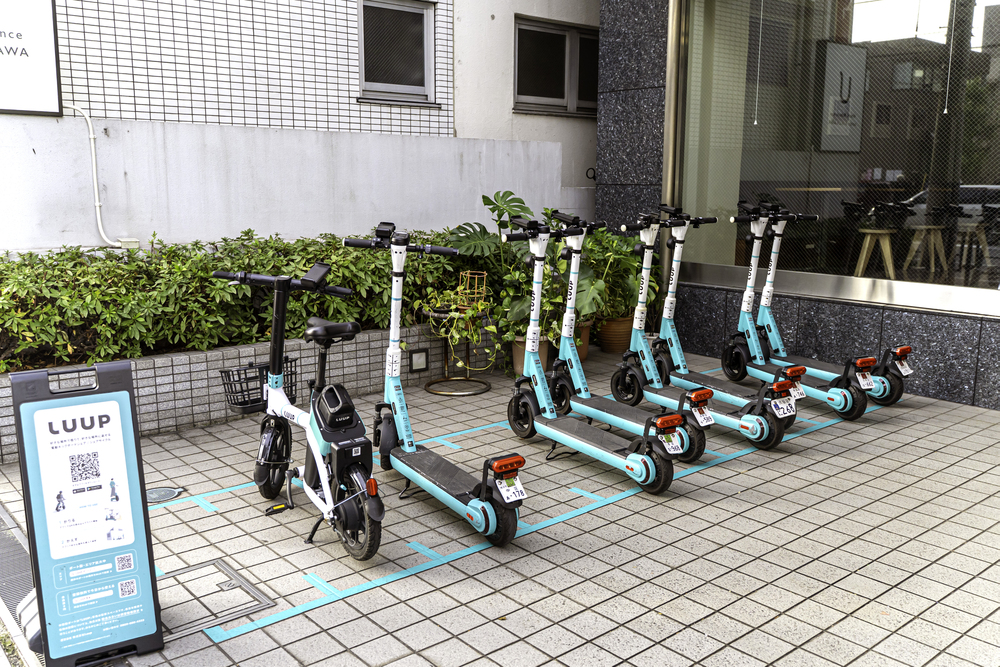
LUUP bikes in Tokyo, Photo: Depositphotos.com
How to Rent a Bike: Six Quick Steps
- Download the app for the service with stations near your hotel.
- Create an account and add a supported payment method. Some services may require phone or SMS verification, so set this up before heading out.
- Find a bike on the app map. Look at the battery level if you’re choosing an electric-assist model.
- Unlock the bike following the instructions in the app. Test the brakes and adjust the saddle before moving.
- Check where you can return it. Some stations have limited spaces, and certain apps offer a return reservation.
- Park in the designated area, lock the bicycle, and confirm in the app that the ride has actually ended.
Travel tip: An international data connection is useful for finding bikes and ending rentals. Don’t rely on being able to connect to Wi-Fi at the return station. Getting an e-SIM helps you have consistent data.
Three Tokyo Areas Worth Exploring by Bicycle
Around the Imperial Palace
The broad roads around the Imperial Palace and Marunouchi are a striking change from Tokyo’s narrower side streets. The palace grounds themselves are not a place you can ride freely, so plan to circle the surrounding streets and obey any temporary restrictions. Weekday traffic can be busy. Be sure to take it slowly.
Prefer to leave the route planning to someone else? The Tokyo Great Cycling Tour takes a small group around several central landmarks with the itinerary depending on the tour option. It’s a good introduction if you’re not yet confident navigating Tokyo traffic.
Asakusa and the Sumida River
Asakusa is an especially rewarding place to slow down. One minute you’re looking toward Tokyo Skytree, and the next you’re on a quiet street discovering a tiny shrine. Walk your bike through crowded shopping streets especially around Senso-ji.
A guided alternative is the Tokyo Backstreets Bike Tour, which focuses on neighborhood streets and a side of the city that’s easy to miss when you only focus on major attractions.
Yoyogi Park, Harajuku, and Shibuya
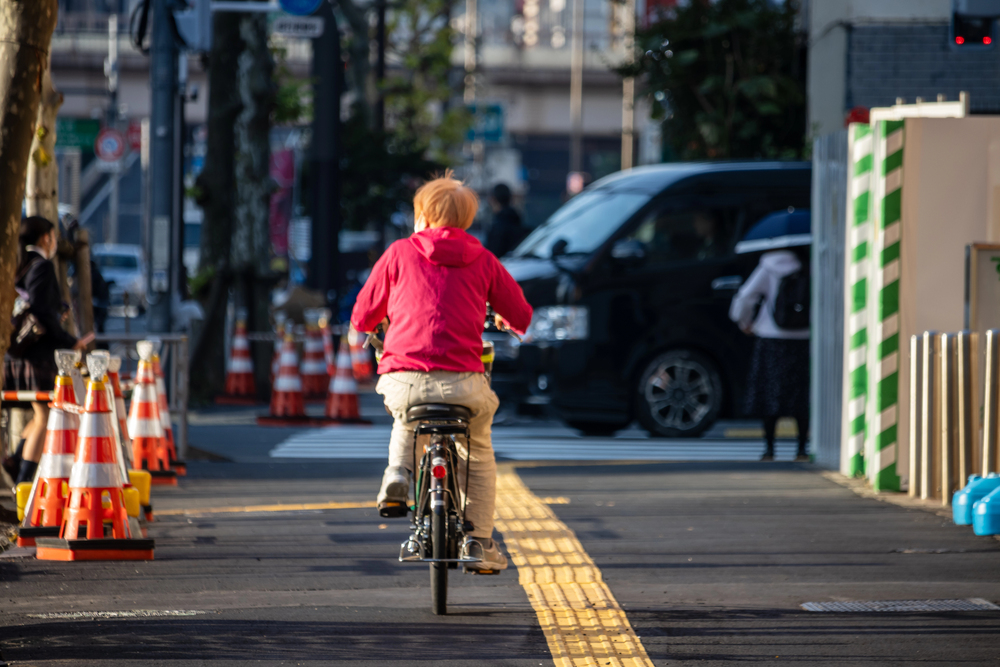
These are some of the most popular parts of the city, and I need to warn you: some of the intersections can be very crowded. Look for calmer parallel streets and treat the bike as way to get from one neighborhood to the next and not a way to weave through pedestrians.
For visitors who want a guide, the Shibuya and Harajuku bike tour combines well-known neighborhoods with lesser known backstreets. Check the specific route and what equipment is included before booking.
Harajuku and Shibuya are where it’s going to get based on my personal experience.
Where to Rent a Bicycle in Person in Tokyo
If you’d rather rent a bicycle from a physical shop, Tokyo has several excellent options. Tokyobike Tokyo is located at 3-7-2 Miyoshi, Koto City, approximately five minutes on foot from Kiyosumi-Shirakawa Station. It’s an ideal starting point for exploring the neighborhood’s cafes, Kiyosumi Gardens, and the nearby waterfront. The shop opens Wednesday through Friday from 11 a.m. to 6 p.m. and weekends from 10 a.m. to 6 p.m., with rentals returned by 5:30 p.m.
Another option is Tokyobike Nakameguro, at 2-42-10 Kamimeguro, Meguro City, about seven minutes from Nakameguro Station. It’s conveniently located for exploring the Meguro River, Daikanyama, and Ebisu. Opening hours are noon to 7 p.m. on Mondays, Tuesdays, and Fridays, and 11 a.m. to 7 p.m. on weekends. Both Tokyobike locations offer rentals for ¥2,500 per day, with advance reservations available through the official Tokyobike rental website.
If you’re looking for road bikes, mountain bikes, or electric bicycles, CycleTrip Base is another excellent choice. Located at 2-9 Kanda Sudacho, Chiyoda City, on the first floor of the Miyagawa Building, it’s approximately four minutes from Akihabara Station. The shop is open daily from 9:30 a.m. to 5:30 p.m. and offers a wider selection of performance bicycles for longer rides. Rentals can be arranged through the CycleTrip website.
Unlike bike-sharing services, Tokyobike requires you to return your bicycle to the same shop where you picked it up.
The Cycling Rules Visitors Should Know
- Ride on the left side of the road, with traffic. Bicycles generally belong on the roadway, not the sidewalk.
- Use sidewalks only where cycling is permitted or another legal exception applies, and always give pedestrians priority.
- Make an effort to wear a helmet. Ask your rental provider whether one is available.
- Do not use your phone while riding, ignore red lights, or cycle after drinking alcohol.
- Park in a permitted place. Tokyo removes improperly parked bicycles, and retrieving one can be expensive.
- Tokyo requires bicycle liability insurance. Confirm what is included with your rental and whether additional coverage is needed.
Japan’s bicycle “blue ticket” system began in April 2026 and applies to eligible traffic violations, including those committed by visitors. For the latest guidance, see GO TOKYO’s official bicycle information. See also the FAQ below.
Frequently Asked Questions
Can tourists rent bicycles in Tokyo?
Yes. Visitors can use bike-share services if they meet the app’s registration and payment requirements. It’s smart to install your chosen app and check the sign-up process before your trip, especially if your phone cannot receive SMS messages abroad.
Do you need a license to ride a bicycle in Japan?
No driver’s license is needed for an ordinary pedal bicycle or a compliant electric-assist bicycle. Electric scooters are a different category with separate rules, so don’t confuse a LUUP scooter with a LUUP bicycle.
Can you leave a rental bicycle anywhere?
No. Shared bikes must be returned to approved stations or ports according to the provider’s instructions. Simply locking the bike on the street can mean continued charges or a parking violation.
Is Tokyo safe to explore by bicycle?
Many neighborhoods are pleasant for cycling, but Tokyo is still a busy city. Start in a quieter area, avoid major rush-hour routes, and walk the bike when crowds or intersections feel uncomfortable.
Is a bicycle better than the subway?
For a long cross-city trip, probably not. For discovering what’s between two nearby neighborhoods, a bike can be much more fun. In mild spring or fall weather, combining cycling with the train is a particularly good way to see Tokyo.
Tokyo is so safe. Do I need to lock up my bicycle?
YES! Bicycles are one of the most popular things to steal in Tokyo (after umbrellas), usually by people feeling lazy and not wanting to walk home. Please take care and make sure to lock up your bicycle.
Do you need to wear a bicycle helmet in Tokyo?
Japan introduced a nationwide bicycle helmet rule in April 2023 that encourages cyclists of all ages to wear helmets. However, wearing a helmet is not strictly mandatory, and there are no fines for riding without one. This applies to tourists as well as residents including people using rental bicycles. Although you’ll see plenty of people cycling without helmets in Tokyo, wearing one is recommended, particularly if you’re unfamiliar with Japanese traffic. If you’re renting a bicycle from a physical shop or joining a guided cycling tour, check whether a helmet is included or available to rent.
Are there any bicycle fines in Tokyo?
Yes. On April 1, 2026, Japan introduced a new bicycle traffic enforcement system that allows police to issue fines to cyclists aged 16 and older for certain traffic violations. These include riding against traffic, cycling on sidewalks where prohibited, using a smartphone while riding, and failing to obey traffic signals. Fines generally range from ¥3,000 to ¥12,000, depending on the violation. However, wearing a bicycle helmet is still not legally mandatory, and cyclists cannot be fined simply for riding without one. These rules apply to both tourists and residents. Be careful not to be fined.
Final Thoughts
How to rent a bicycle in Tokyo comes easily once you know the rules and the best locations. If you want to explore independently, look at the bike-share map near your accommodation and choose the app with the most convenient pickup and return points. Docomo is a strong starting point in central Tokyo. HELLO CYCLING can be useful farther afield. LUUP is better for shorter trips.
If traffic makes you nervous, begin with a guided tour. Also be sure to leave time for unplanned stops. These are often the best part of cycling around Tokyo! I am always in favor of getting a bicycle with a basket. They make lugging your purchases around the city so much simpler!


0 Comments