
Tokyo is home to two of teamLab’s most spectacular immersive art museums – teamLab Planets in Toyosu and teamLab Borderless at Azabudai Hills.
At first glance, they can look fairly similar. Both feature dark spaces, luminous flowers, mirrored rooms, digital landscapes, and enormous interactive installations. However, the experience of visiting them is surprisingly different.
At teamLab Planets, you remove your shoes, walk through water, and physically interact with enormous installations. At teamLab Borderless, you wander through a maze-like museum with no prescribed route, discovering artworks that move between rooms and change as you explore.
I have now had the chance to experience both.
My Experience With teamLab in Tokyo
I first visited the original teamLab Borderless in Odaiba in 2020, when I unexpectedly found myself stuck in Japan for seven months during the pandemic. Tourism had essentially disappeared, so the museum was unusually quiet. I had the rare opportunity to explore it without the crowds that normally surround Tokyo’s biggest attractions.
I was completely blown away. I had never experienced an art museum that felt so interactive, beautiful, and genuinely entrancing. Rather than simply looking at artwork, I felt like I was walking inside it.
I finally visited teamLab Planets in April 2026 with a friend after he finished work. We spent about two hours going through the entire experience. For families, especially those with children who want to linger in the interactive areas, I would allow closer to three hours.
Having experienced both, I can say that they are different enough that I would happily recommend visiting both.
I would choose teamLab Borderless for most first-time adult visitors if you can only choose one. Families traveling with children who want the most physical and interactive experience may prefer teamLab Planets.
There is also an important reason to prioritize Planets. teamLab Planets is currently scheduled to remain open only through the end of 2027, while teamLab Borderless at Azabudai Hills is a permanent museum.
This post contains affiliate links. If you make a booking through one of these links, I may earn a commission at no extra cost to you.
1. teamLab Planets TOKYO
Location – Toyosu, Koto City
Hours – Currently 8:00 a.m. to 10:00 p.m.
Last entry – One hour before closing
Adult tickets – From ¥3,800
Ages 13-17 – ¥2,800
Ages 4-12 – ¥1,500
Ages 3 and under – Free
Current run – Scheduled through the end of 2027
teamLab Planets is the more physical and sensory of Tokyo’s two major teamLab experiences.
The idea is to immerse your entire body in the artwork, and that description is quite literal.
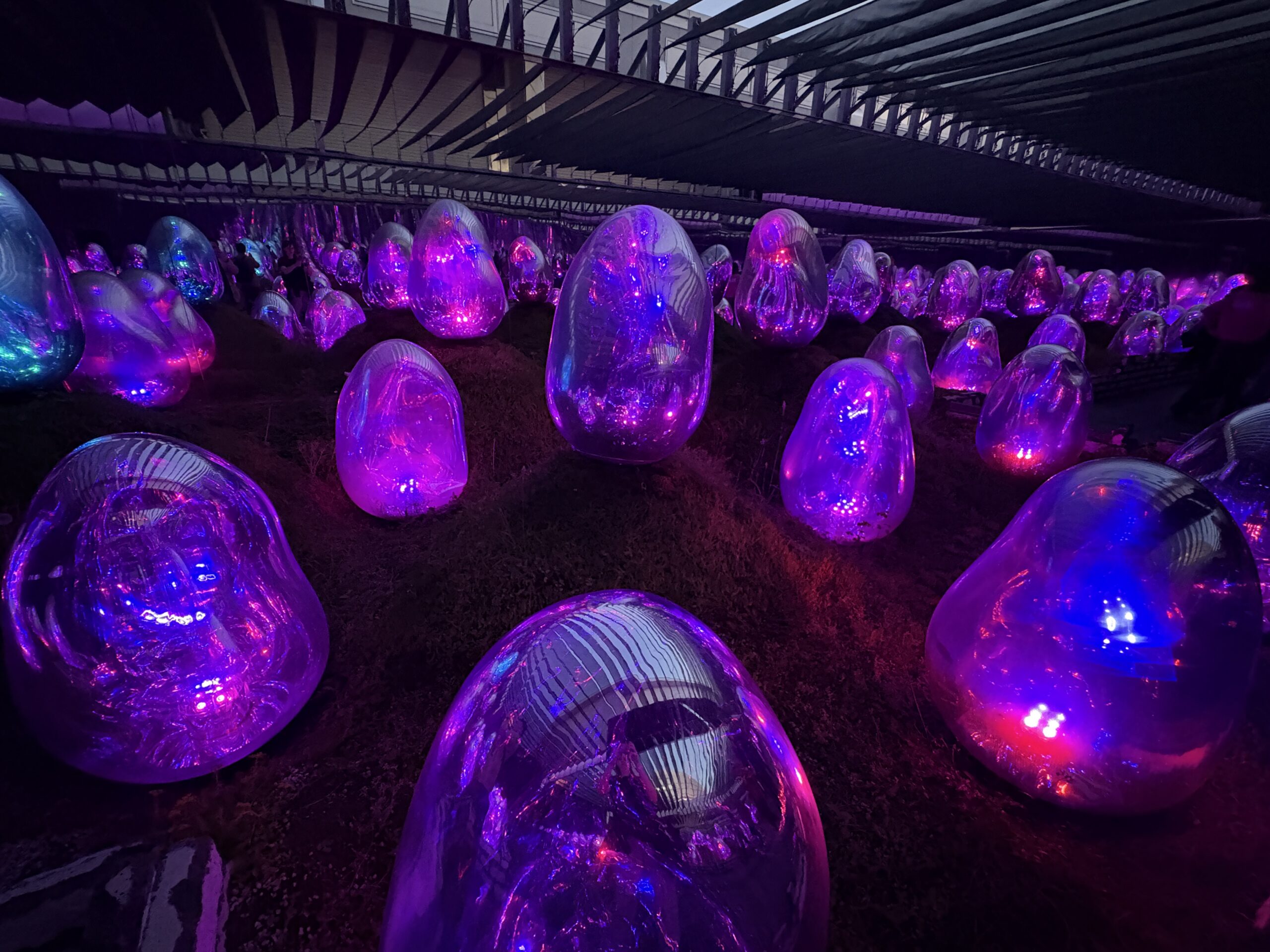
You remove your shoes before entering and travel barefoot through much of the experience. Some areas contain water that can reach around knee height for adults, while other installations use soft surfaces, mirrors, suspended flowers, light, sound, and movement to blur the boundary between the visitor and the artwork.
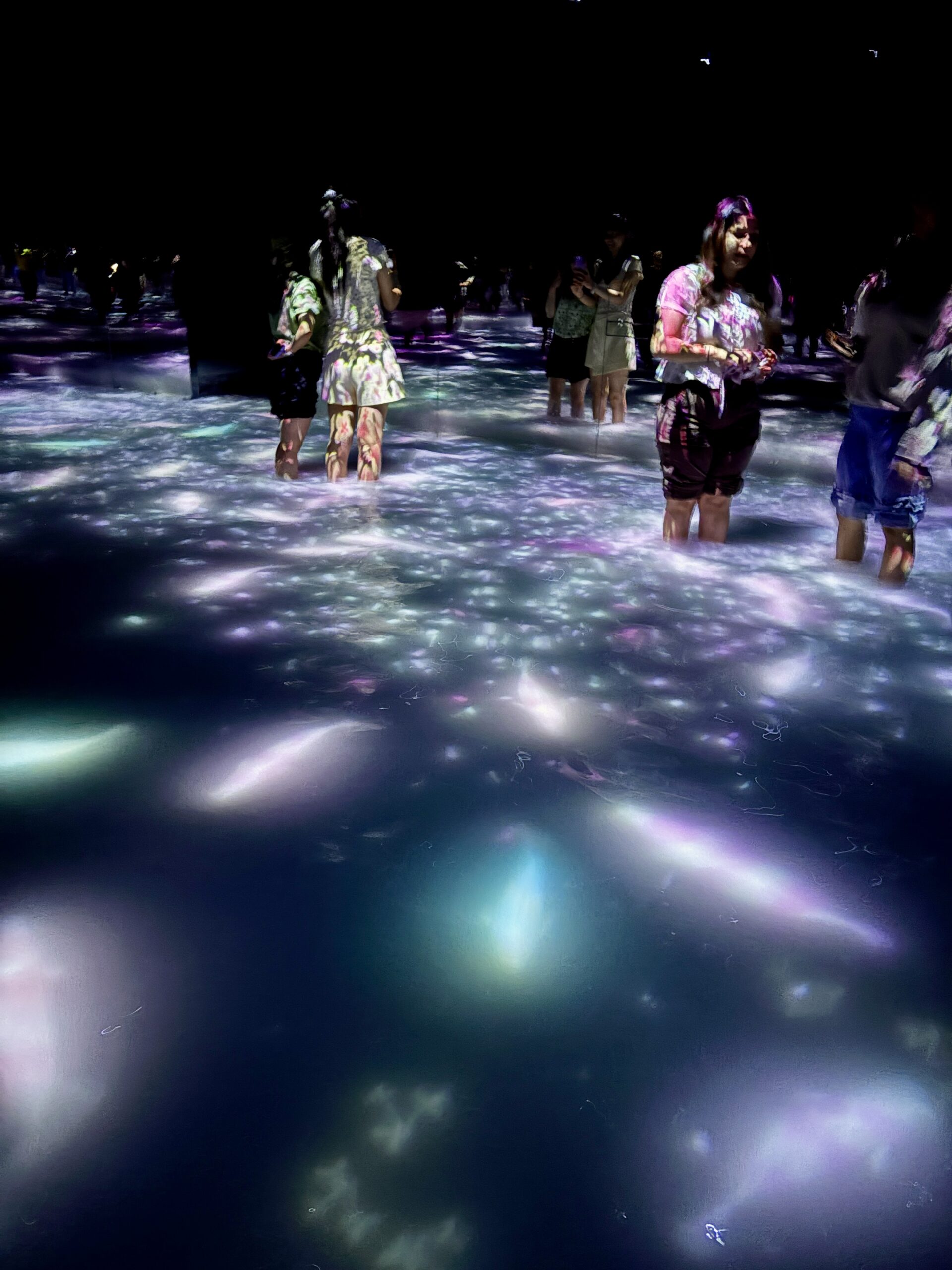
I visited Planets in April 2026, going in the evening with a friend after he finished work. We spent around two hours inside, which felt comfortable for two adults. If I were visiting with a family, however, I would plan for closer to three hours so children have enough time to enjoy the interactive areas without feeling rushed.
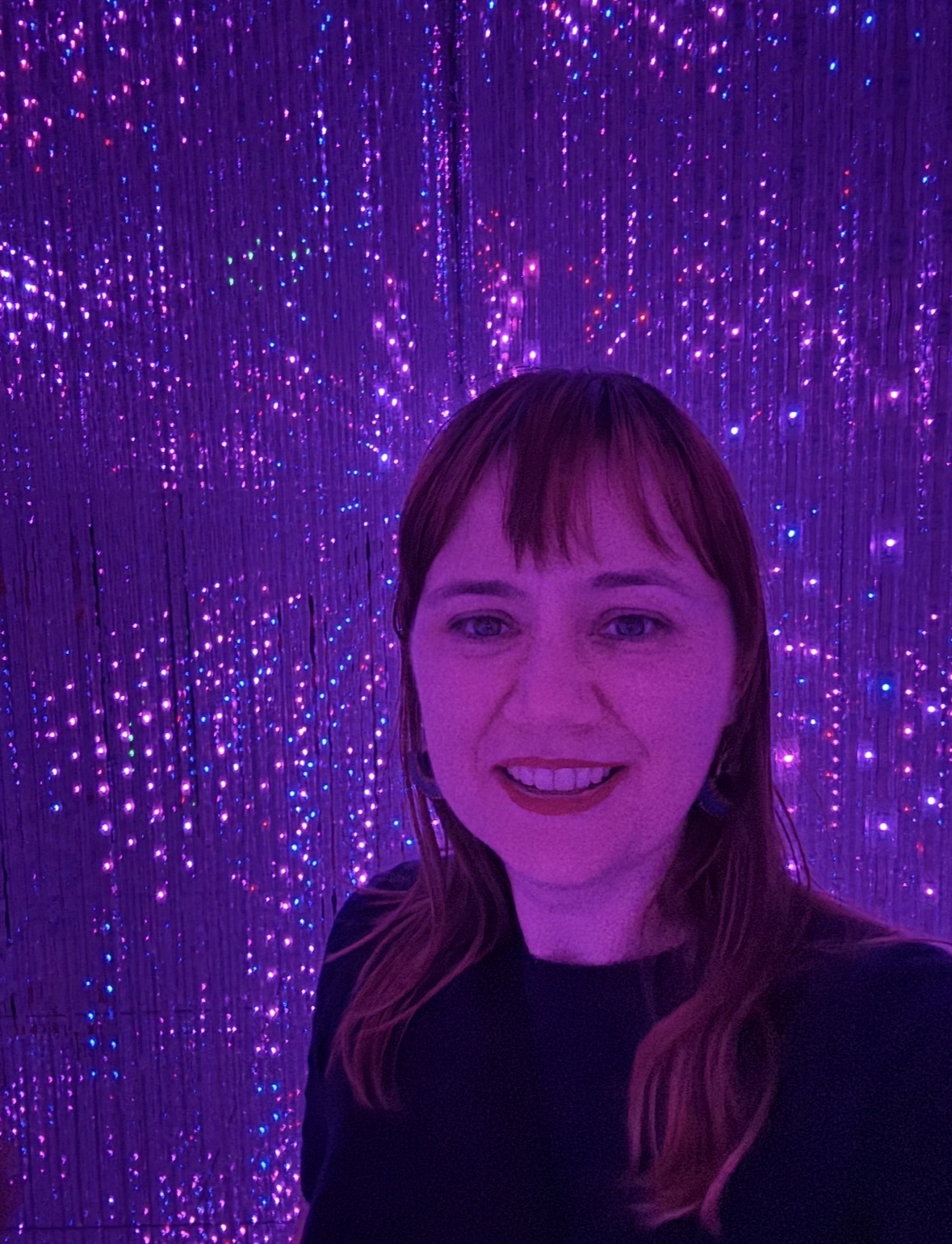
My Favorite Part of teamLab Planets
One of the best-known installations is Drawing on the Water Surface Created by the Dance of Koi and People – Infinity. Digital koi swim through the water around visitors and change when they encounter people.
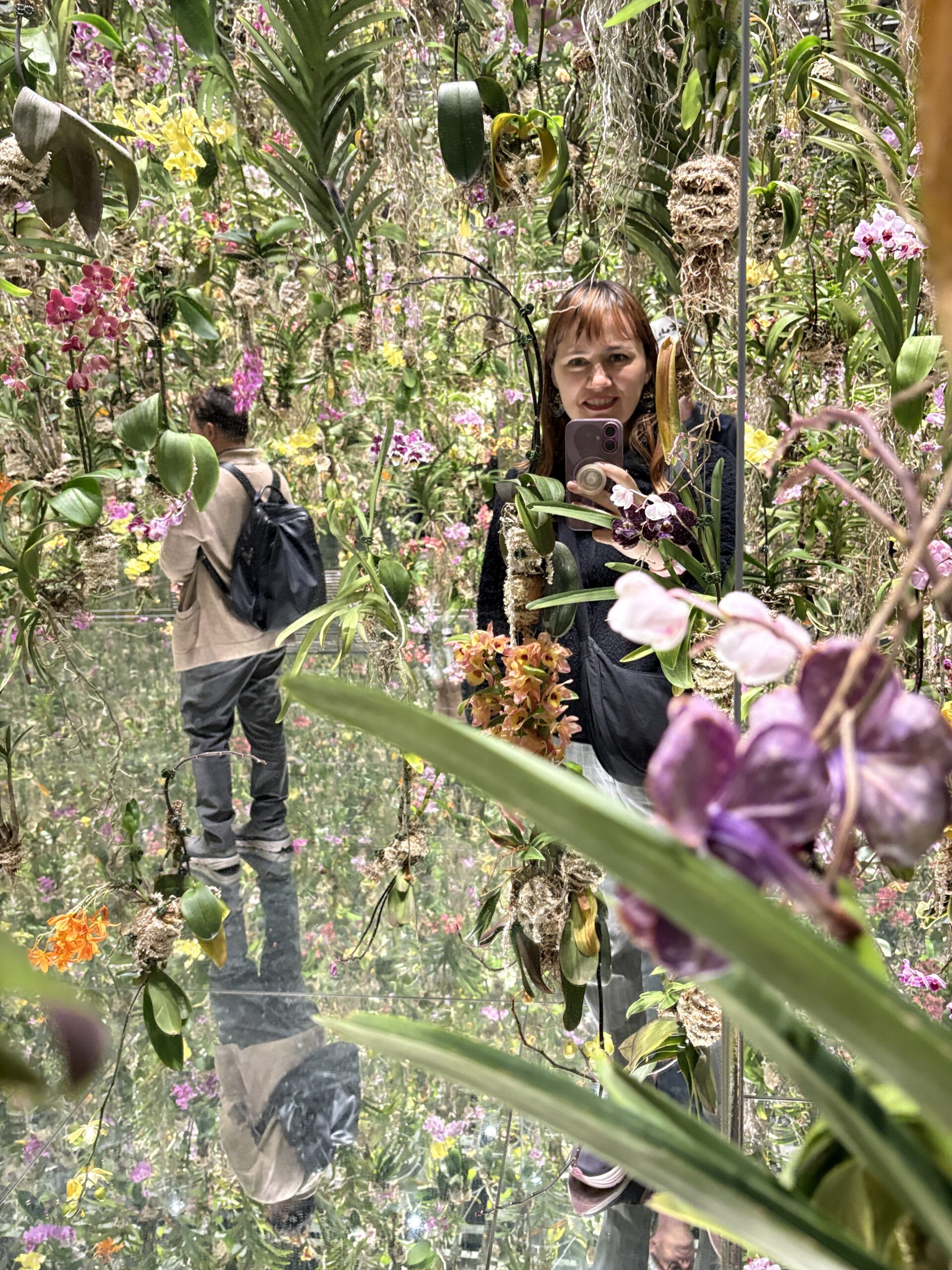
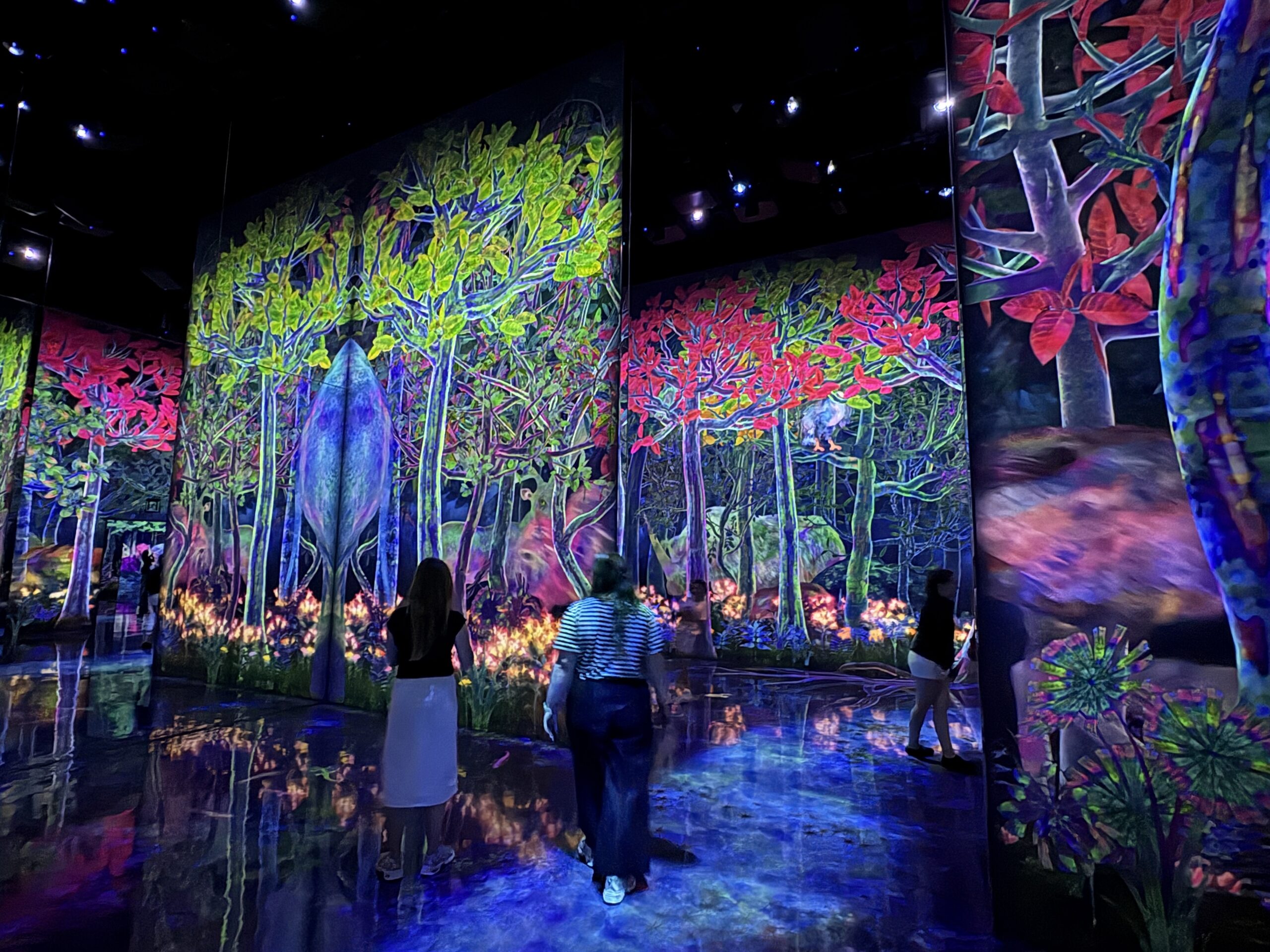
Another major highlight is Floating Flower Garden, where thousands of real orchids appear to hover above and around visitors.
The flower experience was my personal favorite part of Planets.
Flowers seemed to be coming toward me from every direction, creating an experience that felt almost otherworldly. There was something genuinely magical about standing inside a space completely surrounded by flowers and movement. It was one of those rare attractions where photographs can show you what something looks like, but they cannot really reproduce what it feels like to stand inside it.
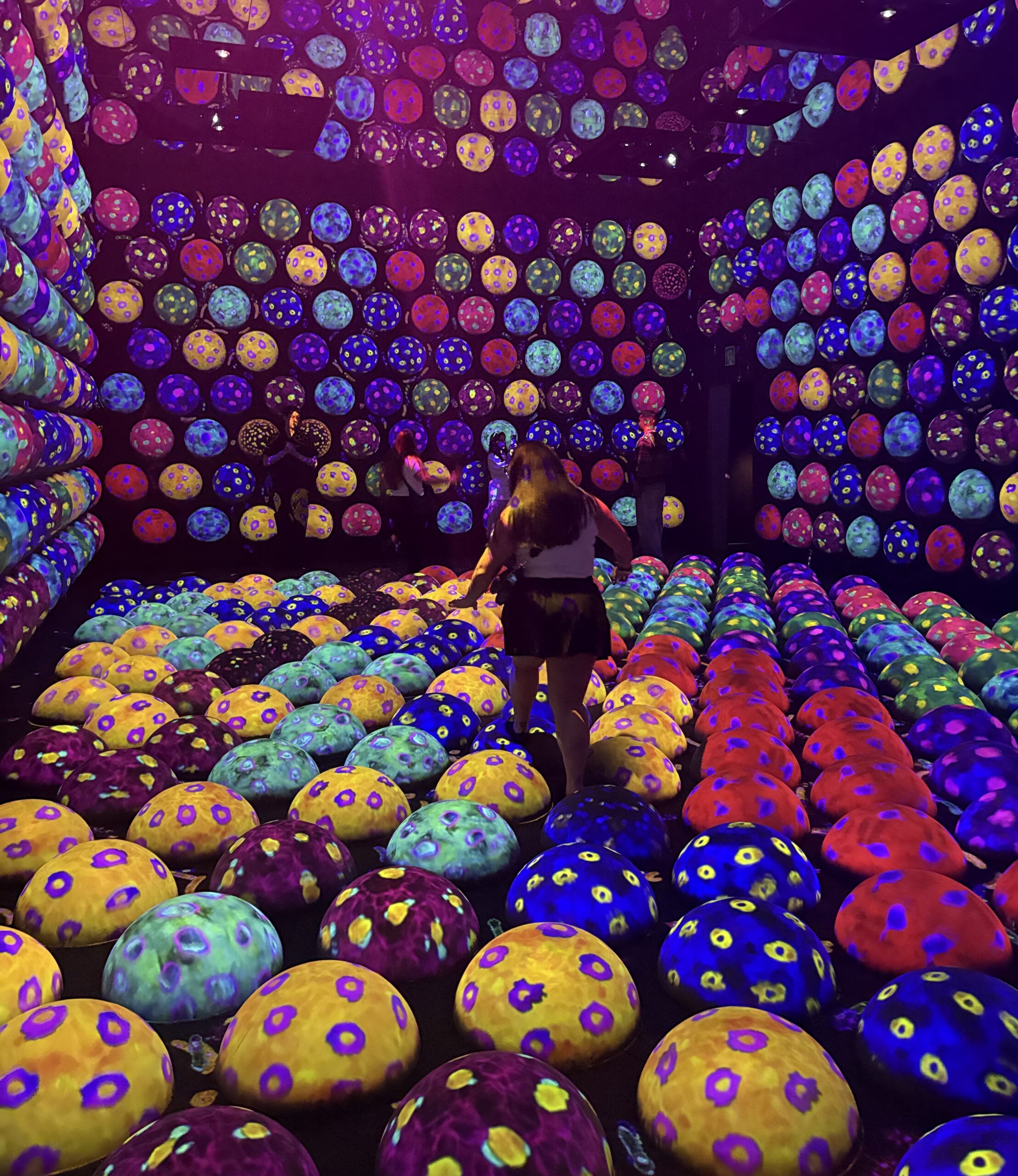
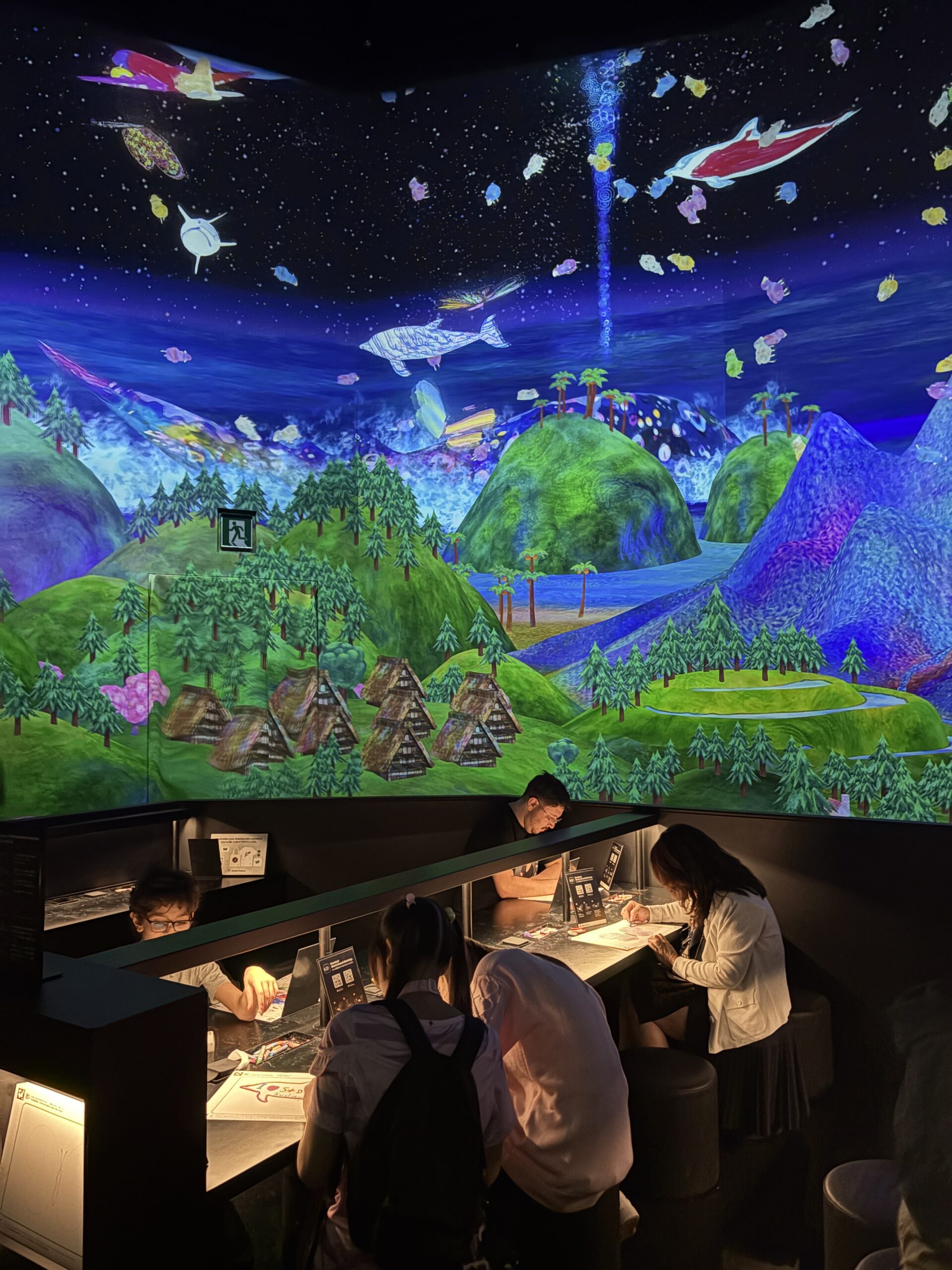
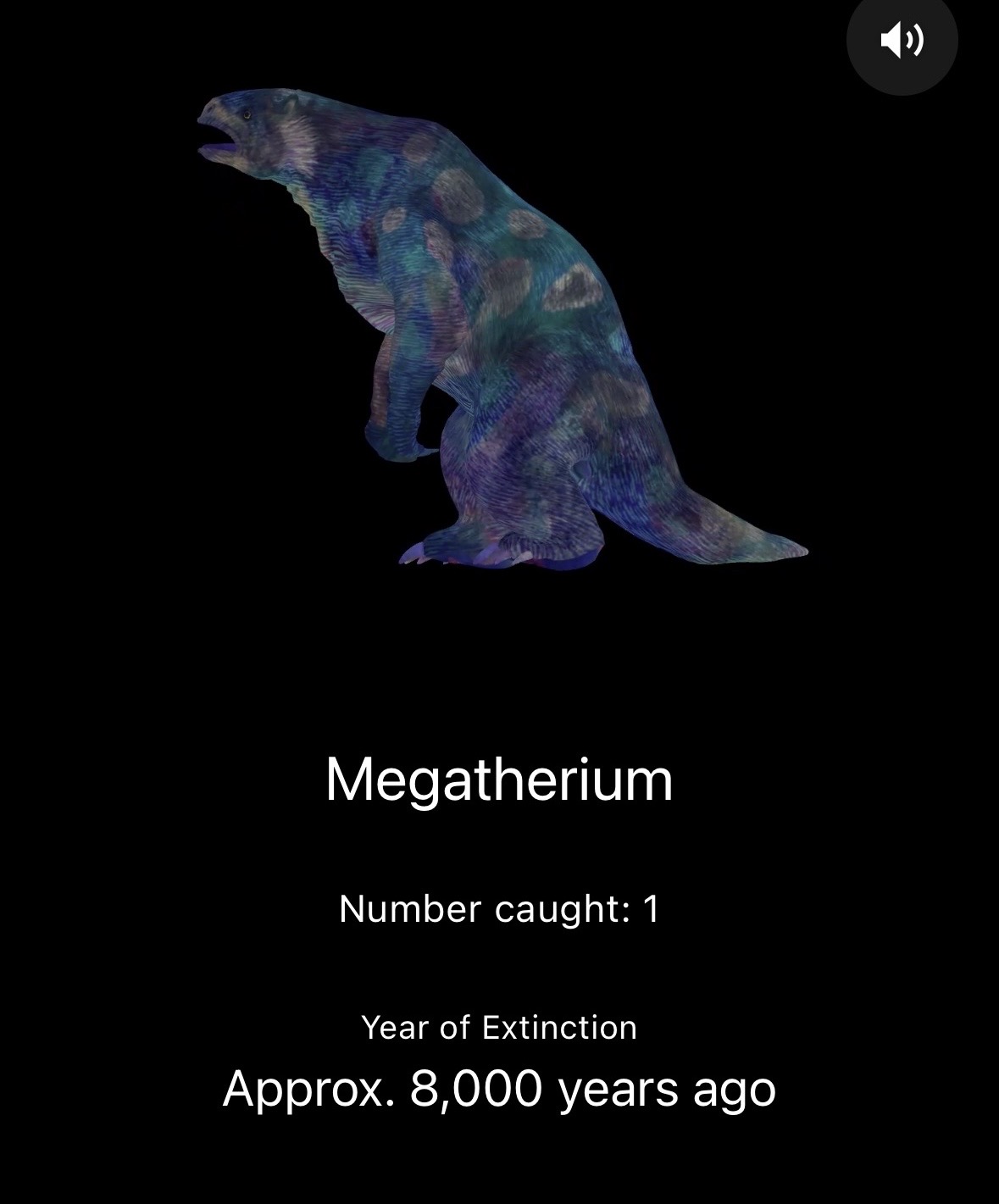
Planets has also expanded to include Athletics Forest, Future Park, and Catching and Collecting Extinct Forest.
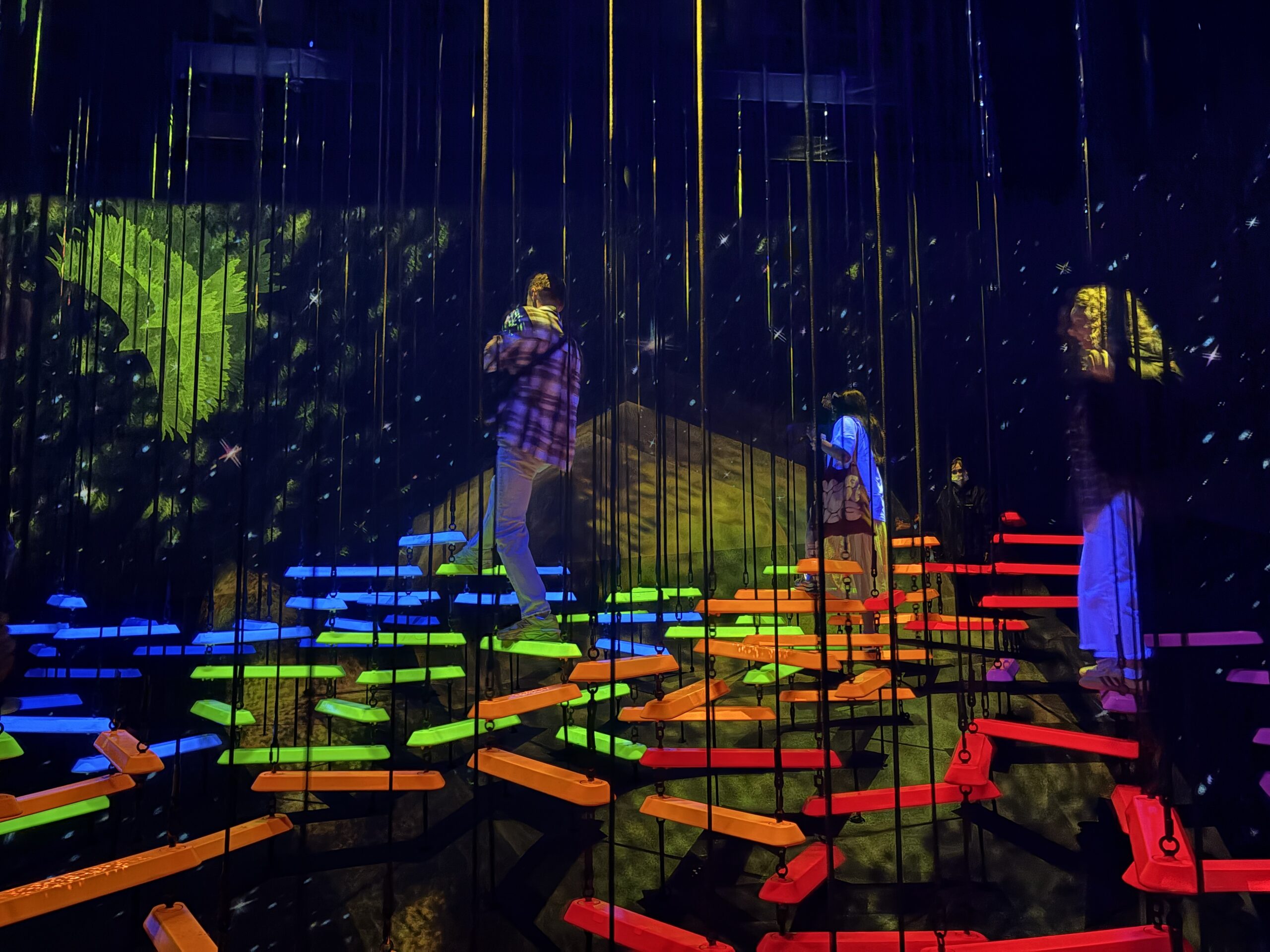
These areas make Planets particularly appealing to families. Visitors can jump, climb, draw creatures that become part of digital worlds, and interact with artwork using their bodies and smartphones.
Older recommendations suggesting that Planets requires only an hour are no longer particularly useful. Based on my own visit, two hours is realistic for adults moving at a comfortable pace, but I recommend allowing two to three hours, particularly if you are traveling with children or enjoy taking your time with photography.
What Should You Wear to teamLab Planets?
Planets requires a little more preparation than Borderless because there are sections where you will be walking through water.
My friend and I brought shorts with us and changed before going through the experience. There is a changing area available, which made this very easy. Changing into shorts meant we did not have to worry about rolling up pants or getting our clothing wet while walking through the water installations.
If you are visiting Planets, I recommend doing something similar if the weather or the rest of your Tokyo itinerary means you do not want to spend the entire day wearing shorts.
Pants that can easily be rolled above your knees also work well.
Some installations feature mirrored floors, so skirts and dresses can be less convenient. Rental shorts and wraps are available if necessary.
Socks and stockings need to be removed before entering the water areas. Some athletic installations also have restrictions involving high heels, sandals, or shoes without adequate heel support.
Comfortable clothing is the best choice because you will be moving, climbing, walking through water, and navigating some unusual surfaces.
Where to Eat Near teamLab Planets
There are several food options around teamLab Planets. I found the food close to the attraction a little expensive, although what I tried was tasty.
My friend and I eventually walked to a nearby mall and ate at the food court instead. It was cheaper and gave us somewhere casual to sit down, relax, and get away from the activity around teamLab.
I would recommend this option if you are traveling on a budget or simply want somewhere less intense after spending a couple of hours surrounded by lights, sound, water, and crowds.
Book Your teamLab Planets Tokyo Experience
teamLab Planets uses timed admission, and popular dates can sell out. Reserve your preferred date and entry time before arriving in Tokyo.
Book teamLab Planets Official teamLab Planets WebsiteStay Close to teamLab Planets
Staying in Toyosu or nearby Ariake puts you close to teamLab Planets, Toyosu Market, and many of Tokyo’s waterfront attractions.
Find Hotels Near teamLab Planets2. teamLab Borderless
Location – Azabudai Hills, Minato City
Hours – Currently 8:30 a.m. to 9:00 p.m.
Last entry – One hour before closing
Adult tickets – From ¥3,600
Ages 13-17 – ¥2,800
Ages 4-12 – ¥1,500
Ages 3 and under – Free
Current run – Permanent
teamLab Borderless takes almost the opposite approach to Planets.
There is no fixed route and deliberately no museum map.
Instead, you wander.
Digital artworks move from one room into another, interact with neighboring works, and transform over time. You may return to a room you visited 20 minutes earlier and discover that it no longer looks exactly the same.
That sense of exploration is fundamental to the concept of Borderless.
My first experience with teamLab was the original teamLab Borderless in Odaiba in 2020.
I was stuck in Japan for seven months during the pandemic, which gave me a highly unusual opportunity to experience Tokyo with very few international tourists around.
When I visited Borderless, the museum was not crowded. That gave me plenty of time to wander through the spaces without constantly moving around other visitors or feeling pressure to leave a room because more people were coming in.
That experience has stayed with me. I had never been to an art museum that was so interactive. The museum was beautiful, but entrancing is probably the word that describes it best.
The artwork surrounds you, reacts to you, travels between rooms, and seems to invite you to keep exploring. It felt completely different from walking through a conventional gallery, and frankly from anything I’d ever seen.
The current Borderless at Azabudai Hills follows the same fundamental philosophy. Rather than moving through a sequence of attractions, you feel as though you have entered one enormous, continuously evolving digital world.
What Will You See at teamLab Borderless?
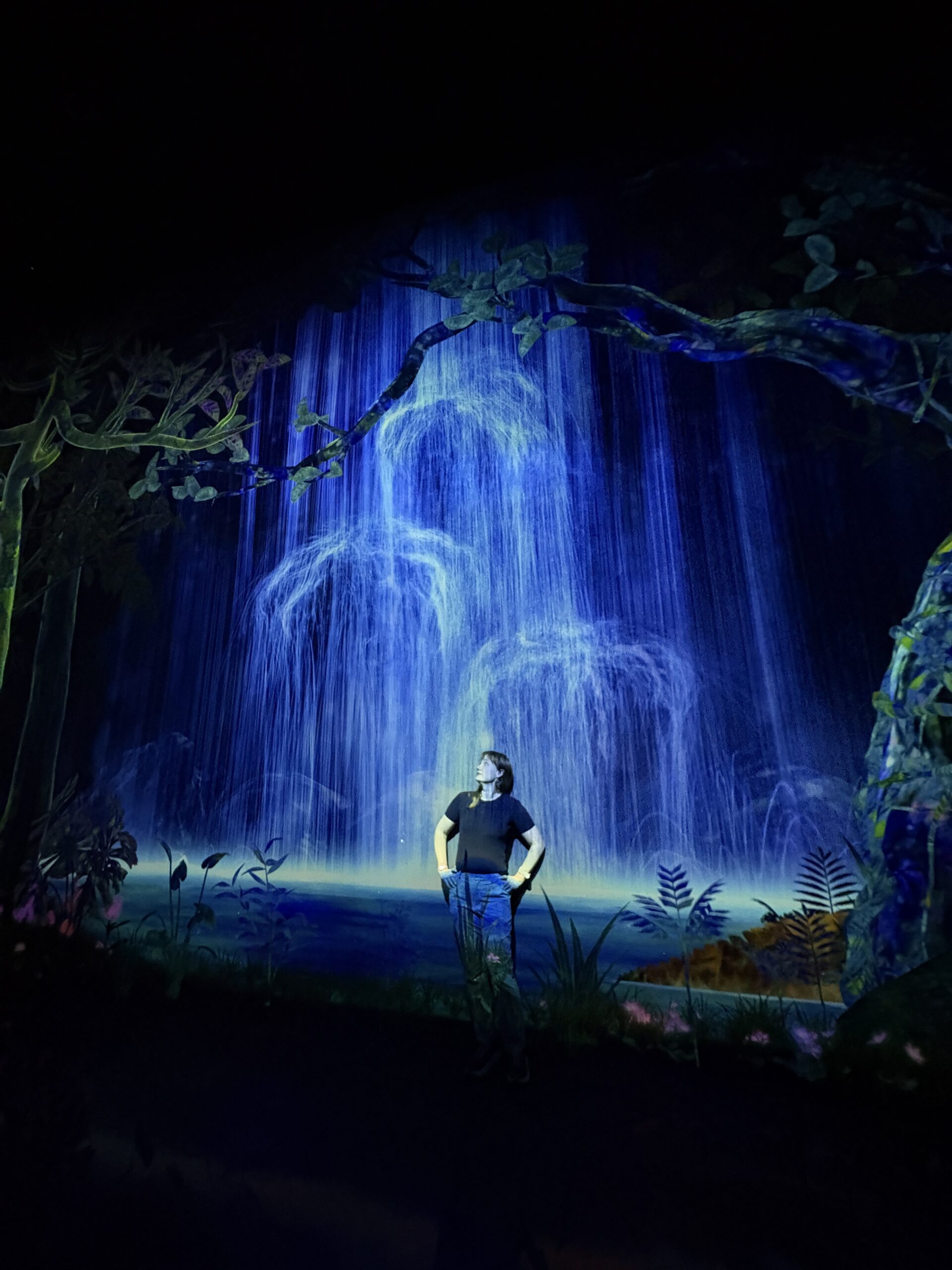
Among its most memorable environments are spectacular light sculptures, digital waterfalls, moving landscapes, flowers and animals that travel through different spaces, Infinite Crystal World, and Bubble Universe.
Bubble Universe features luminous spheres surrounded by mirrors, producing an environment that appears to extend endlessly around you.
There is also the EN TEA HOUSE inside Borderless.
Order tea and digital flowers appear to bloom from the surface of the cup, changing as you drink. Instead of feeling like a conventional break from the museum, the tea experience becomes another part of the artwork.
For me, the ability to get lost and keep discovering something new is what gives Borderless an edge over Planets for many adult visitors.
Planets is more physical. Borderless is more entrancing.
How Much Time Should You Spend at teamLab Borderless?
I recommend allowing around two to three hours for Borderless.
How long you spend here depends heavily on how much you enjoy exploring. Because there is no traditional route through the museum, it is easy to think you have seen everything and then suddenly discover another room or passageway.
My 2020 experience was particularly unusual because the museum was so quiet during the pandemic. Under normal conditions, you should also factor in time for crowds, photographs, and simply waiting for enough space to properly enjoy some installations.
Borderless is also easy to incorporate into a central Tokyo sightseeing day.
The museum is located inside Azabudai Hills, close to Kamiyacho Station and Roppongi-Itchome Station. You can combine it with Roppongi, Tokyo Tower, Toranomon, or other attractions in central Tokyo.
Book Your teamLab Borderless Tokyo Experience
Borderless tickets are date- and time-specific and can sell out, particularly on weekends, holidays, and during peak travel periods.
Book teamLab Borderless Official teamLab Borderless WebsiteStay Close to teamLab Borderless
For easy access to Borderless and central Tokyo, look for hotels around Azabudai, Toranomon, Roppongi, or Tokyo Tower.
Find Hotels Near teamLab BorderlessteamLab Planets vs. teamLab Borderless – What Is the Difference?
| Comparison | teamLab Planets | teamLab Borderless |
|---|---|---|
| Location | Toyosu | Azabudai Hills |
| Main concept | Physically immerse yourself in the art | Wander through one borderless digital world |
| Shoes | Removed for much of the experience | Stay on |
| Water | Yes, some areas can reach knee height | No water-wading sections |
| Route | More structured | No prescribed route or museum map |
| Best for children | Planets | Still family-friendly |
| Best for art and design lovers | Excellent | Borderless |
| Best for exploring | Good | Borderless |
| Best for physical interaction | Planets | Good |
| Recommended time | 2 to 3 hours | 2 to 3 hours |
| Future | Scheduled through 2027 | Permanent |
The easiest way to understand the difference is this.
Planets asks you to move through the artwork. Borderless asks you to discover it.
Planets is more tactile and physical. Borderless is more exploratory and atmospheric.
My experiences at the two museums reinforced that difference.
At Planets, I remember changing into shorts, walking barefoot through water, moving between interactive spaces, and being surrounded by flowers.
At Borderless, I remember wandering. I remember wondering where one installation ended and another began. Most of all, I remember how completely entrancing the experience felt.
If you are traveling with children who want to climb, jump, draw, and physically interact with installations, I would choose Planets.
For those who want to wander through beautiful spaces without knowing exactly what is around the next corner, I would choose Borderless.
I recommend doing both if your Tokyo itinerary has room for both.
More teamLab Experiences in Tokyo
Planets and Borderless are by far Tokyo’s largest teamLab attractions, but they are not the only places where you can experience teamLab’s work.
3. Galaxy & teamLab in Harajuku
Location – Galaxy Harajuku
Admission – Free
Hours – Currently 11:00 a.m. to 7:00 p.m., with last entry at 6:30 p.m.
Galaxy & teamLab – Continuous Life and Death at the Now of Eternity opened at Galaxy Harajuku in January 2026.
The experience includes interactive works in which flowers grow and scatter in response to visitors, while flowing digital forms react to human movement.
It is much smaller than either Planets or Borderless, so I would not treat it as a replacement for either of Tokyo’s main teamLab museums.
However, because Galaxy Harajuku is located in one of Tokyo’s most popular shopping and sightseeing districts, it makes an easy addition to a day exploring Harajuku and Omotesando.
The fact that admission is free makes it even easier to include in your itinerary.
Visit the Official Galaxy & teamLab Website
4. MoonFlower Sagaya Ginza, Art by teamLab
Location – Ginza
Dinner price – Check the current menu and reservation price before booking
Capacity – Eight seats
For something completely different, teamLab has transformed a small restaurant in Ginza into an immersive dining experience.
At MoonFlower Sagaya Ginza, projections interact with the table, dishes, seasonal ingredients, and surrounding space.
The environment changes throughout the meal, connecting the food with teamLab’s digital artwork.
This is very much a luxury dining experience rather than another museum. With only eight seats available, reservations should be made well in advance if this is something you want to experience while visiting Tokyo.
5. Universe of Water Particles at GINZA SIX
Location – GINZA SIX, Ginza
Type of experience – Permanent public digital artwork
There is also a permanent teamLab installation inside one of Ginza’s best-known shopping complexes.
Universe of Water Particles on the Living Wall has been displayed at GINZA SIX since 2017.
The enormous digital waterfall changes with time and its surrounding environment, creating a continuously evolving artwork inside the shopping center.
You do not need to plan an entire excursion around it. If you are already shopping, eating, or sightseeing in Ginza, this is an easy way to add one more teamLab experience to your Tokyo itinerary.
Visit the Official GINZA SIX teamLab Page
So, Which teamLab in Tokyo Should You Choose?
If you only have enough time for one teamLab experience in Tokyo, my overall choice is teamLab Borderless.
The freedom to wander, discover hidden spaces, and watch artworks migrate throughout the museum makes it particularly memorable.
My first visit in 2020 remains one of my favorite immersive art experiences in Tokyo. The lack of crowds certainly made that particular visit extraordinary, but it was the creativity and interaction of the museum itself that made such a strong impression on me.
Families with energetic children may prefer teamLab Planets, particularly with its more physical and interactive areas.
Travelers who specifically want to walk barefoot through immersive spaces, wade through water, and physically interact with installations should also put Planets first.
Planets was genuinely beautiful. The flower room alone was worth experiencing, and walking through the water makes the museum feel completely different from Borderless.
There is also the issue of timing. Because teamLab Planets is currently scheduled to remain open only through the end of 2027, travelers visiting Tokyo before then have a limited opportunity to experience it.
Borderless, on the other hand, is permanent.
If you have time for two, visit both.
Planets and Borderless share teamLab’s unmistakable artistic style, but the way you experience the two museums is fundamentally different.
If you visited the original teamLab Borderless in Odaiba, which closed in 2022, do not automatically skip the new museum. The current teamLab Borderless opened at Azabudai Hills in February 2024 and is a new incarnation of the Borderless concept rather than simply the old Odaiba museum moved into another building.



0 Comments