
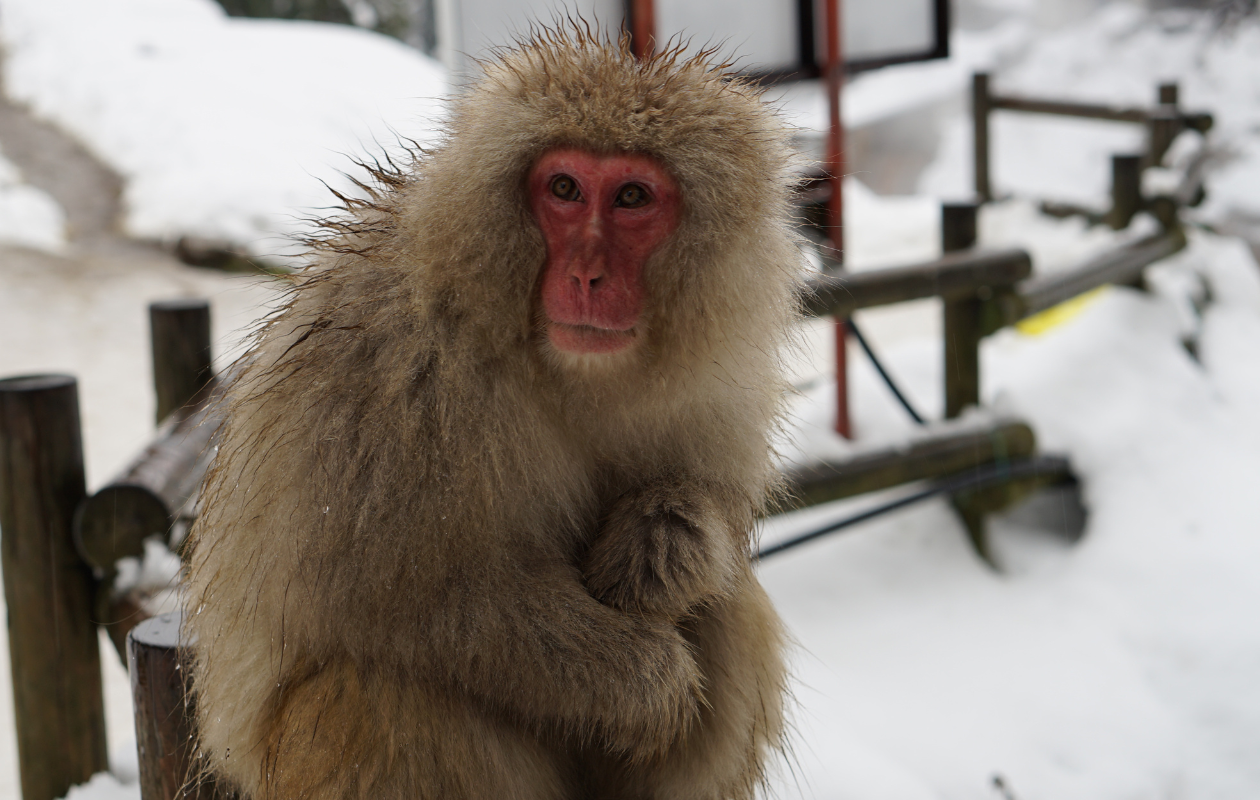
Wild Japanese macaques soaking in a steaming mountain hot spring, surrounded by deep cedar forest and snow. Jigokudani Monkey Park in Nagano Prefecture is one of the most singular wildlife experiences on earth, and in 2026 it has never been easier to visit.
(Updated March 2026)
What is it? Jigokudani Yaenkoen (Jigokudani Monkey Park) is a wildlife reserve in Yamanouchi, Nagano Prefecture, where approximately 200 wild Japanese macaques (snow monkeys) are famous for bathing in a natural mountain hot spring. Open since 1964. Free-roaming monkeys with no barriers.
Where is it? Yamanouchi, Shimotakai District, Nagano Prefecture. Approx. 35km northeast of Nagano City, at 850 metres altitude in the Joshinetsu Kogen National Park.
Admission (2026): 800 yen adults / 400 yen children. Snow Monkey Pass (train + bus + entry): 5,100 yen adults. Snow Monkey Express Bus Pass (direct bus + entry): 6,800 yen adults.
Opening hours: Green season (April to October) 8:30 to 17:00. Winter season (November to March) 9:00 to 16:00. Open every day of the year.
How to get there from Tokyo: Hokuriku Shinkansen from Tokyo Station to Nagano (approx. 80 to 100 minutes on the Kagayaki/Hakutaka). Then direct Nagaden Express Bus to the park (approx. 40 to 45 minutes). Total: approximately 2.5 to 3 hours.
Best time to visit: December to late February for the iconic snow and hot spring scenes. January and February offer the most reliable conditions for seeing monkeys bathing in the onsen.
JR Pass valid? Yes, on the Hokuriku Shinkansen (Kagayaki and Hakutaka services) to Nagano. The Nagano Electric Railway (Nagaden) and local buses are not covered by the standard JR Pass.
Why Are Japan’s Snow Monkeys So Famous?
Imagine standing on a wooden viewing platform in a cedar forest blanketed in snow. Steam rises from a natural hot spring just below you. And in that spring, grooming each other, rolling snowballs along the ground, or staring serenely into the middle distance, sit dozens of wild Japanese macaques, their faces flushed red, their thick grey-brown fur fringed with ice crystals. This is Jigokudani Monkey Park, and it is unlike anywhere else on earth.
The park’s reputation went global after a 1970 cover feature in LIFE magazine showed the monkeys bathing in the onsen. Since then, Jigokudani has become one of Japan’s most iconic wildlife destinations, drawing visitors from every continent. And unlike so many famous attractions, it fully delivers on its promise. You will see the monkeys. You will stand close enough to hear them. You will feel the steam on your face while snow falls silently through the cedars above you.
The name Jigokudani means “Hell’s Valley,” a reference to the steep volcanic cliffs and the scalding water that bubbles up from the earth’s surface. For the approximately 200 snow monkeys that live here year-round, though, it is anything but. It is home. And the hot spring, which the monkeys began using in the late 1950s after observing humans bathing at a nearby inn, is where they come every winter morning to warm themselves against temperatures that can drop well below minus 10 degrees Celsius.

Adorable snow monkeys bathing in a hot spring, Photo by Tokyo Becky
This tour pairs the snow monkey park with Nagano’s magnificent Zenko-ji Temple and sake tasting in the city, making it a perfect full-day introduction to the region.
When Is the Best Time to Visit the Snow Monkeys in Japan?
Winter (December to late February) is by far the best time to visit Jigokudani Monkey Park. This is the season for which the park is world-famous: snow thick on the cedars, steam rising from the hot spring, and monkeys immersed to their chins in the warm water. The colder the air temperature, the more reliably the monkeys enter the onsen, which is the sight you came to see. January and February, when temperatures regularly drop below minus five degrees Celsius, offer the most dependable conditions.
The park is open every day of the year, and each season has its own appeal. Spring brings baby monkeys and wildflowers along the forest trail. Autumn turns the surrounding hillsides gold and red. Summer, while lush, is the least recommended season for the onsen experience, as warm temperatures mean the monkeys have less reason to soak. For the photograph that will make everyone ask “where is that?” you want to be here between December and late February.
One practical note: the monkeys are wild and free to leave the park at any time. The official Jigokudani website maintains live updates on monkey presence at the hot spring. Check it the morning of your visit if you want to be sure the troop is around before making the journey. In practice, during the core winter months, you are very unlikely to be disappointed.

For anyone who has been into Baby Punch this year, the snow monkeys are the same species and you can see them in the hot spring, Photo by Tokyo Becky
How Do I Get to the Snow Monkey Park from Tokyo, Osaka, and Kyoto?
The gateway city for Jigokudani is Nagano, reached from Tokyo in approximately 80 to 100 minutes on the Hokuriku Shinkansen. This is a significant upgrade from the older Nagano Shinkansen timing, and makes Jigokudani a very comfortable day trip from Tokyo.
| Departing From | Route | To Nagano | Nagano to Park | JR Pass? |
|---|---|---|---|---|
| Tokyo | Hokuriku Shinkansen (Kagayaki/Hakutaka) | Approx. 80 to 100 min | Express Bus: approx. 40 to 45 min. Or Nagaden train + bus: approx. 60 to 75 min. | Yes (Shinkansen only) |
| Osaka | Shinkansen to Tokyo or direct limited services | Approx. 3 to 4 hrs via Tokyo transfer | Express Bus: approx. 40 to 45 min | Yes (Shinkansen only) |
| Kyoto | Shinkansen to Tokyo, then Hokuriku Shinkansen | Approx. 3 hrs via Tokyo transfer | Express Bus: approx. 40 to 45 min | Yes (Shinkansen only) |
Getting from Nagano Station to the Snow Monkey Park
From Nagano Station, there are two main routes to Jigokudani. For 2026, the easiest and most popular option for day-trippers is the Snow Monkey Pass, sold by Nagano Electric Railway (Nagaden). There are two versions:
Option 1: Snow Monkey Pass (Train + Local Bus version): 5,100 yen adults, 2,550 yen children (ages 6 to 12). Covers unlimited one-day travel on the Nagaden Railway, a round-trip local bus between Yudanaka Station and the park, and one park admission. Can be bought online in advance. This is the best option if you want to stop at Zenko-ji Temple, Obuse, or other towns along the Nagaden line on the same day.
Option 2: Snow Monkey Express Bus Pass: 6,800 yen adults, 3,400 yen children. Covers a round-trip direct express bus from Nagano Station East Exit to the Snow Monkey Park bus stop, plus park admission. Faster and more direct, but must be purchased in person at the Nagaden ticket counter at Nagano Station East Exit.
If you are already staying near the park (in Shibu Onsen, Yudanaka, or Kanbayashi Onsen), you can simply pay the standalone admission fee of 800 yen adults / 400 yen children at the park entrance.
Important for cash planning: The Nagaden train and local buses do not accept IC cards (Suica, Pasmo) or credit cards. Bring cash. ATMs are scarce once you leave Nagano Station, so withdraw before you board.
From the final bus stop at Kanbayashi, the walk to the hot spring is approximately 30 minutes through a beautiful cedar forest. The path is mostly flat with some steps near the park entrance. In winter, it can be icy: wear sturdy walking boots or hire boots at the gear shop near the trailhead (see the What to Wear section below).

The journey back to the city is very pretty on the Nagano Dentetsu express train. I definitely recommend the front seat!, Photo by Tokyo Becky
This tour runs from Tokyo and includes the snow monkey park plus a beef sukiyaki lunch in Nagano, making it a complete and easy day trip without any transport logistics to manage.
Book the Nagano Snow Monkey 1 Day Tour with Beef Sukiyaki Lunch from Tokyo
How Much Does It Cost to Visit the Snow Monkey Park in 2026?
| Item | Price (yen) | Notes |
|---|---|---|
| Park admission (standalone) | 800 adults / 400 children | Paid at park entrance. No advance booking required. Credit cards accepted; QR/barcode payments not accepted. |
| Snow Monkey Pass (train + local bus + entry) | 5,100 adults / 2,550 children (6-12) | Available online in advance. Includes unlimited Nagaden Railway travel. Best value for public transport visitors. Not available October to November. |
| Snow Monkey Express Bus Pass (direct bus + entry) | 6,800 adults / 3,400 children (6-12) | In-person purchase only at Nagano Station East Exit. Fastest and most direct route. One round-trip direct express bus included. |
| Boot/jacket hire at trailhead shop | 500 per item | Also: gloves 500, ear muffs 500, scarf 1,000, hat 1,000, anti-slip shoe covers 1,500. Bag storage also available (500 yen). |
| Nagano to Nagano Dentetsu (Yudanaka) | Approx. 1,190 to 1,290 yen one-way | Not covered by JR Pass. Included in Snow Monkey Pass. |
| Local bus (Yudanaka to Kanbayashi) | 310 yen one way | Included in Snow Monkey Pass. Pay cash at the Yudanaka station window or on exit from the bus. |
Always confirm at jigokudani-yaenkoen.co.jp and snowmonkeyresorts.com before visiting.
What Is the Walk to the Snow Monkeys Like?
The walk from the Kanbayashi bus stop to the monkey park takes approximately 30 minutes each way. It is one of the most beautiful parts of the experience. The path winds through a dense cedar and beech forest along a narrow mountain river, with the hot springs occasionally sending wisps of steam up through the tree canopy ahead of you. In winter, with snow on every branch and the only sounds being the crunch of your boots and the rush of the river below, it genuinely feels like entering another world.
The trail is mostly flat with two short staircases, one at the entrance and one steeper section near the park itself. In winter it can be icy in patches. The walk is accessible to most reasonably fit visitors, including families with older children. Wheelchairs and pushchairs are not accessible due to the unpaved surface. Allow at least three hours for the full experience including the walk in, time at the hot spring, and the walk back.
Along the trail, bilingual Japanese-English signs explain the snow monkeys’ diet, social hierarchy, history, and habits. They are genuinely interesting, and include thought-provoking questions about the relationship between humans and other primates. Good material for a conversation on the way back.
At the park itself, there are no barriers between visitors and the monkeys. The troop is entirely comfortable with human presence, to the point where they will walk around your feet, groom one another at arm’s reach, and on occasion roll snowballs back and forth along the ground. You are asked not to touch, feed, or stare directly at the monkeys (direct eye contact can be read as aggression), and to keep your belongings secured, as the younger macaques are famously curious. A small information centre near the entrance describes the troop’s social structure and introduces the current alpha male.

On the way to the snow monkeys, Photo by Tokyo Becky
What Should I Wear to Visit the Snow Monkey Park in Winter?
This is not a casual stroll. The park sits at 850 metres altitude and winter temperatures regularly drop to minus five or below, sometimes significantly colder. The 30-minute walk through the forest is exposed, and you may be standing at the viewing platform for an extended time. Dress for cold weather even if the day looks mild in Nagano City.
Essential items: Warm waterproof jacket. Thermal underlayers. Warm trousers (not jeans, which become damp and cold quickly). Hat, gloves, and scarf. Sturdy waterproof boots with ankle support. A small backpack is preferable to a shoulder bag, to keep your hands free on the icy sections.
Anti-slip crampons (yakusen): These lightweight rubber and metal covers strap over your boots and make an enormous difference on the icy trail. They are available to buy (or sometimes hire) at the gear shop near the trailhead for approximately 1,500 yen. If you have never walked on a snowy forest trail in Japan, buy them. They are cheap, compact, and the trail after heavy snowfall can be genuinely treacherous without them.
A full gear rental and purchase service is available at the shop near the Kanbayashi trailhead. Boots can be hired for approximately 500 yen, and a wide range of warm clothing items can be purchased. If you are travelling light or forgot your winter gear, everything you need is available here.
What Else Can I Do Near the Snow Monkey Park?
The snow monkey park sits at the centre of one of Japan’s richest concentrations of traditional hot spring culture, winter activities, and historic towns. A two or three-night stay in the area turns a single wildlife experience into one of the best mountain trips in Japan.
Shibu Onsen
Less than 3km from the park entrance, Shibu Onsen is one of Japan’s most atmospheric hot spring towns. Over 1,300 years old, the town is famous for its nine public outdoor baths (kyu-tou meguri), which guests of local ryokan are invited to walk between in yukata and wooden sandals. The narrow cobblestoned streets, traditional inn facades, and steaming drains underfoot create an experience that feels like stepping directly into a Ghibli film. This is where to stay if you want the full immersive Nagano mountain experience.
Yudanaka Onsen
The nearest train station to the snow monkey park, Yudanaka is a small, relaxed onsen resort town with several traditional ryokan and a more laid-back atmosphere than Shibu. A good base for those arriving by the Nagaden railway.
Zenko-ji Temple, Nagano City
One of Japan’s most important Buddhist temples, Zenko-ji has been receiving pilgrims for over 1,400 years. It houses what is believed to be Japan’s oldest Buddhist image (which is kept entirely hidden from public view, adding to its mystique). The temple’s main hall and surrounding lantern-lit streets make it one of Japan’s most serene religious experiences. Easily combined with a snow monkey day trip from Nagano Station.
Shiga Kogen Ski Resort
Approximately 10km from the snow monkey park, Shiga Kogen is Japan’s largest and highest ski resort area, a collection of interconnected resorts across one vast plateau. It hosted the alpine skiing and biathlon events at the 1998 Nagano Winter Olympics. For anyone visiting the region in winter, combining a morning with the monkeys and an afternoon on the slopes is an extremely easy and very memorable combination.
Obuse
A charming small town on the Nagaden line between Nagano and Yudanaka, Obuse is famous for its chestnuts, traditional merchant architecture, and the Hokusai Museum, which houses a remarkable collection of paintings by the great ukiyo-e artist Katsushika Hokusai, who spent the final years of his life here. A natural stopping point on the Snow Monkey Pass train journey.
This guided tour pairs Jigokudani with Shibu Onsen’s historic hot spring streets and a traditional soba noodle lunch in the mountains, the ideal way to experience the full flavour of the Nagano highlands.
Where Should I Stay Near the Snow Monkey Park?
For the full immersive experience: Shibu Onsen or Yudanaka Onsen. Staying at a traditional ryokan in Shibu or Yudanaka puts you within minutes of the monkey park trailhead and gives you access to the hot spring bath culture that defines this part of Japan. Ryokan rates typically include dinner and breakfast (a seasonal kaiseki meal is often included), and guests of Shibu Onsen accommodation receive a key to the town’s nine public outdoor baths. Book well in advance for winter weekends, as these small inns fill quickly.

Delicious meal on the way to see the snow monkeys, Photo by Tokyo Becky
For convenience and value: Nagano City. Nagano offers a wide range of hotels at all price points, excellent dining, the Zenko-ji Temple, and fast Shinkansen connections. The snow monkey park is a straightforward day trip from Nagano Station. This is the right choice for visitors combining Jigokudani with the rest of Nagano Prefecture or using it as a base for skiing at Shiga Kogen or Nozawa Onsen.
For the most remote experience: Kanbayashi Onsen. The tiny hamlet of Kanbayashi Onsen sits right at the monkey park trailhead, closer to the hot spring than anywhere else. There are a handful of small inns here, and staying overnight allows you to reach the park before the day-trippers arrive, giving you the monkeys almost to yourself in the early morning stillness.
Is the Snow Monkey Park Worth Visiting in 2026?
Without question. Jigokudani Monkey Park is one of the rare travel experiences that exceeds expectations. The approach through the cedar forest alone is worth the journey. The moment you round the final bend and see the steam rising from the hot spring with monkeys settled inside it, red-faced and apparently unconcerned by your presence, is one of those moments that lodges in the memory permanently.
With the Hokuriku Shinkansen now bringing Tokyo to within 80 minutes of Nagano, access has never been easier. The Snow Monkey Pass makes the onward journey from Nagano straightforward and good value. And the surrounding area, with Shibu Onsen’s ancient bath houses, Zenko-ji Temple, the Shiga Kogen ski fields, and the charming town of Obuse, means that even a long weekend here is unlikely to feel like enough time.
If you are in Japan in winter and have not booked Jigokudani, change your plans. This is one of the truly non-negotiable experiences the country offers.
Frequently Asked Questions: Japan Snow Monkeys (2026)
What are Japan’s snow monkeys?
Japan’s snow monkeys are wild Japanese macaques (Macaca fuscata) that live in the mountains of Nagano Prefecture and are famous for bathing in natural hot springs (onsen). They are found at Jigokudani Monkey Park (Jigokudani Yaenkoen) near the village of Yamanouchi. Approximately 200 monkeys live in the troop, and they have been bathing in the hot springs since the late 1950s. They became internationally famous after a 1970 LIFE magazine cover story.
Where is the Snow Monkey Park located?
Jigokudani Monkey Park (Jigokudani Yaenkoen) is located in Yamanouchi, Shimotakai District, Nagano Prefecture, Japan. It is situated in the Joshinetsu Kogen National Park at an altitude of 850 metres, approximately 35km northeast of Nagano City. The nearest train station is Yudanaka Station on the Nagano Electric Railway (Nagaden).
How do I get to the Snow Monkey Park from Tokyo?
From Tokyo, take the Hokuriku Shinkansen from Tokyo Station to Nagano Station (approximately 80 to 100 minutes on the Kagayaki or Hakutaka services; covered by the JR Rail Pass). From Nagano Station, take the Nagaden Snow Monkey Express Bus directly to the Snow Monkey Park bus stop (approximately 40 to 45 minutes), or the Nagano Electric Railway to Yudanaka Station (approximately 50 minutes) and then a local bus to Kanbayashi (approximately 7 minutes). From the final bus stop, it is a 30-minute walk through the forest to the hot spring. Total journey time from central Tokyo is approximately 2.5 to 3 hours.
How much does it cost to visit the Snow Monkey Park in 2026?
Standalone park admission at Jigokudani Monkey Park costs 800 yen for adults and 400 yen for children in 2026. No advance booking is required; tickets are purchased at the park entrance on the day. For visitors using public transport from Nagano, the Snow Monkey Pass (5,100 yen adults) covers unlimited Nagaden railway travel, a round-trip local bus, and park entry, and can be bought online. The Snow Monkey Express Bus Pass (6,800 yen adults) covers a direct round-trip express bus and entry, purchased in person at Nagano Station.
When is the best time to see the snow monkeys in the hot spring?
The best time to see the snow monkeys bathing in the hot spring is during winter, particularly from December through to late February. January and February offer the coldest temperatures and the most reliable onsen bathing behaviour from the troop. The park is open year-round, but in warmer months the monkeys have less incentive to soak. The official Jigokudani Monkey Park website provides live updates on monkey presence that you should check before your visit.
Do I need to book tickets for the Snow Monkey Park in advance?
No advance booking is required for standalone park admission to Jigokudani Monkey Park. Tickets are purchased on the day at the park entrance for 800 yen (adults). However, the Snow Monkey Pass (the combined rail and bus pass) can be bought online in advance and is recommended during peak winter weekends to avoid queues at Nagano Station. The Snow Monkey Express Bus Pass must be purchased in person at Nagano Station and cannot be booked online.
Is the JR Rail Pass valid for travel to the Snow Monkey Park?
The JR Rail Pass covers the Hokuriku Shinkansen (Kagayaki and Hakutaka services) from Tokyo to Nagano Station. It does not cover the Nagano Electric Railway (Nagaden) from Nagano to Yudanaka, or the local buses onward to the park. These must be paid separately, or you can purchase the Snow Monkey Pass, which covers Nagaden transport and park admission in a single ticket.
Can I touch or feed the snow monkeys?
No. Touching or feeding the snow monkeys at Jigokudani Monkey Park is strictly prohibited. The monkeys are wild animals in a near-natural state. Visitors are asked not to touch, feed, or stare directly into the monkeys’ eyes, as direct eye contact can be perceived as a threat. The monkeys are highly accustomed to human presence and will often pass within arm’s reach, but this proximity should be respected rather than exploited. Flash photography is permitted. Drones, selfie sticks, and submerging cameras in the hot spring are not permitted.
Is the Snow Monkey Park worth visiting in 2026?
Yes, without reservation. Jigokudani Monkey Park is one of Japan’s most singular wildlife experiences and consistently one of the country’s most memorable travel destinations. The combination of wild primates in an alpine hot spring, a beautiful forest walk, and the surrounding Shibu Onsen hot spring culture and Shiga Kogen ski fields makes the Nagano highlands one of Japan’s best multi-day destinations. In 2026, with the Hokuriku Shinkansen making Nagano accessible from Tokyo in under 90 minutes, there has never been a better time to make the trip.


0 Comments