
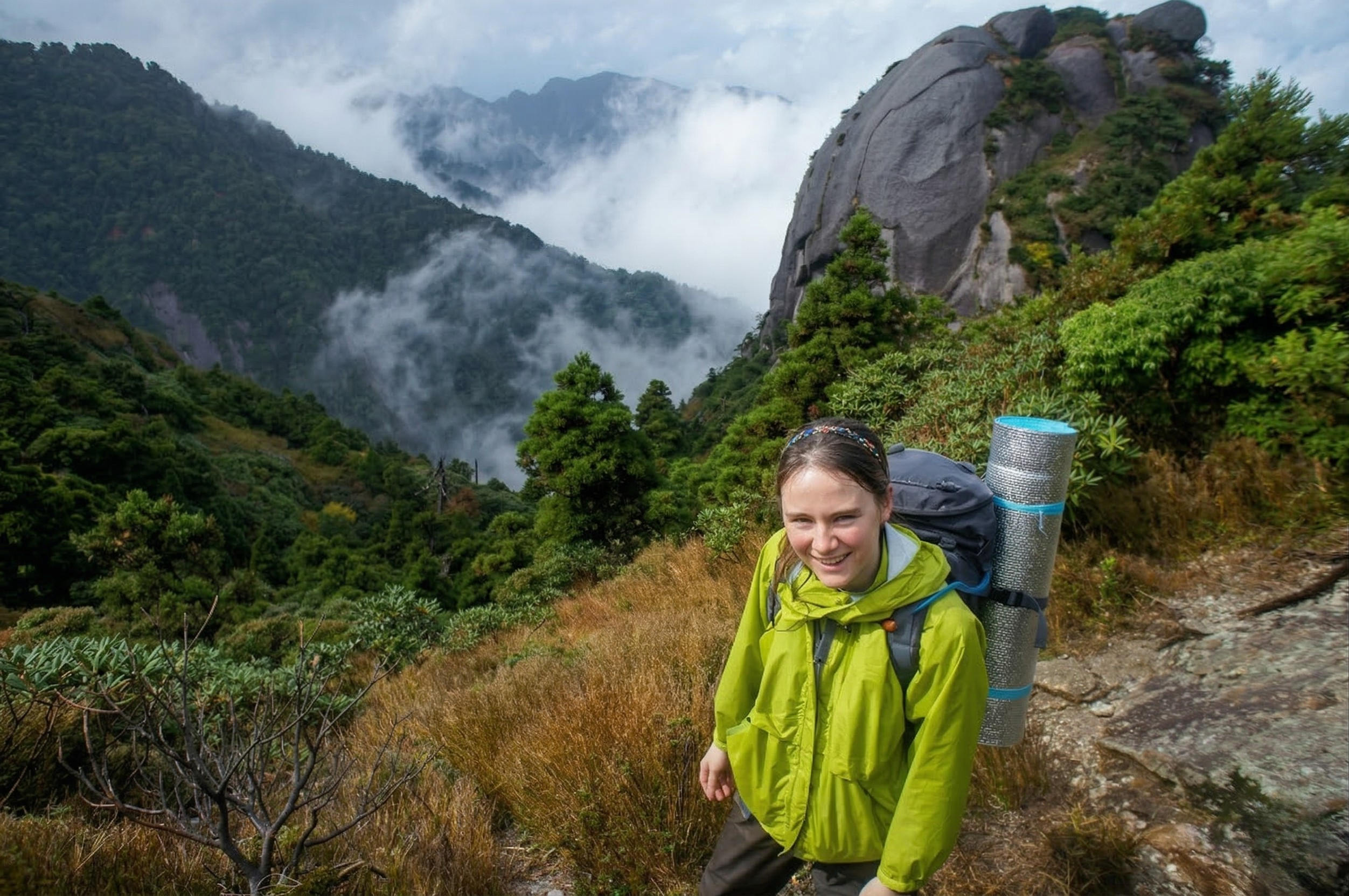
A first-person guide to Japan’s most extraordinary island: the ancient cedar forests, the all-day hike to Jōmon Sugi, the sea turtles, the moss worlds that inspired Studio Ghibli, and why – more than fifteen years after I first visited – I am still dreaming of going back.
By Tokyo Becky
What is Yakushima? A subtropical island in Kagoshima Prefecture, southern Japan. Registered as a UNESCO World Natural Heritage Site in 1993. Famous for its ancient yakusugi cedar forests, particularly Jōmon Sugi, estimated to be between 2,000 and 7,200 years old. The primeval moss forests of Shiratani Unsuikyo inspired Studio Ghibli’s film Princess Mononoke. The island is one of the wettest places in Japan and one of the most biodiverse.
Where is it? Approximately 60 km south of Kagoshima City, in the East China Sea. Part of Kagoshima Prefecture. The island covers around 505 sq km and is roughly circular.
How to get there: By high-speed jetfoil from Kagoshima (approx. 2 hours, around 8,400 yen one way); by car ferry from Kagoshima (approx. 4 hours, around 5,000 yen one way); by flight from Kagoshima (approx. 40 min). Flights also available from Osaka Itami and Fukuoka.
Key prices: Shiratani Unsuikyo Ravine: 800 yen (from April 2026). Yakusugi Land: 800 yen. Yakusugi Museum: 600 yen. Getting around the island is best done by rental car. Bus passes are available (2,000 yen per day).
How long to stay: Minimum 3 nights and 4 days for the Jōmon Sugi hike, Shiratani Unsuikyo, and coastal sights. If combining the overnight Mt. Miyanoura summit hike, allow 4 nights and 5 days.
Why Does Yakushima Feel Like Nowhere Else on Earth?
There is a saying on Yakushima that it rains thirty-five days a month. I can confirm that this is not as much of an exaggeration as it sounds. When my friend Rima and I arrived on the island in 2009, the mountains were swallowed by cloud, the forest floor was black and gleaming, and the air had a weight to it, a dense, cool moisture that settled on your skin and never quite left. It did not matter. In fact, it was part of it. The rain is what makes Yakushima what it is.
Yakushima is a UNESCO World Natural Heritage Site, registered in 1993 as one of Japan’s first natural World Heritage listings. The island is home to the yakusugi: ancient Japanese cedar trees, cryptomeria japonica, that are over 1,000 years old. The oldest of them, Jōmon Sugi, is estimated to be somewhere between 2,000 and 7,200 years old, which would make it not merely the oldest tree in Japan, but one of the oldest living things on the planet. Standing before it, you feel that.
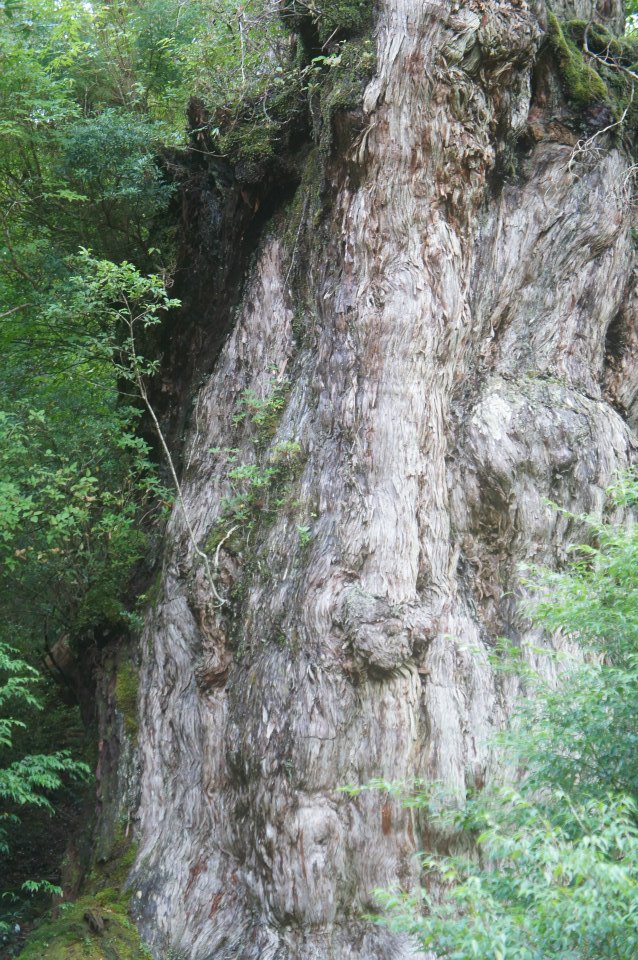
Standing in front of the Jōmon Sugi is incredibly powerful, Photo by Tokyo Becky
The moss-covered forests of Shiratani Unsuikyo inspired the lead artist on Studio Ghibli’s Princess Mononoke to paint the spirit forests of that film. If you have seen the movie, you will walk into those woods and understand immediately why. If you have not seen it, watch it before you go.
More than fifteen years have passed since that first visit, and I have not stopped thinking about going back. If you are compiling a list of the best places in Japan, Yakushima belongs near the top. There is nowhere else in the country quite like it.
Yakushima is one of Japan’s most important sea turtle nesting grounds. Take a guided snorkeling tour and swim alongside these ancient animals in the warm waters off the island’s coast.
Book the snorkeling tour to swim with sea turtles at Yakushima Island
What Are the Best Things to Do on Yakushima?
Yakushima rewards those who come prepared to walk, to get wet, and to give it time. Here is a guide to the island’s essential experiences.
1. The Jōmon Sugi Hike: Japan’s Most Extraordinary Tree
Distance: Approximately 22 km round trip from the Arakawa Trailhead. Duration: 8 to 10 hours. Difficulty: Rated 4 out of 5 by the Yakushima Tourism Association. No admission fee for the trail itself, but shuttle bus to the trailhead is required from March to November (private vehicles are not permitted on the access road during this period).
The hike to Jōmon Sugi is the reason most people come to Yakushima. It is a full day, and it earns every hour.
The trail begins at the Arakawa Trailhead, accessible by shuttle bus from Yakusugi Shizenkan (also known as the Yakusugi Museum) from March to November. From April to November, the first buses depart before 5:00 AM, and starting early is essential: you must catch the last return bus in the afternoon. Aim to be at the Arakawa Trailhead no later than 6:00 AM.
The first section of the trail follows the route of a former logging railway: flat, wide, atmospheric, running alongside a clear mountain river through cedar and broadleaf forest. After about 8 km the railway ends, and the trail rises steeply into older, denser forest. Along the way, you pass Wilson Stump, a hollowed-out ancient cedar whose cavernous interior you can actually step inside; Meoto Sugi, the husband and wife cedars whose trunks have grown together over centuries; and Daio Sugi, one of the largest remaining yakusugi, before the final approach to Jōmon Sugi itself.
Jōmon Sugi stands at 1,280 metres elevation. Its trunk is 5 metres in diameter. It is not tall, by tree standards, standing around 25 metres. But the presence of it is something else entirely. You cannot touch it: a viewing platform keeps you at a respectful distance. But you do not need to touch it. When I finally saw Jōmon Sugi, it felt like a power spot. I could feel its energy emanating outward from the bark. I stood there for a long time and did not want to leave.
Bring more food than you think you will need, a full rain kit, and waterproof boots. The trail is well marked in both Japanese and English. Water from the mountain streams along the route is safe to drink. There are toilets at the trailhead and at Takatsuka Hut near Jōmon Sugi.
2. Climbing Mt. Miyanoura: Kyushu’s Highest Peak
Elevation: 1,936 m. The overnight loop hike via Jōmon Sugi is the most rewarding option and requires two days. The day hike from Yodogawa Trailhead takes approximately 9 to 10 hours round trip. A taxi to the Yodogawa Trailhead costs approximately 7,000 yen from Miyanoura (book the night before — the first bus is very early).
Mt. Miyanoura is the highest peak in Kyushu and one of Japan’s famous One Hundred Mountains. Rima and I caught a taxi in the early hours of the morning to reach the trailhead and climbed through forest and then above the treeline to the summit. We spent the night in a mountain hut at altitude, where two Japanese men we had never met offered to share their bacon with us in the morning over a small camp stove. My socks did not dry overnight. The air was so wet that nothing dried in it. It did not matter.
The overnight loop hike that combines the Miyanoura summit with Jōmon Sugi is the single best hiking experience on the island. You ascend one side of the island’s central mountain range and descend toward Jōmon Sugi on the other, spending a night in Takatsuka Hut or New Takatsuka Hut near the tree. Mountain huts on Yakushima are basic: sleeping platforms, blankets, and nothing more. Bring food, a sleeping bag liner, and warm layers. Reservations are not required, but space is limited.
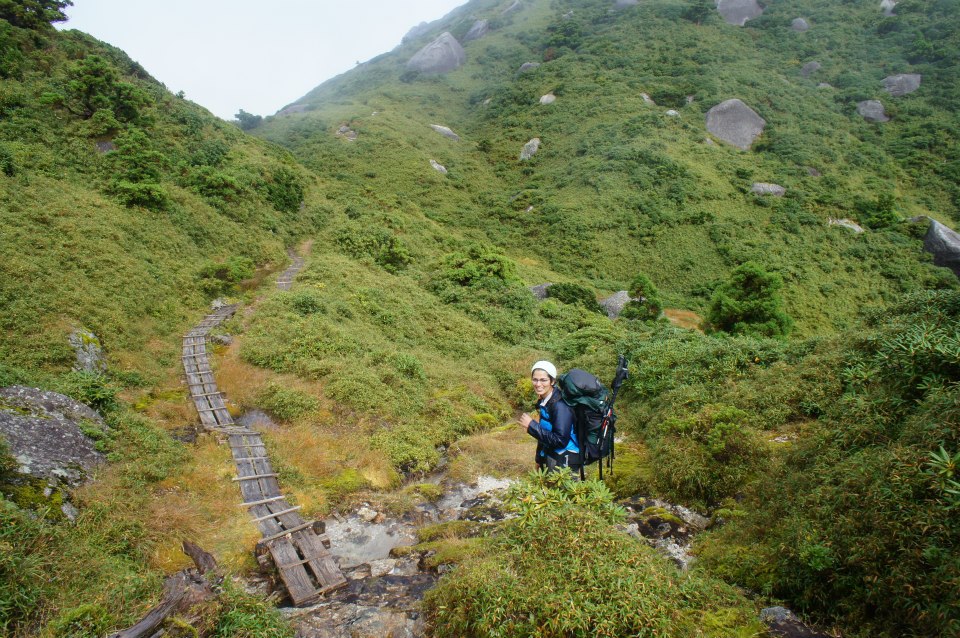
Rima and I only saw three other people for the entire day of our first hike, due to the rain and our path along the lesser trekked area leading to Mt. Miyanoura
3. Shiratani Unsuikyo Ravine: The Real Princess Mononoke Forest
Admission: 800 yen (from April 2026). Shortest trail: approximately 1 hour. Longest trail including Taiko Iwa Rock: approximately 4 hours. Accessible by bus from Miyanoura Port (approx. 35 minutes, 560 yen one way) or by rental car (approx. 30 minutes from Miyanoura).
Shiratani Unsuikyo is the most accessible of Yakushima’s major nature sites and the one most often cited as the inspiration for the spirit forests of Princess Mononoke. It is beautiful in a way that feels invented: moss in every shade of green imaginable covers rocks, tree roots, fallen trunks, and the walls of the ravine itself, creating an effect that is not quite of this world. Crystal-clear mountain streams run between the ancient cedars. The forest glows.
There are four marked trail routes varying from one hour to four hours. The longer route to Taiko Iwa Rock, a granite outcrop at 1,050 metres with panoramic views over the island’s central mountains, is highly recommended for reasonably fit hikers. The Kusugawa Trail beyond the Moss Forest leads eventually to Tsuji Pass and connects with the Jōmon Sugi trail, making it possible to combine the two in a multi-day hike with an overnight in a mountain hut.
Note that the genseirin section of the forest has been closed due to landslide damage. Guides can navigate alternative routes that keep the tour experience largely intact, and this is one hike where a local guide adds significant value: the forest is far larger and more complex than it looks on the trail map.
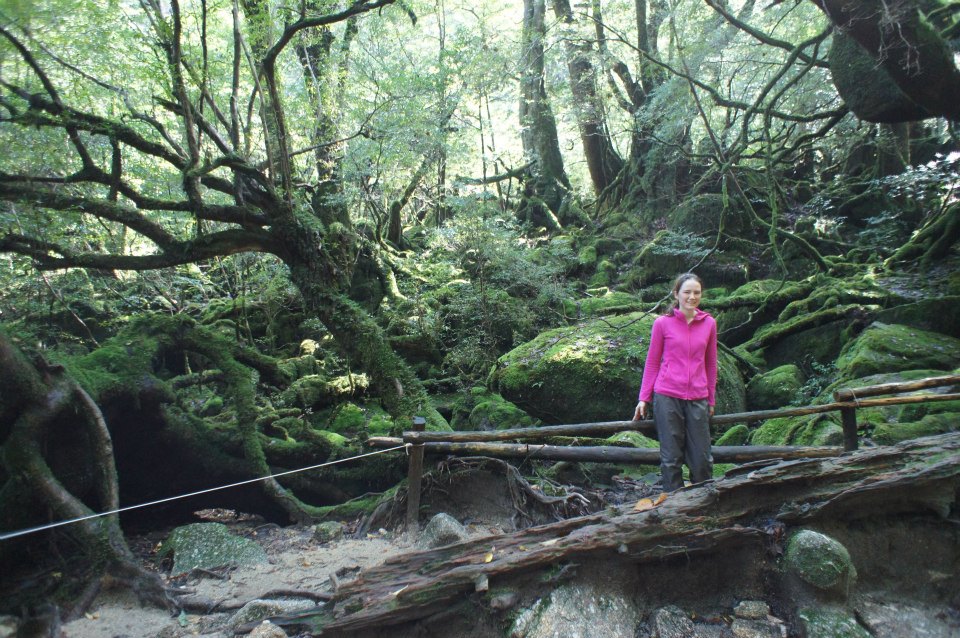
Standing in front of the forest that most inspired Princess Mononoke, Photo by Rima Ramchandra
4. Yakusugi Land: Ancient Cedars for All Abilities
Admission: 800 yen (from April 2026). Trail options: 30 minutes to 2.5 hours. Accessible by car (approx. 40 minutes from Anbo Town) or by bus from Anbo Town (approx. 40 minutes, 1,050 yen one way, two buses daily).
Yakusugi Land is the most accessible place on the island to encounter ancient yakusugi cedars without a full-day hike. The shortest trail, a 30-minute boardwalk loop, is suitable for families with children and those with limited mobility. Longer trails lead deeper into the forest over two hours, past the Buddha Sugi, Twin Sugi, and the enigmatic Thousand-Year Sugi. Fifteen minutes farther up the mountain road by car is Kigensugi, a giant ancient cedar that stands directly beside the road and is the only major yakusugi on the island reachable by vehicle: easy, spectacular, and often overlooked.
5. Sea Turtle Nesting at Nagata Inakahama Beach
Admission: Free to the beach. Turtle observation tours operate June to July. Nagata Inakahama Beach is approximately 30 minutes by car from Miyanoura.
Yakushima is one of the most important sea turtle nesting grounds in Japan. Loggerhead turtles come ashore at Nagata Inakahama Beach from May to August to lay their eggs, and the hatchlings emerge from July to October. Watching a loggerhead turtle crawl up the beach under the stars to nest is one of the great wildlife experiences available anywhere in Japan. Organised nighttime tours operate during nesting season and provide both access and responsible guidance. Outside of turtle season, the beach is simply one of the most beautiful on the island, facing the East China Sea with an unobstructed view of the sunset.
6. Senpiro Waterfall
Admission: Free. Accessible by car from the coastal road; the falls are visible from an observation deck. No hiking required.
Senpiro Falls drops 60 metres against a massive wall of Yakushima granite and is the most dramatic of the island’s many waterfalls. It is easily accessible and requires no hiking, making it an excellent addition to any day on which the higher trails are closed due to rain. After heavy rainfall the volume of water is extraordinary.
7. Hirauchi Kaichu Onsen: The Tidal Hot Springs
Admission: Free. Open only at low tide. Located on the southern coast of Yakushima.
Along Yakushima’s southern coast, natural hot spring water seeps up through the rock directly into pools at the sea’s edge. Hirauchi Kaichu Onsen is only accessible at low tide, and disappears entirely when the tide comes in: you must check the tidal schedule before visiting. The baths are mixed-gender and clothing-optional in the Japanese tradition. The combination of hot spring water, cold sea air, and the sound of the Pacific is surpassingly good.
Yakushima’s forests, coastlines, and waterfalls cover a large island with limited public transport. A private tour with an English-speaking guide ensures you see the highlights without the logistics headache.
Book the Yakushima private island sights tour with an English-speaking guide
How Much Does It Cost to Visit Yakushima?
| Attraction / Cost | Price (yen) | Notes |
|---|---|---|
| Jetfoil from Kagoshima (Toppy/Rocket) | ~8,400 one way | Approx. 2 hours. Fastest ferry option. 5 to 7 sailings daily. Reservations advised. |
| Car Ferry from Kagoshima (Yaku II) | ~5,000 one way | Approx. 4 hours. One daily departure (approx. 8:30 AM from Kagoshima). No reservation needed for foot passengers. |
| Flight from Kagoshima | ~12,000–21,000 | Approx. 40 minutes. Japan Air Commuter (JAL Group). Discount fares often available. Also from Osaka Itami and Fukuoka. |
| Shiratani Unsuikyo Ravine | 800 (from Apr 2026) | High school age and above. Was 500 yen prior to April 1, 2026. |
| Yakusugi Land | 800 (from Apr 2026) | High school age and above. Was 500 yen prior to April 1, 2026. |
| Yakusugi Museum (Yakusugi Shizenkan) | 600 | Also serves as the shuttle bus departure point for the Arakawa Trailhead (Jōmon Sugi hike). |
| Jōmon Sugi Trail | No admission fee | Shuttle bus to the Arakawa Trailhead required March to November. Bus timetables at yakukan.jp. |
| Bus Day Pass | 2,000 (1-day) | 3-day: 3,000 yen. 4-day: 4,000 yen. Not valid on the Arakawa Trailhead shuttle bus. |
| Hirauchi Kaichu Onsen (tidal hot springs) | Free | Only accessible at low tide. Check tidal schedule before visiting. |
| Senpiro Waterfall | Free | Observation deck accessible from the coastal road by car. |
Always confirm current prices and bus schedules at yakukan.jp (Yakushima Tourism Association) before visiting.
How Do I Get to Yakushima from Tokyo, Osaka, and Kyushu?
Yakushima is reached via Kagoshima. From Tokyo or Osaka, fly or take the Shinkansen to Kagoshima first, then continue to the island.
| From | Route to Kagoshima | Then to Yakushima | Total Approx. Time |
|---|---|---|---|
| Tokyo | Shinkansen to Kagoshima-Chuo (approx. 7 hrs) or fly to Kagoshima Airport (approx. 2 hrs) | Jetfoil (2 hrs) or flight (40 min) | Approx. 4–10 hrs total |
| Osaka | Shinkansen to Kagoshima-Chuo (approx. 4 hrs) or fly from Osaka Itami direct to Yakushima (approx. 1 hr 20 min) | Jetfoil (2 hrs) if via Kagoshima; or fly direct | Approx. 4–6 hrs total |
| Kagoshima City | Already there | Jetfoil: 2 hrs (~8,400 yen). Car ferry: 4 hrs (~5,000 yen). Flight: 40 min | 2–4 hrs |
| Fukuoka | Fly direct from Fukuoka to Yakushima (approx. 1 hr) | Direct flight; one round trip daily | Approx. 1 hr |
The Shinkansen Nozomi stops at Kagoshima-Chuo. Jetfoil reservations are recommended but not always required. In typhoon season or rough weather, both jetfoil and ferry services may be delayed or cancelled. Check with operators before travelling.
Yakushima’s waters are as remarkable as its forests. Licensed divers can explore vibrant underwater terrain, sea turtles, and subtropical marine life in clear, warm seas.
Where Should I Stay on Yakushima?
The island has two main towns: Miyanoura on the north coast, which is the larger of the two, with the main port, the Yakusugi Museum, and most of the supermarkets; and Anbo on the east coast, which is closer to the Arakawa Trailhead and the recommended base town if your priority is the Jōmon Sugi hike. Staying in Anbo means more sleep before a pre-dawn start.
For the overnight mountain huts near Jōmon Sugi and on Mt. Miyanoura, no advance reservation is required, but the huts are basic: platforms for sleeping, no bedding provided, no meals. Bring a sleeping bag liner at minimum, and warm layers regardless of season.
Rental cars are strongly recommended for exploring the island beyond the main hiking trailheads. Buses run approximately once per hour along the coastal road but are less frequent and sometimes non-existent into the island’s interior. For visitors relying on public transport, basing yourself in Miyanoura or Anbo is essential.
From guesthouses and ryokan to resort hotels and eco-lodges, Yakushima has accommodation options at every level. Book well ahead for peak trekking season (April to May and October to November).
What Do I Need to Know Before Visiting Yakushima?
When is the best time to visit Yakushima? Spring (April and May) and autumn (October and November) are the most popular and most pleasant times to visit, with milder temperatures and slightly lower rainfall. Summer (June to August) is the hottest and wettest period, coinciding with sea turtle nesting season: worth planning around if that experience matters to you. July and August also bring typhoon risk. Winter (December to February) is quiet, cool, and uncrowded, with occasional snow above the treeline and snow on Miyanoura’s summit. There is no truly dry season on Yakushima.
Do I need a rental car? Almost certainly yes, unless you are doing only the Jōmon Sugi hike and Shiratani Unsuikyo, both of which have bus access. For the coastal sights, waterfalls, onsen, and Yakusugi Land, a rental car is significantly more practical. Reserve your car in advance, as availability is limited on a small island.
What gear do I need? Waterproof hiking boots and a full rain kit (jacket and trousers) are non-negotiable. Even on days when it is not raining, the trail surfaces and forest floor are permanently wet. Pack more warm layers than you think you need for overnight hikes. Hiking poles help significantly on the steep sections. Bring cash: many places on the island do not accept cards, and buses require exact change or IC card.
Do I need a guide? The Jōmon Sugi trail and the shorter Shiratani Unsuikyo courses are well marked in English and do not require a guide. For the Miyanoura overnight loop, multi-day hikes, or if you want to go deeper into the forest than the standard routes, a certified Yakushima guide adds real value. The island has its own guide certification system, and licensed guides carry insurance and first aid training.
Is Yakushima good for families? Yes, with the right planning. Yakusugi Land’s 30-minute boardwalk trail is suitable for children and all abilities. Shiratani Unsuikyo’s shorter routes are accessible for older children. The sea turtles and snorkeling are excellent family experiences. The Jōmon Sugi full-day hike is not recommended for young children or anyone with limited fitness.
Is the JR Rail Pass useful for Yakushima? The JR Pass covers the Shinkansen to Kagoshima-Chuo. The jetfoil and car ferry to Yakushima are not covered and must be purchased separately. Flights to Yakushima are also not covered.
Is Yakushima Worth Visiting?
More than fifteen years since that first trip, I am still dreaming of going back. The socks that never dried. The bacon shared by strangers at altitude. The tree that has been alive since before any city I have ever walked through existed. There is a quality to the air on Yakushima, damp and green and charged with something older than human memory, that I have not found anywhere else in Japan.
Yakushima is one of the best places in Japan not because it is easy or convenient or comfortable. It is because it is genuine. The forest does not care about you. The rain does not care about your itinerary. And standing in front of a tree that has been alive for possibly seven thousand years, you stop caring about those things too.
If you love nature, wilderness, or travel that asks something of you, Yakushima is not optional. It is essential.
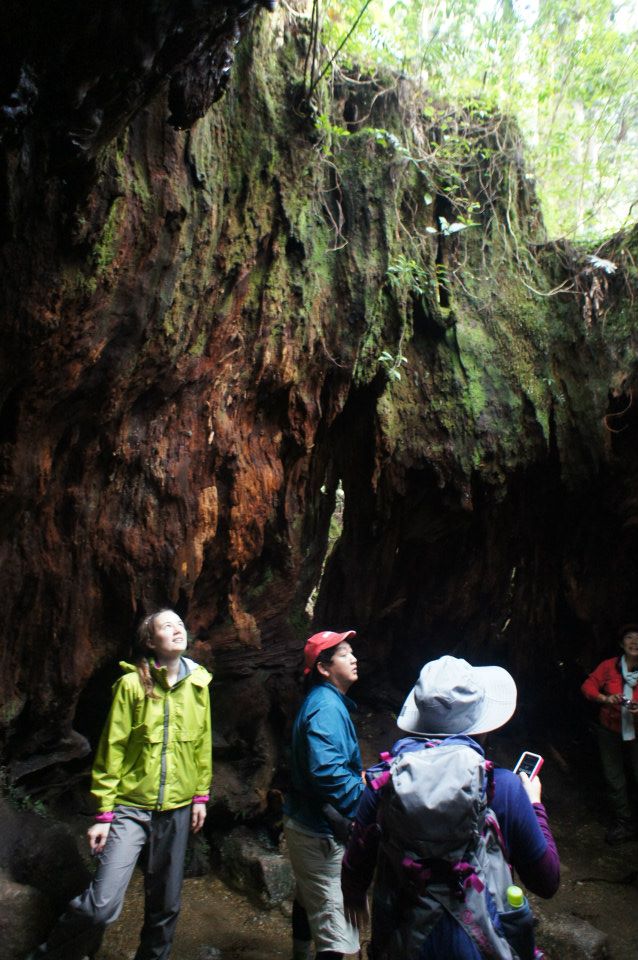
Visiting Wilson’s Stump is another amazing moment on Yakushima. It is only accessible via hiking and is on the way to Jōmon Sugi, Photo by Tokyo Becky
Frequently Asked Questions about Yakushima
What is Yakushima famous for?
Yakushima is famous for its ancient yakusugi cedar forests, particularly Jōmon Sugi, Japan’s oldest tree estimated to be between 2,000 and 7,200 years old. The island’s primeval moss forests inspired Studio Ghibli’s animated film Princess Mononoke. Yakushima was Japan’s first UNESCO World Natural Heritage Site, registered in 1993. It is also known as one of Japan’s most important sea turtle nesting grounds, one of the wettest places in Japan, and the location of Mt. Miyanoura, the highest peak in Kyushu at 1,936 metres.
Where is Yakushima located?
Yakushima is an island in Kagoshima Prefecture, southern Japan, located approximately 60 km south of Kagoshima City in the East China Sea. The island covers approximately 505 square kilometres and is roughly circular in shape. The majority of the island is within Kirishima-Yaku National Park and the UNESCO World Heritage zone covers the interior mountains and ancient cedar forests.
How do I get to Yakushima from Tokyo or Osaka?
From Tokyo, fly to Kagoshima Airport (approx. 2 hours) or take the Shinkansen to Kagoshima-Chuo (approx. 7 hours), then take the Toppy/Rocket jetfoil to Yakushima (approx. 2 hours, around 8,400 yen one way). From Osaka, a direct flight from Itami Airport to Yakushima takes approximately 1 hour 20 minutes. Alternatively, fly or take the Shinkansen to Kagoshima and continue by ferry or jetfoil.
How long does the Jōmon Sugi hike take?
The Jōmon Sugi hike is approximately 22 km round trip and takes 8 to 10 hours. Hikers should start at the Arakawa Trailhead no later than 6:00 AM to ensure they complete the hike and catch the last return shuttle bus. From March to November, private cars cannot use the access road to the trailhead; a shuttle bus from Yakusugi Shizenkan (Yakusugi Museum) is required. The first buses depart before 5:00 AM during peak season.
How much does it cost to visit Yakushima?
Getting to Yakushima from Kagoshima costs around 5,000 to 8,400 yen one way by ferry or jetfoil, or around 12,000 to 21,000 yen by flight from Kagoshima. Shiratani Unsuikyo Ravine and Yakusugi Land each cost 800 yen admission (from April 2026). The Jōmon Sugi trail itself has no admission fee, but the shuttle bus is required seasonally. A bus day pass is 2,000 yen. A rental car significantly expands access to the island’s coastal sights and is recommended for most visitors.
What is the best hike on Yakushima?
The overnight loop hike combining the Mt. Miyanoura summit with a descent to Jōmon Sugi is widely considered the best hiking experience on Yakushima. It takes two days and involves a night in a basic mountain hut. For a single-day hike, the Jōmon Sugi trail from Arakawa Trailhead (8 to 10 hours round trip) is the most celebrated. Shiratani Unsuikyo Ravine is the best option for those wanting a shorter, more accessible experience in the ancient forests (1 to 4 hours, suitable for moderately fit hikers).
Is Yakushima suitable for beginners or non-hikers?
Yes, in part. Yakusugi Land has a 30-minute boardwalk trail suitable for all abilities, including families with children. Shiratani Unsuikyo’s shorter routes (1 to 3 hours) are manageable for most reasonably fit visitors. Senpiro Waterfall and Nagata Inakahama Beach require no hiking at all. The Jōmon Sugi full-day hike and the Mt. Miyanoura overnight route are for experienced hikers with proper equipment.
When can I see sea turtles on Yakushima?
Loggerhead sea turtles nest on Yakushima’s Nagata Inakahama Beach from May to August, with hatchlings emerging from July to October. Organised nighttime nesting observation tours operate during the peak nesting period of June and July. Year-round, sea turtles can be encountered underwater in Yakushima’s waters on snorkeling and scuba diving tours.
Is Yakushima worth visiting?
Yes, without reservation. Yakushima is one of the best places in Japan for travellers seeking genuine wilderness, extraordinary natural beauty, and experiences unlike anything else in the country. The ancient cedar forests, the Jōmon Sugi tree, the Studio Ghibli-inspired moss forests of Shiratani Unsuikyo, the sea turtles, and the tidal hot springs combine to make Yakushima one of Japan’s most unforgettable destinations. It takes effort to reach, but that is part of the experience.
For more amazing hiking experiences in Japan, check out my posts on the Kumano Kodo, the Nakasendo postal road, and the eight best hiking trails in Japan that you will never forget.


0 Comments