
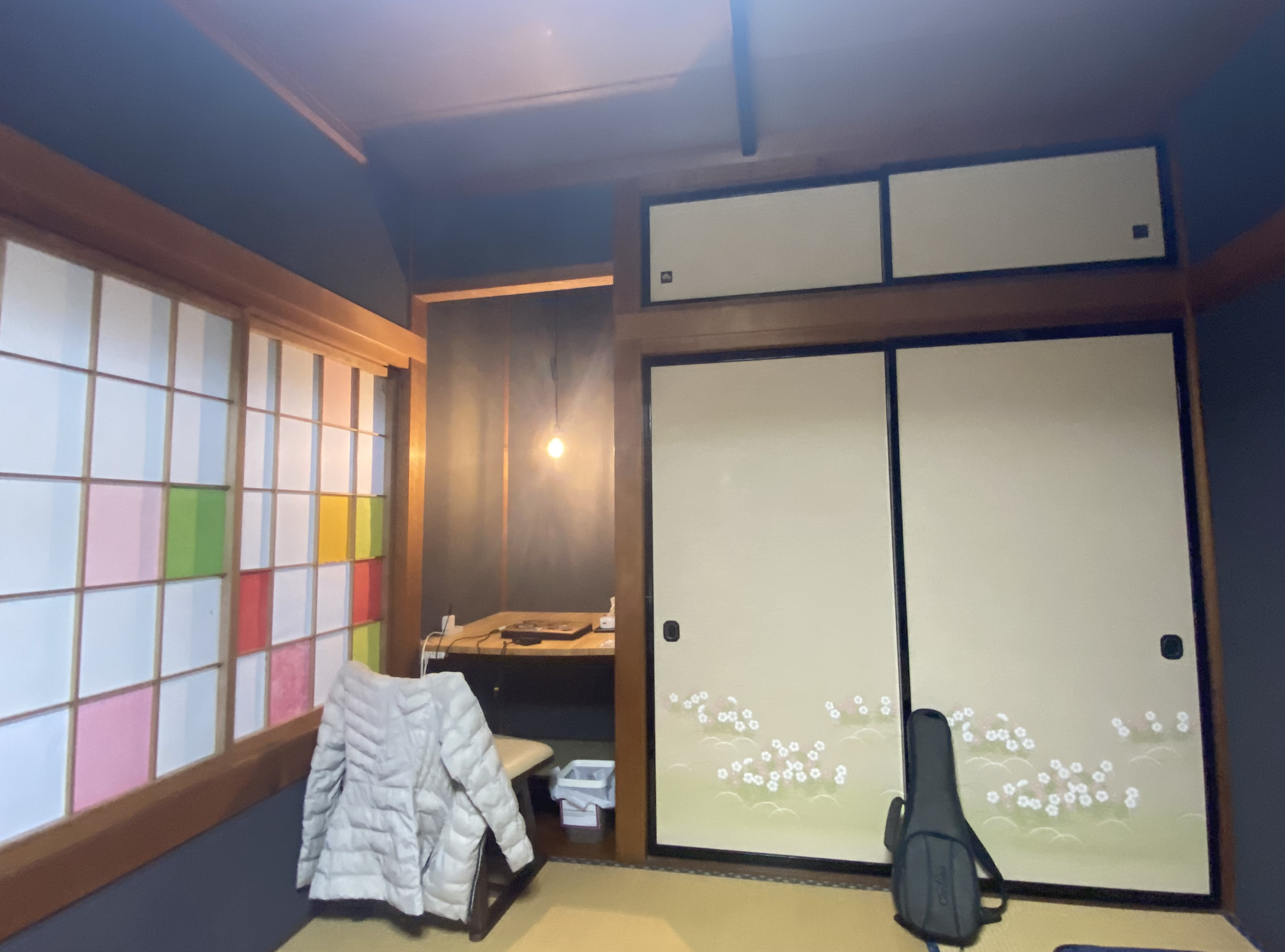
Searching for apartments in Japan for one month or more can feel overwhelming the first time you visit Japan. As someone who moved to Japan three different times within a 13-year stint and stayed in Japan for more than one month two other times, I can really speak from experience. Finding apartments in Japan as a tourist (or student) can sometimes seem difficult, but there are a number of different options.
In this article, I’m going to introduce you to several websites that will hopefully help you. Unlike Airbnb, VRBO, and Booking.com, which can cost thousands of dollars a month, there are options available that will still give you privacy but with lower prices. These are often called guesthouses in Japan, shared living, or coliving. The catch is that you will have to live with other people. You will have your own bedroom but usually not your own bathroom.
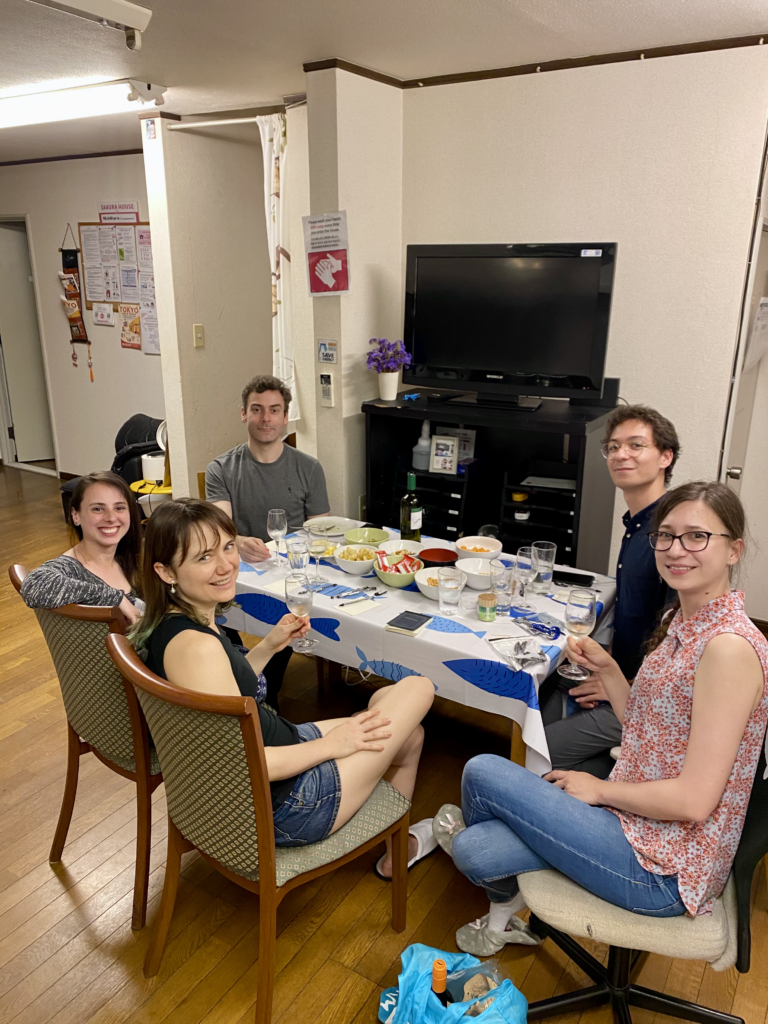
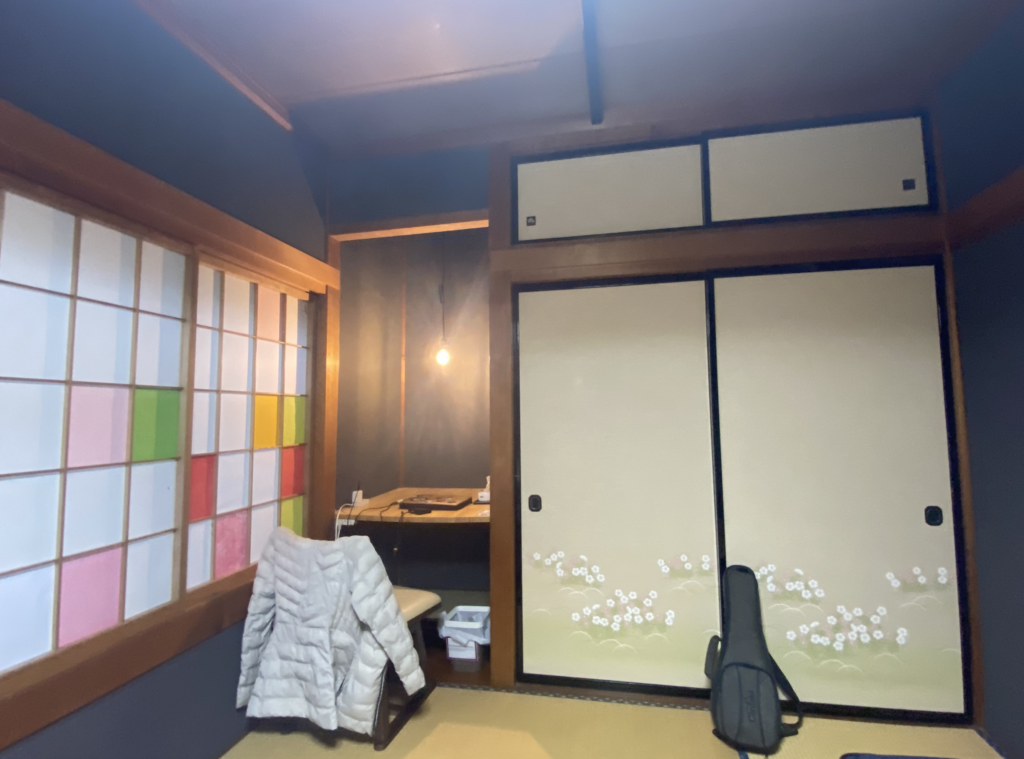
During my first years in Japan, I lived in a guesthouse for two and a half years. Later, when I moved back in 2008, I went straight into a sharehouse. Years after that, in 2018, I stayed in Sakura House and ended up returning to the exact same room during the first months of the pandemic from April to August 2020. Thanks to Sakura House, those strange months became surprisingly warm. I made friends I still talk to today.
You can find a link here to a video that was filmed in 2007 at my first guesthouse in Noborito, Japan. I am behind the camera narrating. This was before anyone had smart phones or even Facebook accounts. I miss these incredible times of being social with everyone, but spending the pandemic at Sakura House proved to me that it’s possible to feel that magical closeness with your housemates even in 2020. This is why guesthouses in Japan for those who want to be social!
Most travelers don’t know that Japan’s rental world is split between traditional long-term apartments and short-term options that work better for foreigners, tourists, and people on working holiday visas. The rules are strict, and the expectations differ from what many Western renters expect. The good news is that there are far more options now than when I started. Some even specialize in short stays that work perfectly for visitors.
This guide breaks down how the system works, what types of apartments and housing you can realistically rent, and which companies actually support short-term stays in English.
Why It’s Hard for Tourists to Rent Regular Apartments in Japan
If you try to apply for a normal Japanese apartment as a tourist, you will run into the same obstacles that many people do when they move to Japan.
Most landlords want:
- A long-term work contract
- Key money (a gift that you pay to the landlord that you never get back, many apartments charge at least 1 month of key money as part of the deal, sometimes two months)
- A Japanese guarantor
- Proof you can stay in Japan long enough to justify the lease (this also means a Japan resident card, which requires a Japanese visa)
- Move-in fees that often equal several months of rent (I once had to pay five months worth of rent upfront to rent a proper Japanese apartment – 2 months key money, 1 month deposit, 1 month of rent upfront, and 1 month that went to the guarantor company – good luck with that).
- Comfort with renting to foreigners, which is not universal (I was unable to move into more than one dream apartment thanks to this)
Even if you manage all of that, most traditional apartments come completely unfurnished. No bed, no fridge, not even a light bulb. For someone staying a few months, the cost doesn’t make sense.
Because of this, short-term housing options grew into their own ecosystem. They are designed for foreigners, long-stay tourists, students, and working holiday travelers who need something simple, furnished, and flexible.
Foreign Friendly Apartments in Japan
A special category exists for foreigners who want a private apartment without dealing with the strict Japanese leasing system. These are sometimes called foreigner friendly apartments. They are run by agencies that communicate in English and handle the practical parts for you. They come furnished, and the move-in costs are far lower than traditional leases.
These apartments cost more than a sharehouse but offer privacy, your own kitchen, and your own bathroom. They were created for people who stay a few months but don’t want to live with housemates.
Searching for something like “foreigner friendly apartments in Tokyo” will bring up several agencies with real listings and English staff. I am including a couple of these below in my list below.
Host Families in Japan
For tourists or students who want immersion, homestays are another option. The minimum stay is usually one week. You live with a Japanese family, eat meals with them, learn household habits, and see daily life up close.
This works best for people who want structure, language practice, and an easy rhythm. It is not a private experience, but it is meaningful. Check out Your Home in Japan or Homestay.com.
Serviced Apartments in Japan and Mid-Term Rentals
If your trip is going to combine business and travel, serviced apartments offer a comfortable middle ground. These units are furnished, private, and designed for stays of one month or more. You pay a single monthly bill that includes utilities and internet.
They are pricier than sharehouses but simpler than navigating Japan’s traditional rental market.
Tourists or short-term visitors usually cannot satisfy these requirements, which is why the short-term housing market exists.
How to Choose the Right Option for Your Trip
Think about how you travel. If you want community, choose a sharehouse or guesthouse. If you prefer privacy, look at foreign friendly apartments or serviced apartments. If you want cultural immersion, consider a homestay. If you plan to stay for more than a month, you have far more choices than someone staying for only two weeks.
My own housing path in Japan started with company-supported accommodation, moved from guesthouse to guesthouse, and then I finally shared an apartment with one roommate, and then moved on to my place.
A Quick Overview of Short-Term Apartments in Japan
To make the differences easier to see at a glance, here is a table that compares the main categories tourists consider.
| Type of Housing | Minimum Stay | Furnished | Good for Tourists | Notes |
|---|
| Guesthouses/Sharehouses | 1 month (often) | Yes | Yes | Casual, community oriented. I lived in one for 2.5 years. Some are female-only. |
| Homestays | 1 week | Yes | Yes | Strong cultural immersion. Meals sometimes included. |
| Foreign Friendly Apartments | 1 month to 1 year | Yes | Yes | No guarantor needed. Higher privacy. English support. |
| Serviced Apartments | 1 month | Yes | Yes | Great for professionals. Higher price range. |
| Standard Japanese Apartments | Usually a minimum 2-year contract | Usually no | Rarely | High fees. Requires a guarantor. Not realistic for tourists. |
My Experience with Sharehouses and Guesthouses
Guesthouses were my first home in Japan, and I stayed in one for two and a half years. It felt like a loose, international family. Someone was always cooking noodles at midnight, someone was always practicing Japanese in the hallway. Later, when I returned to Japan in 2008, I lived in a sharehouse. It was cleaner, more structured, but still full of energy and connection.
These early years shaped how I understand housing in Japan. A guesthouse or sharehouse isn’t just a place to sleep. You join a micro-community. If you’re new to the country or traveling alone, this can make the transition softer and more memorable. A stay of more than 30 days is considered a long stay, which means the typical accommodation licensing laws for nightly lodgings don’t apply. That is why most sharehouses and many furnished apartments require at least a one-month stay.
Recommended Apartments in Japan for Tourists
Below are the housing providers travelers ask about most. Each works well for short stays, and each has its own personality and requirements.
Sakura House
Sakura House is one of the most foreigner-friendly companies in Japan. They focus on furnished rooms, apartments, and guesthouse style housing. Minimum stays usually start at one month.
I stayed with them for two months in 2018. In 2020, I ended up returning to the exact same room for five months of the pandemic in 2020. Those months could have been lonely, but instead I found stability and friendship. Sakura House draws a mix of students, travelers, remote workers, and long-stay visitors, and the staff is used to helping people who don’t speak Japanese.
At Sakura House, you will only be charged the monthly stay fee, with part of the monthly stay required in advance to complete a reservation. Rooms are furnished and utilities are already included so you don’t have to go through the trouble of applying for services in Japanese. You also do not need a guarantor, which is a huge load of bureaucracy off of your back when looking for a place in Japan.
When you sign the lease agreement with Sakura House, you will need to bring the following:
– A valid passport and visa. Temporary and 90 day visas are accepted (including that of countries that do not require a visa application in advance).
– Remaining amount of the first month’s rent (if it has not been paid totally already)
– Emergency contact in Japan
– Emergency contact in your country
– Information of your school or workplace in Japan
(*Requirements may change if you do not plan to travel for work or study)
Oakhouse
Oakhouse offers a very wide range of sharehouses and furnished apartments. Some apartments require a one-year contract, but many of their sharehouses accept short stays. The community events are frequent, and the properties tend to be a bit younger.
Oakhouse’s minimum contract is one month. There are 3 types of contracts: between 1 to 6 months (certain houses excluded), 1 year, or 2 years.
Moving out requires advance notice of 14 days for dormitories and 1 month for other types, so please contact them as soon as possible when you know you will be moving out.
Guests are generally allowed, especially if you live in a single room or private apartment. You can have one visitor at a time, and they can stay overnight. If they stay more than three nights in a month, an extra monthly fee of 20,000 yen applies, the same as a two-person contract. Some houses have restrictions, such as women-only or non-smoker properties, where only visitors who meet those conditions can enter. Even if overnight stays are limited, friends or partners can still visit shared lounges in most houses and join Oakhouse events.
To move in, you only need a copy of your photo ID, an official seal if you have one, and house slippers. All homes already include basic furniture, appliances, and kitchenware, so most people can move in with just their luggage. If you need bedding, a full set can be purchased for 17,600 yen, and the team should be notified in advance. There is also a one-time contract fee of 50,000 yen. This could be a barrier for those only wanting to stay for one month.
Tokyo Sharehouse
This is a fantastic website that showcases many beautiful sharehouses in Tokyo. This is like rental porn and I personally love looking at sites like this. It so addictive for a wannabe real estate agent like me. While you may stay a bit further away from the city, the homes include movie rooms, music studios, and sometimes even home gyms. Unfortunately, their homes require a minimum 6-month contract, but there is one house that allows short-term stays. When it says that there is an age limit, it is usually 49 years old.
MetroResidences
MetroResidences specializes in furnished apartments aimed at expats and foreigners. These spaces feel more like serviced apartments. If you are staying for two to three months or longer, they can be cheaper than Airbnb and offer more privacy.
You will need a passport, proof of your length of stay, and payment details. No guarantor is needed, but stays under one month are rarely available. Serviced Apartment (Monthly) are available as well as Residential Rental (2 Years). MetroResidences are more expensive but very flexible. Look way in advance and book ahead.
SUMII
SUMII focuses on all-inclusive furnished apartments in convenient locations. Their pricing is transparent, and rental terms range from one month to one year. Units feel modern and clean. The minimum stay is one month. These apartments are super fancy and right in the heart of town. Book way in advance, but you can enjoy incredible luxury.
Borderless House
Borderless House is known for intentional cultural exchange. They match foreign residents with Japanese residents at roughly equal ratios, and they encourage community events and shared meals. If you want a social experience, this is a great choice.
You need a completed application, personal profile, and basic documents. Minimum stay usually starts at one month. They have locations in Tokyo, Kansai, and Sendai. There is a newly opened house in Uji, a 15-minute train ride from Kyoto.
Bamboo House
Bamboo House offers affordable accommodations with simple, comfortable rooms. Many are set up for long stays and short commuter stays. The social aspect varies by building. They have 12 houses in the Tokyo area but limited availability. It could be worth keeping your eye on what may become available and putting your bid in way in advance.
Edo Sharehouse
Edo Sharehouse offers one-month minimum stays and long-term options. Rooms are fully furnished, and many buildings are in quiet residential districts near central Tokyo.
They accept short-term guests, but all stays are charged on a monthly basis, so you must pay the full first 30 days of rent even if you stay only a couple of weeks. Even with this rule, the total cost is usually cheaper than a month in a hostel or hotel. Utility fees are included for the first 30 days, and only start being charged from day 31 onward.
There is no age limit, though anyone under 19 needs parental permission, and guests must be able to care for themselves independently. Their residents have ranged widely in age, from a one-year-old staying with a parent to an 80-year-old preparing for a move to a nursing home, as well as younger teens whose families wanted a safe place for them to live while studying in Tokyo.
HafH (Home away from Home)
HafH is a monthly membership system where you pay a fixed amount to receive “coins,” which act as travel credit. You choose how many coins you want to save each month, and the price per coin stays the same regardless of plan size. These coins accumulate in your account and can be redeemed for hotel stays in Japan and around the world. You can also top up coins anytime or earn bonus coins through referrals, campaigns, and sharing travel stories. Bonus coins expire after about a year, while regular coins stay in your wallet unless you use them.
As you stay subscribed month after month, your member rank increases. Higher ranks give you better discounts on bookings and a higher “wallet bonus,” which works like an annual interest rate of up to 12 percent based on your regular coin balance. You can pause your membership if you don’t want to keep paying, but doing so resets your rank. HafH emphasizes price stability, meaning accommodations don’t fluctuate wildly in cost between dates, making budgeting easier.
When you’re ready to book a property, you pay with your accumulated coins. You can cancel for free up until the day before check-in, and you can even split the cost with friends who also use HafH. If you don’t have enough coins yet, you can use the “Pay Later” feature, which lets you book using the coins scheduled to arrive in your next monthly cycle. HafH partners with thousands of properties worldwide from ryokan and onsen hotels to business hotels and major international brands. This gives you a more flexible way to travel at predictable prices. If you don’t want to stay in a guesthouse and want your own space for an affordable price, this is a good option.
Taikoukyo Coliving in Kyoto
Taikoukyo is a 400-year-old cultural property in the western foothills of Kyoto preserved by the Yamaguchi family for twenty generations. The residence offers an immersive experience in traditional Japanese living. The estate includes a historic thatched gate, a machiya-style main house, an elegant reception room, and a tea house all surrounded by a garden rich with mosses, seasonal flowers, and maples.
Daily rhythms still reflect the practices of past generations: cooking with well water on an old-fashioned stove, eating locally grown and foraged foods, and embracing the realities of a home that is warm in summer, cold in winter, and open to the natural world.
In recent years, Taikoukyo has opened its doors to coliving and coworking through a partnership with achicochi Ltd. Tourists staying in Kyoto for a month or longer can rent nearby share houses and use Taikoukyo as a workspace. The residence now shares its cultural activities in multiple languages and welcomes international residents looking for accommodation surrounded by traditional Japanese life.
You can contact Taikoukyo about the coliving opportunity here.
Check out my perfect 3-day itinerary for Kyoto here if you’re looking for something to do in the area.
Kotori Coworking & Hostel
Kotori Coworking & Hostel is a community-oriented coliving space designed for travelers and digital nomads in Kagawa Prefecture, with locations in Kotohira and Takamatsu. What began as a tourist information center has grown into a welcoming hub where guests and locals can work, connect, and share experiences. Both hostels offer easy access to public transportation, shopping streets, and major attractions, along with practical amenities such as a full kitchen, cozy lounge, free laundry, high-speed Wi-Fi, private meeting rooms, and sub-monitors. Guests can use the coworking space for free from 9:00 am on check-in day until 6:00 pm on check-out day, while non-guests are welcome to drop in anytime.
The atmosphere is supported by a community manager who helps travelers meet each other and settle into the area. Kotori’s Kotohira location sits just steps from the famous Konpira Shrine, which is lively by day and peaceful at night. The Takamatsu hostel offers a quiet neighborhood feel just minutes from markets, restaurants, and Kawaramachi Station. Both serve as convenient bases for exploring Kagawa and Shikoku. I haven’t been here myself, but it is definitely a perfect looking base for my next visit to Japan.
Murasaki Properties in Takayama, Gifu
In 2023, I met the company Algoritmi at Web Summit in Lisbon and learned about their initiative to bring digital nomads and longer term tourists to Japan. I visited them in January 2024 and got to visit the incredible historic town of Takayama in Gifu prefecture. Takayama, in Gifu Prefecture, developed as a prosperous castle town during the Edo period and was known for its highly skilled carpenters who were often sent to work on imperial and shogunate projects. Today, it has well-preserved streets, merchant houses, and traditional festivals that reflect centuries of craftsmanship, trade, and mountain culture that shaped the region. You can reach Takayama from Tokyo Station in Tokyo by taking the shinkansen to Nagoya and switching to a limited express train to Takayama. It takes about 4 hours and 40 minutes. It takes two trains and 3 hours and 50 minutes to get to Shin-Osaka.
Ryutaro Suda, one of Algoritmi’s business development representatives, took me around Takayama and introduced me to the city’s long history with making sake, traditional pottery known as Shibukusa-yaki, and mouth-watering Hida beef, a premium brand of Japanese Wagyu (trust me, it is melt in your mouth sensational).
Algoritmi has renovated three properties in Takayama while keeping the building’s traditional features. I only had a chance to stay in Hostel Murasaki, but you can stay in the bigger Hostel Miyagawa or the cozier Jinya Sunset Inn. Hostel Murasaki feels the most like staying in a classic Japanese home and even has rooms styled after Doraemon! I highly recommend it. You can choose between private rooms and hostel beds.
All three of Algoritmi’s buildings are located a 10-minute walk from each other, which makes these a great option if you want to bring a group of people together to Takayama and book in these three different buildings. The city of Takayama is even planning a 24-hour coworking space to help digital nomads be able to work more comfortably. I have no doubt that you will be charmed by the town of Takayama and want to stay! Please visit if you get the chance!

Final Thoughts
Finding apartments in Japan for 1 month or more certainly takes some extra planning in advance, but the system becomes clearer once you know your options as a tourist or student. Short-term housing companies exist because the traditional rental world is difficult, and they make life much easier for travelers, students, and people who want to stay for a month or more.
Each option offers a different kind of life. Some focus on privacy. Others focus on community. I have lived in several of them, and every place gave me a different version of Japan. If you approach your search with curiosity, you will end up somewhere that teaches you something new about the country and maybe about yourself too. I can say with certainty that some of my best moments in Japan were shared with friends that I made in Tokyo guesthouses, and many of those friends made then continue to my friends today.

0 Comments